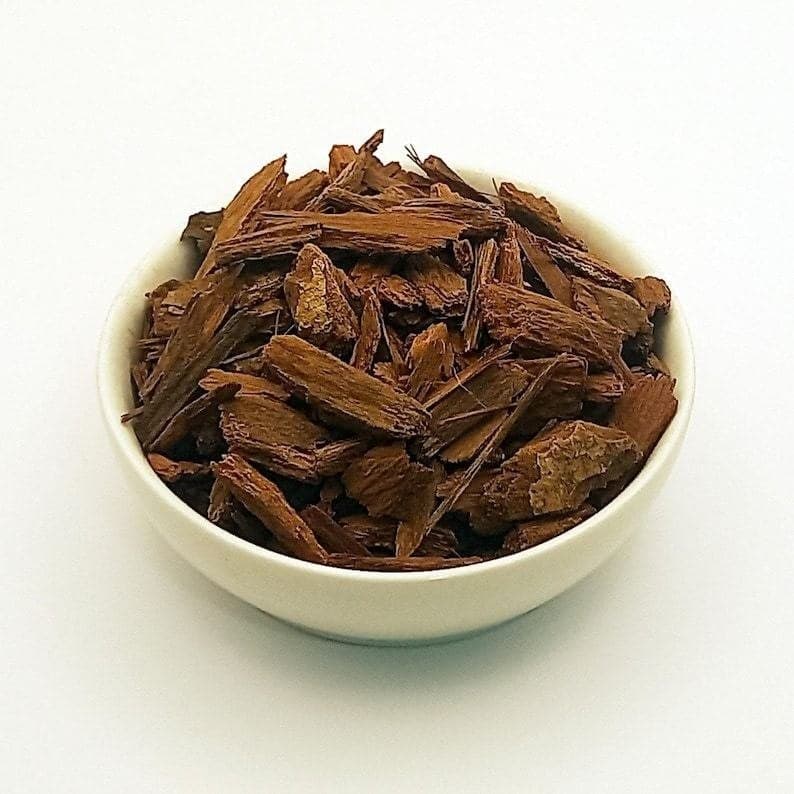
Sassafras Root Bark, Cut (Sassafras albidum)
Botanical use only
$42.501/4 lb
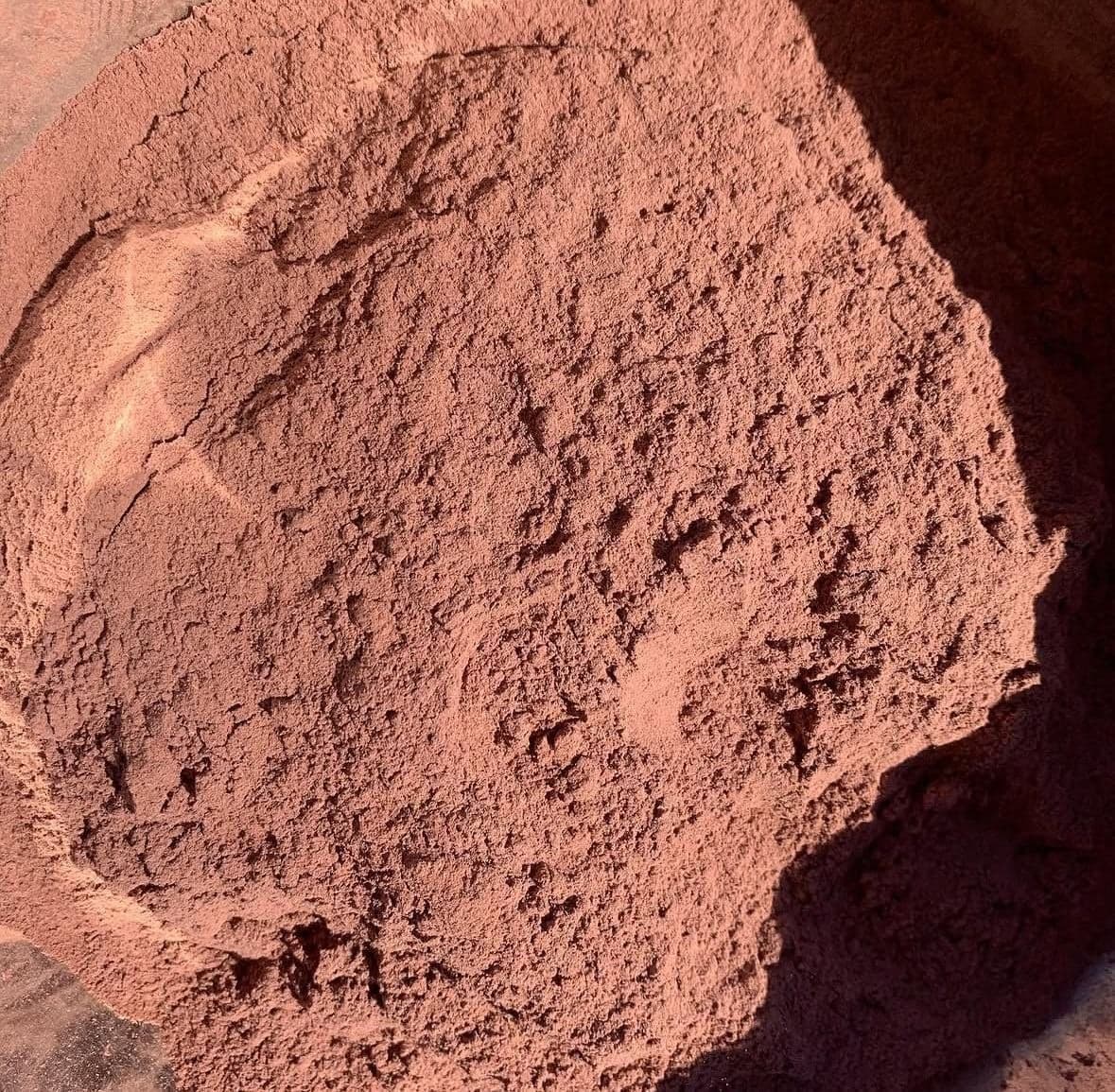
Finely milled Mimosa hostilis root bark powder for natural dyeing and cold-process soap color. The fastest-releasing cut, sold by the pound from 1/4 lb, shipped from California.
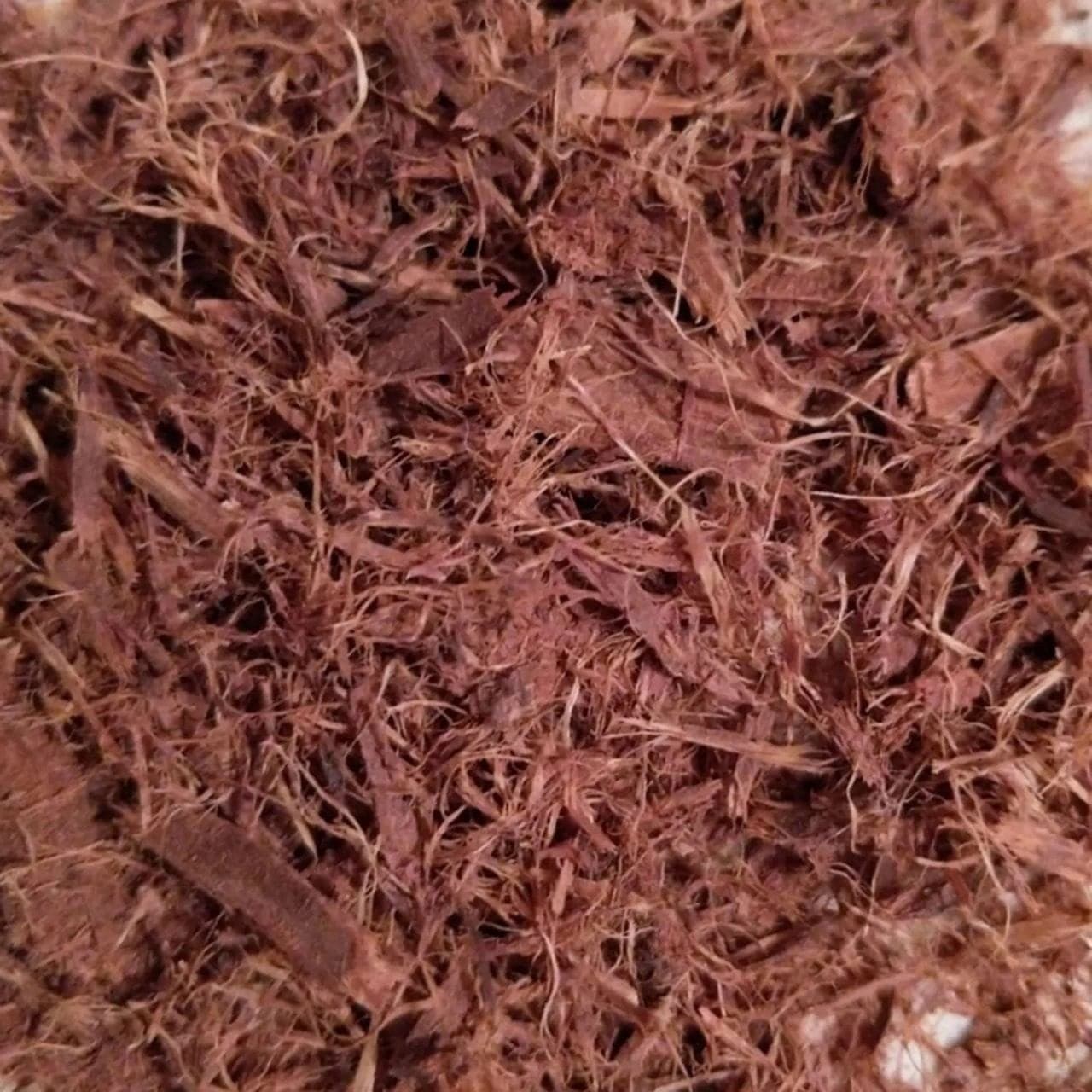
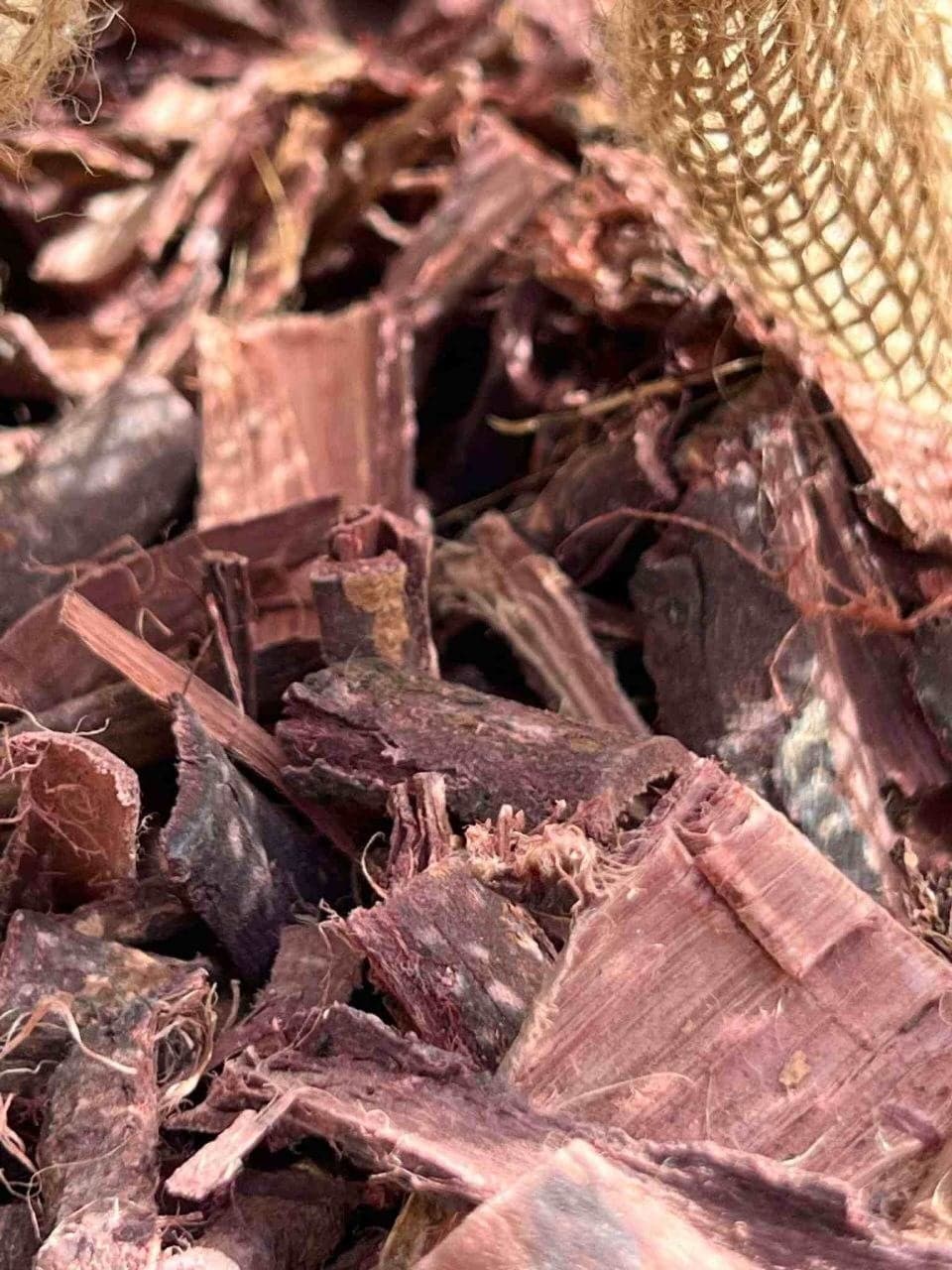
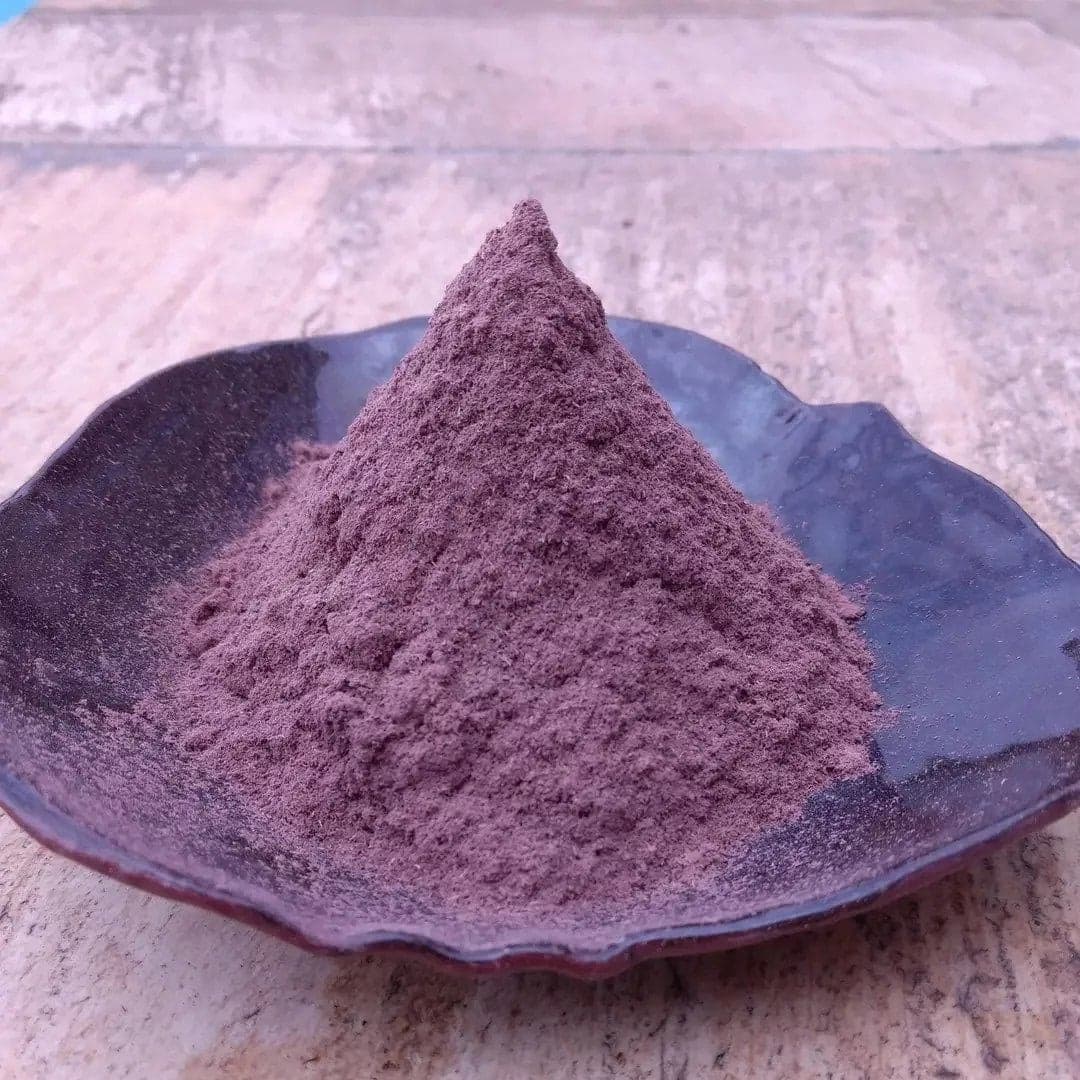
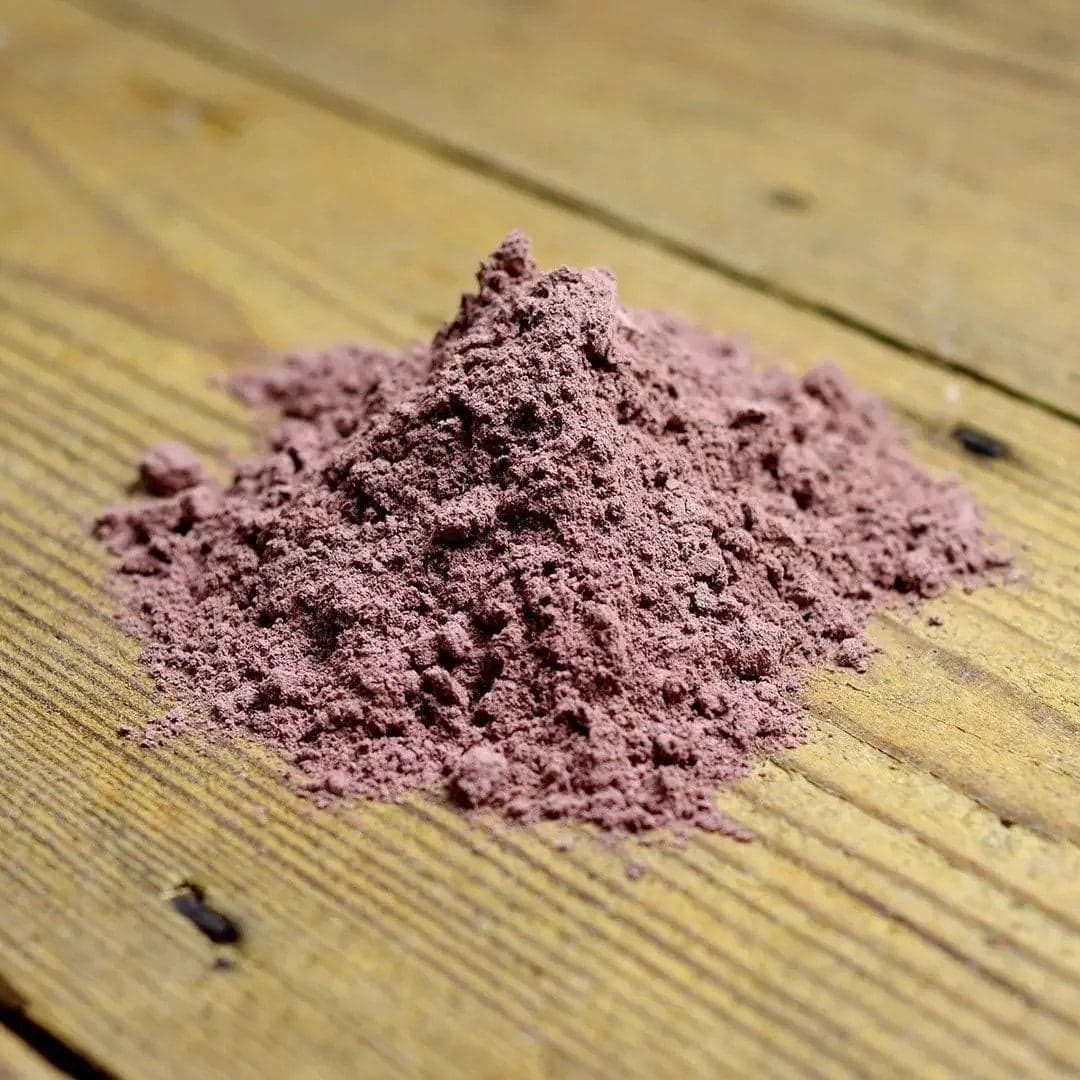
Mimosa hostilis root bark, milled to a fine, even powder. It is the same bark as our shredded and whole cuts, taken all the way down to a powder, and in the bag it reads mauve to red-brown depending on the light.
The plant is Mimosa tenuiflora, still sold under its older name Mimosa hostilis, a thorny tree of the legume family native to northeastern Brazil and southern Mexico. In Brazil it is called jurema preta. The root bark is the part dyers want: it is dense with tannins and with the red-purple pigments that make it one of the few natural dyes that goes straight from bag to pot without a separate mordant for most wool work.
Speed and concentration. A powder has far more surface in contact with the water than a strand of bark, so it gives up its color in a fraction of the simmer time. That makes it the cut for small, controlled jobs: test skeins, dye samples, a single scarf, and soap, where you want color in the oil rather than a pot to strain. Why particle size changes everything in a dye pot goes into the trade-off in detail.
The price of that speed is straining. Powder stays suspended, so a powder bath has to be settled and poured off or run through fine cloth before the fiber goes in, or specks will lodge in the wool. If you are dyeing a full fleece or several pounds of yarn, the shredded cut is easier to lift out and gives more than one bath. The three cuts of Mimosa root bark, and who each one suits compares all three side by side.
On wool and silk, a first bath gives dusky pinks, plum and a warm red-brown; more bark and a longer simmer push it toward burgundy and a deep chocolate. A little alum in the fiber first brightens the pinks. An iron afterbath turns the same bath slate, charcoal or near-black, which is one of the reasons dyers keep a pound of this on the shelf: one material, two very different palettes. Iron as a modifier, and how far to go shows how quickly that shift happens.
The pot's pH moves the color as well. Keep the bath neutral to slightly acidic if you want to stay in the purples, and expect browns if it drifts alkaline. Keeping a bark bath purple instead of brown is the short version of how to hold it there.
Cotton and linen take the color more palely than wool and silk, because plant fibers have no protein for the tannins to bind to. Mordanting them with tannin and then alum first closes most of that gap; wool, silk, cotton and linen in the same bath shows the difference on one set of swatches.
Dyers measure bark against the dry weight of the fiber, written as a percentage "of weight of fiber" (WOF). A pale tint takes about 25 to 40 percent, 4 to 6 ounces for a pound of wool; a mid shade about 50 to 75 percent, 8 to 12 ounces; and the deepest plums up to an equal weight of bark and fiber. Powder gives up its color most completely, so start at the lower end of each range.
That makes a quarter pound enough to learn on with a few test skeins, and a full pound enough for one to two pounds of fiber in mid shades. How much bark per pound of fibre has the full table, and testing a dye before you commit a fleece is worth ten minutes before the first big pot.
Soap makers use the powder for color alone: it gives bars in tones from warm tan to dusky brown-purple depending on how much goes in and how it is added. The usual routes are infusing the powder in part of the recipe's oil and straining it, or adding a small amount at light trace. Start low, since the color deepens as the bar ages over the following weeks. Bark as a colourant in cold process soap walks through both methods.
We make no claim about what the bark does for skin; it is sold here as a colorant.
Sold by weight at one price per pound, in four sizes: 1/4 lb, 1/3 lb, 1/2 lb and 1 lb. The size you pick sets the price shown in the buy box, and that is the price you are quoted. Orders of parcel items from 100 dollars ship free.
Buying for a studio, a class or a soap line? Several pounds at a time are priced individually on the bulk and wholesale page, and a person replies with a quote.
You place your order, a person checks it, and payment details arrive in your order chat and by email; once payment is confirmed, the order is weighed, sealed and shipped from California with tracking. We ship to addresses in the United States only. The shipping policy has the details. Every order is packed in a double-sealed, smell-proof bag that is flushed with nitrogen before it is closed: the nitrogen pushes the oxygen out, so the bark does not oxidize in transit or on your shelf and arrives as fresh as the day it was packed.
Powder keeps well if it stays dry and dark. Reseal the bag after each use, keep it out of a steamy kitchen, and it will still be strong a year from now. See storing root bark so it lasts.
Fine bark powder lifts into the air when it is poured, so weigh it out away from drafts, wear a dust mask and gloves, and keep it away from food, children and pets. Working safely with fine milled bark covers the sensible basics.
This is raw botanical material for dyeing and craft. It is not food, not a supplement and not for human consumption.
Every batch is tested before it is offered for sale, on a full panel rather than potency alone.
What this material is, how to read the report that comes with it, and what the law says where you are.
Mimosa hostilis root bark is the inner bark of the root of Mimosa tenuiflora, a fast-growing tree of north-eastern Brazil and southern Mexico. Dyers buy it for one reason: it is unusually rich in tannin, and tannin on protein fibre gives purple. It is sold by the pound in three cuts.
GuideCheck four things in this order: does the batch code on the report match the bag in your hand, when was it tested, is the laboratory accredited for those tests, and does the report cover species identity and contaminants such as heavy metals and microbes. A report that fails the first check describes different material.
GuideYou order here by sending a request, not a payment. A person checks the stock and your address, then sends payment details in your order chat and by email for the method you chose: Cash App, Chime, Apple Cash or Bitcoin. Once payment arrives, the bark is weighed, nitrogen-sealed and shipped from California with tracking.
It is used as a natural dye for wool, silk, leather and, once mordanted with tannin and alum, cotton and linen, and as a colorant in cold-process soap. The powder is the fastest-releasing cut, which makes it the usual choice for test skeins, small batches and soap. It is sold as raw botanical material and is not for human consumption.
Powder releases color faster and is more concentrated, so it suits small, controlled jobs and soap. Shredded bark is easier to lift out of the pot and gives a second and third bath, so it suits larger dye lots and whole fleeces. Many dyers keep both.
Plan on 25 to 40 percent of the dry fiber weight for a pale tint and 50 to 75 percent for a mid shade, which is 8 to 12 ounces of powder for a pound of wool. Deep plum and burgundy take up to an equal weight. Test a small skein first, since water and fiber change the result.
Not for most wool and silk work: the bark is rich in tannins, which help the color bind on protein fibers. An alum mordant brightens the pinks and improves lightfastness, and cotton or linen need a tannin-then-alum mordant for good depth.
It is sold by the pound in 1/4, 1/3, 1/2 and 1 lb sizes, each at one fixed price. For several pounds at a time, request a quote on the bulk and wholesale page and a person will reply with pricing.
In a double-sealed, smell-proof bag that is flushed with nitrogen before sealing. Nitrogen displaces the oxygen inside the bag, which stops the bark oxidizing, so the color and freshness hold in transit and in storage. Reseal the bag after each use to keep it that way.
Orders ship from California to US addresses only, with tracking once payment is confirmed. Kept sealed, dry and out of the light, the powder holds its color for well over a year.
It is sold as raw botanical material for natural dyeing, soap color, leather work and craft. Dyers use it for rose, plum, burgundy and brown on wool and silk, and grey to charcoal with an iron afterbath. It is not food and it is not for human consumption; at checkout you confirm that is what you are buying it for, and that confirmation is stored with your order.
Shredded for everyday dyeing: it strains cleanly and gives second and third baths from the same bark. Powder for test skeins, small batches and cold-process soap, because it releases color fastest. Whole chips and strips for stocking up, because they keep longest and can be broken or milled when you need them.
Plan on 50 to 75 percent of the dry fiber weight for a mid shade, which is 8 to 12 ounces of bark per pound of wool, or 25 to 40 percent for a pale tint. Deep plum and burgundy take up to an equal weight of bark and fiber. Test a small skein first, because water and fiber change the result.
Yes. Root bark is priced by the pound in 1/4, 1/3, 1/2 and 1 lb sizes, and larger quantities for dye studios, soap makers, schools and resellers are quoted by a person. Use the bulk order page or email sales@mimosalsd.com with the cut and the quantity you need.
Yes. We ship to every US state and the District of Columbia, and your cart shows the delivery option and cost for your address before you order.
After a person has confirmed it. You place your order and choose a payment method; we check the stock and the address it is going to, then send payment details in your order chat on this site and by email. Your order is confirmed once payment arrives. We never ask for card details.
You must be 21 or older. You confirm your age once, when you enter the site, and everything we sell is for adults 21 and over, whatever the product.
Pricing
$37.50/ 1/4 lb
$150 per pound
Total
$37.50
1 × 1/4 lb at $37.50
Your cart is empty
Everything we sell is batch-tested, and we tell you what ships to your state before you add it.
Browse the shop