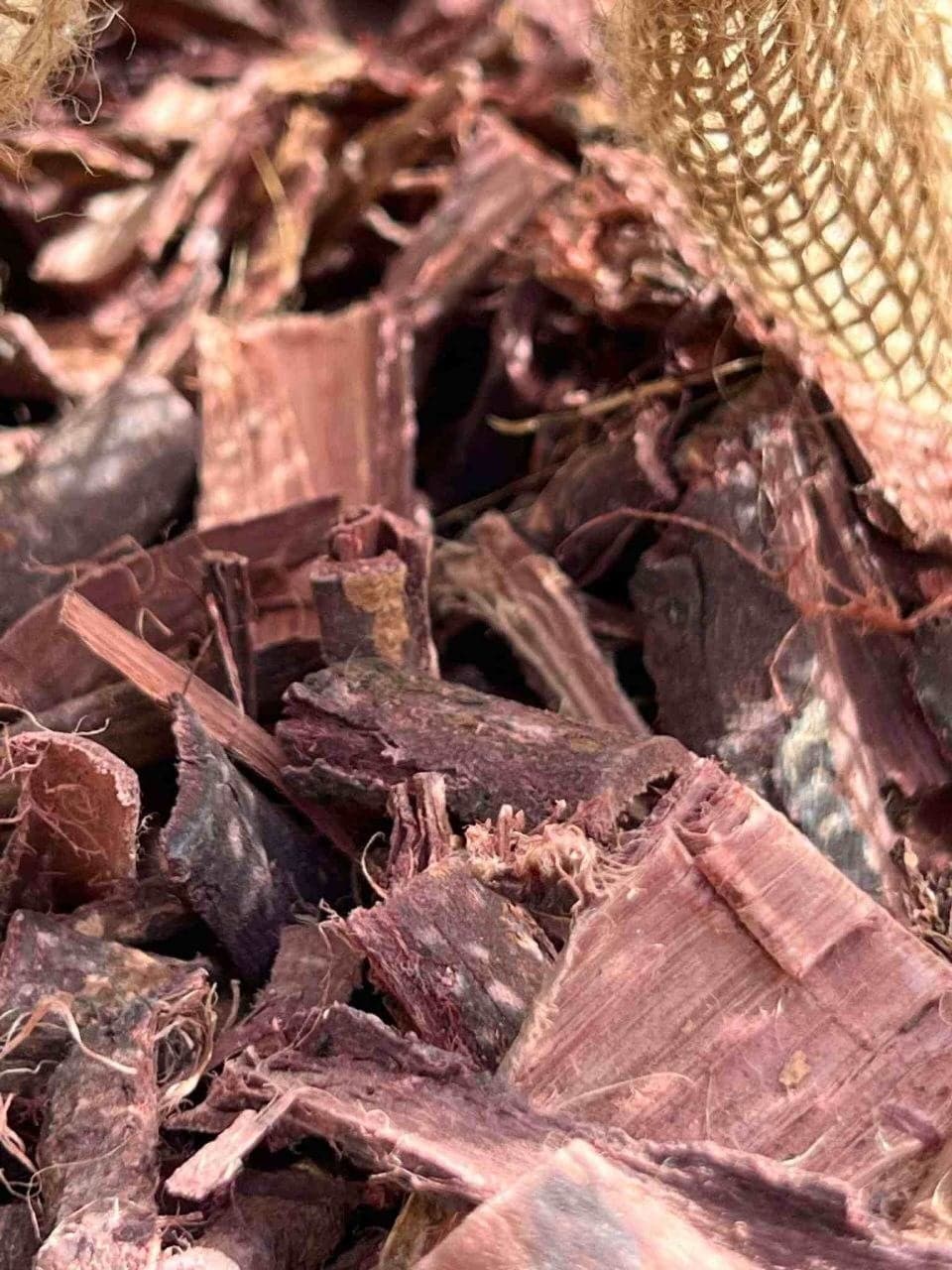
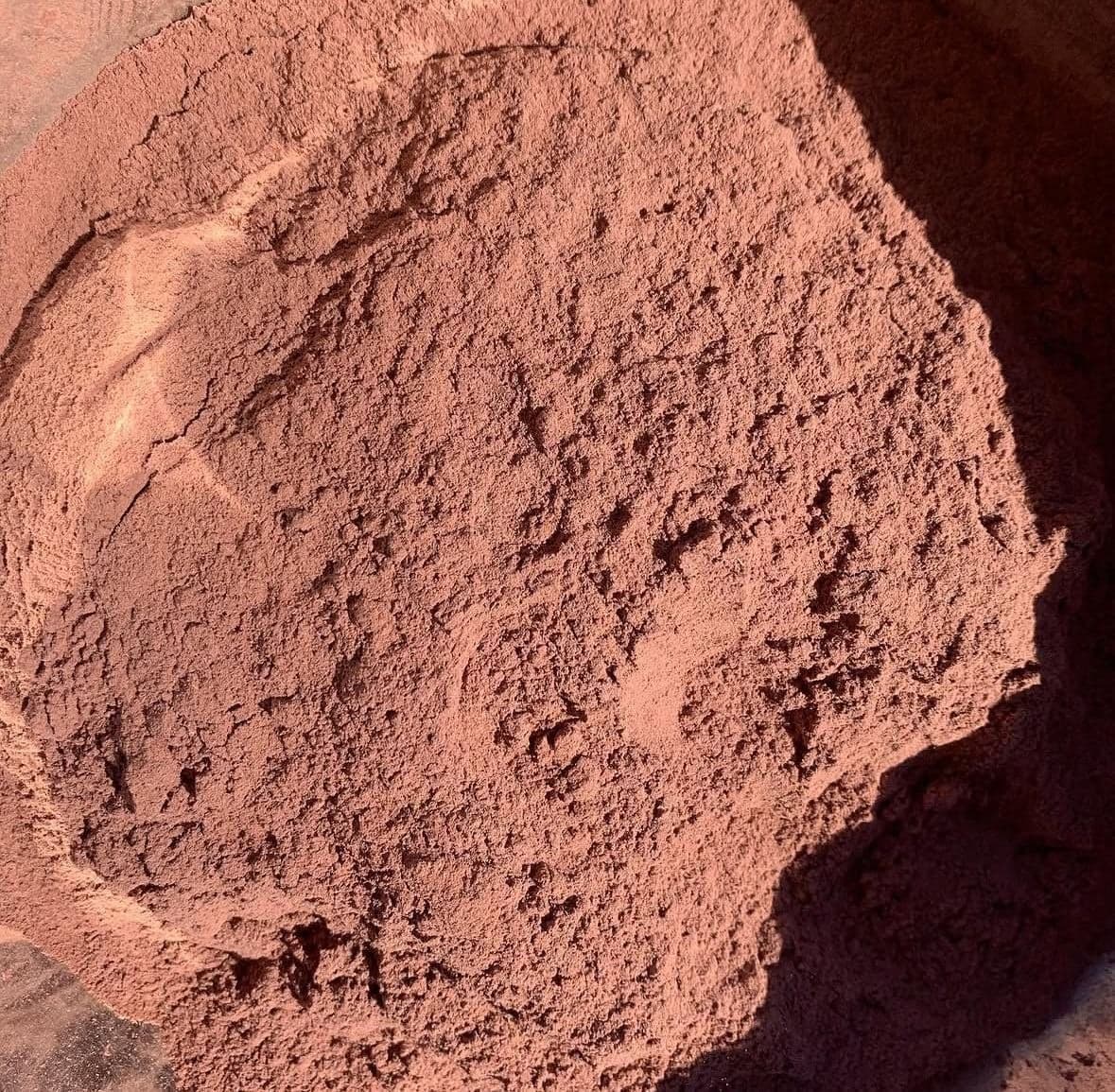
Mimosa Hostilis Root Bark Powder
Botanical use only
$37.501/4 lb
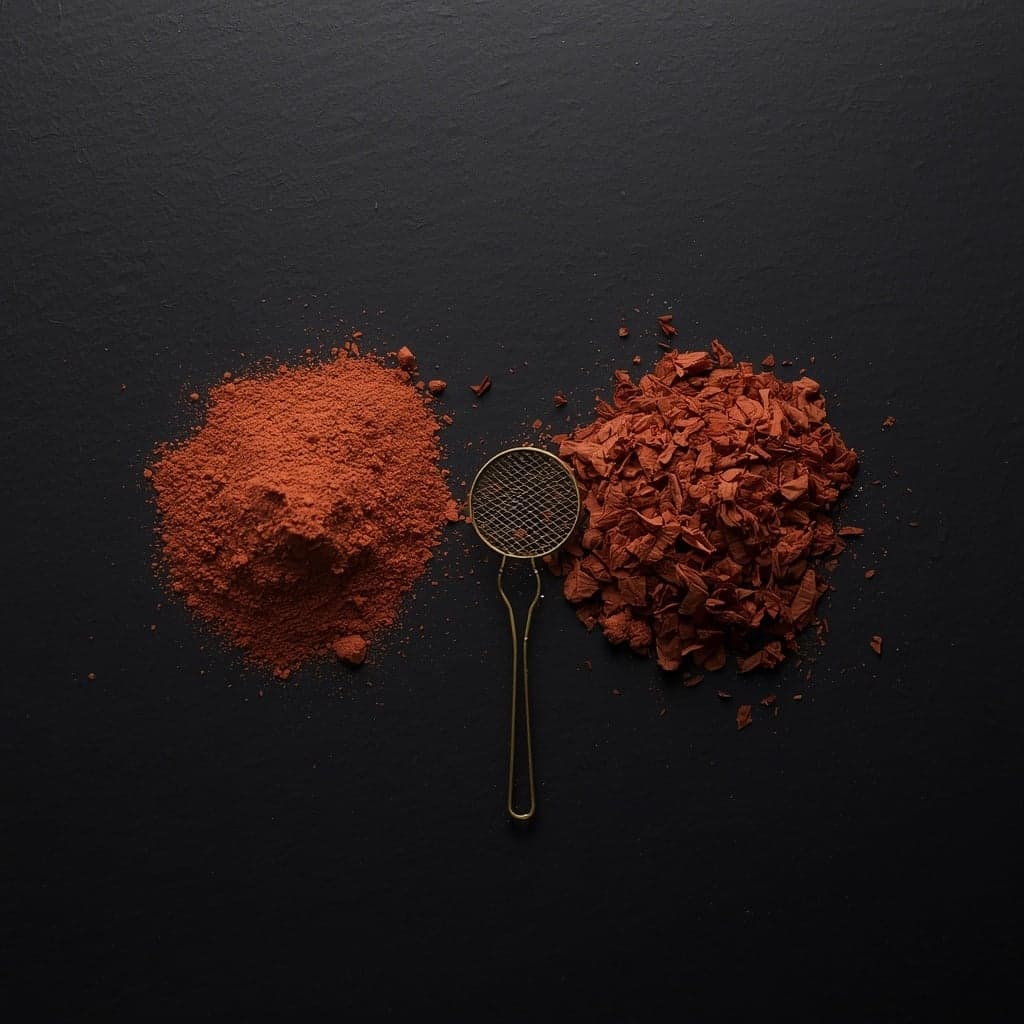
Milling does not add colour to bark. It multiplies the surface where colour crosses into water, and that one change explains why powder works faster, strains harder, floats, spoils sooner and gives no second bath. Understand the mechanism once and the rest follows without a list.
Editorial desk · Written and checked in house · Updated
Two bags of the same bark, cut differently, behave so differently in a pot that people assume they bought two different things. They did not. One number changed, and everything else in this article is a consequence of it.
Colour leaves plant material at the boundary between the material and the water. Grind a chip into powder and you have not created any more colour: you have created enormously more boundary, because the inside of every fragment becomes an outside.
That is the whole explanation. What follows is what it looks like from the pot.
Powder that has soaked overnight is usually giving everything it has within an hour of reaching temperature; the same weight of coarse material may want three. This is useful when you are running a sequence of tests and want each bath ready quickly, and it is a nuisance when you wanted a long slow bath and the colour is spent before the fibre has settled into it.
The same speed is why the second bath disappears. Coarse material holds colour in reserve simply because water has not reached the middle of it yet. Powder has no middle.
Coarse fragments sink or can be lifted out. Fine particles do neither: they stay suspended, they float as often as they settle, and decanting moves them along with the liquid. They find their way between the plies of a skein and dry there as dark flecks.
In practice this means powder needs a real filter rather than a careless pour, and it means the material wants to be held in a mesh bag from the start if the piece being dyed is anything you cannot rinse aggressively afterwards.
Milled plant material lifts into the air when a bag is opened, weighed or tipped. That is true of flour, paprika and sawdust, and it is true here. It is a handling matter rather than anything peculiar to this species, and a fitted dust mask, a slow hand and a wiped bench cover it.
The surface that lets colour out also lets moisture in. Powder is the cut most punished by a humid cupboard: it cakes, and caked powder never disperses evenly again. Stripped root, at the other end of the scale, is the one that forgives a poor storage spot for longest.
Two things are worth stating because people assume otherwise. The palette is identical: powder reaches the same plums, burgundies and roses at the same percentages of fibre weight. And boiling browns it exactly as it browns a coarse bath, so a fast bath is not permission to rush the heat. If anything the temptation is stronger, because everything else about powder is quick.
Everything described here is raw botanical material sold for dyeing, soap making and craft work. It is not food, it is not a supplement, and it is not for human consumption. Nothing on this page is a recommendation to put any of it in or on a body.

We are a US business first, but we also ship Mimosa hostilis and sassafras root bark to other countries. Each international order is quoted separately, because the cost of sending bark abroad depends on its weight. Ask through the bulk enquiry form, choose Outside the United States, and check your own country's import rules for plant material before you order.
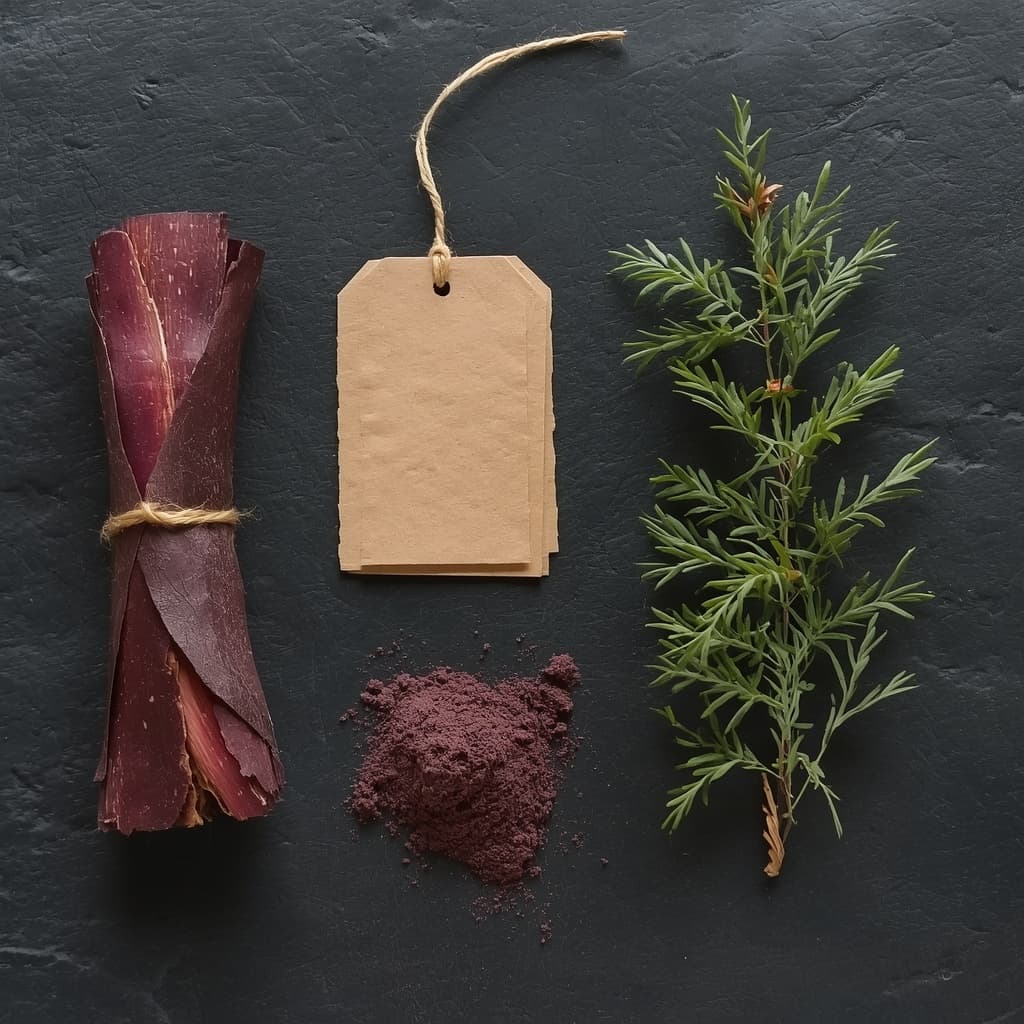
Mimosa hostilis and Mimosa tenuiflora are the same tree. Mimosa tenuiflora is the botanical name in current use and Mimosa hostilis is an older synonym that the dye trade kept. Jurema preta and tepezcohuite are its common names. It is not the leather trade's mimosa, the sensitive plant, or the pink-flowered mimosa tree of American gardens.
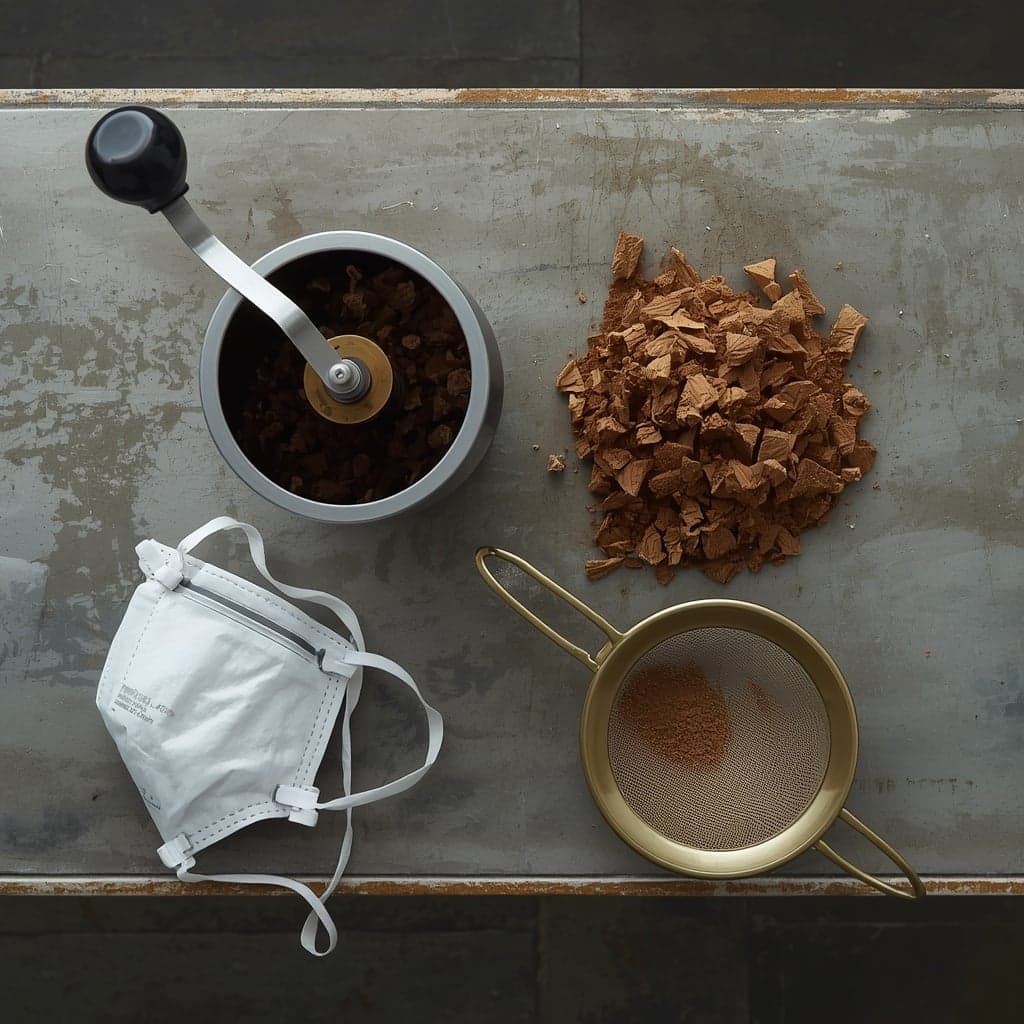
A coffee or spice grinder will take shredded bark to a usable powder in short bursts, sieved between passes. It is worth doing when you want one cut in the cupboard and both in the pot; it is not worth doing for volume, because domestic grinders overheat and the dust is considerable.
Your cart is empty
Everything we sell is batch-tested, and we tell you what ships to your state before you add it.
Browse the shop