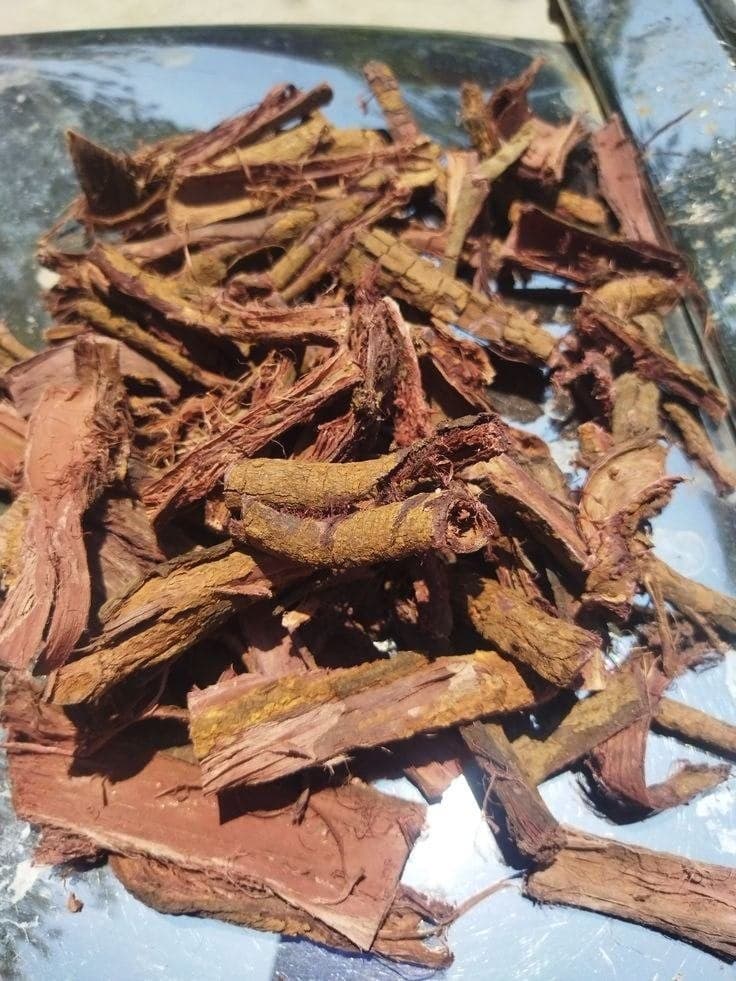
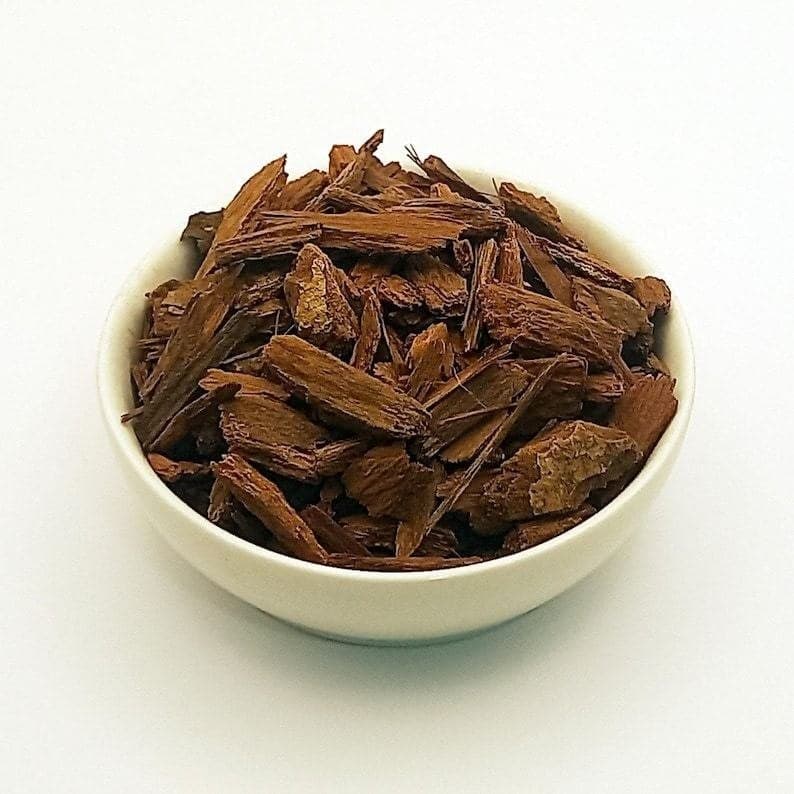
Sassafras Root Bark, Cut (Sassafras albidum)
Botanical use only
$42.501/4 lb
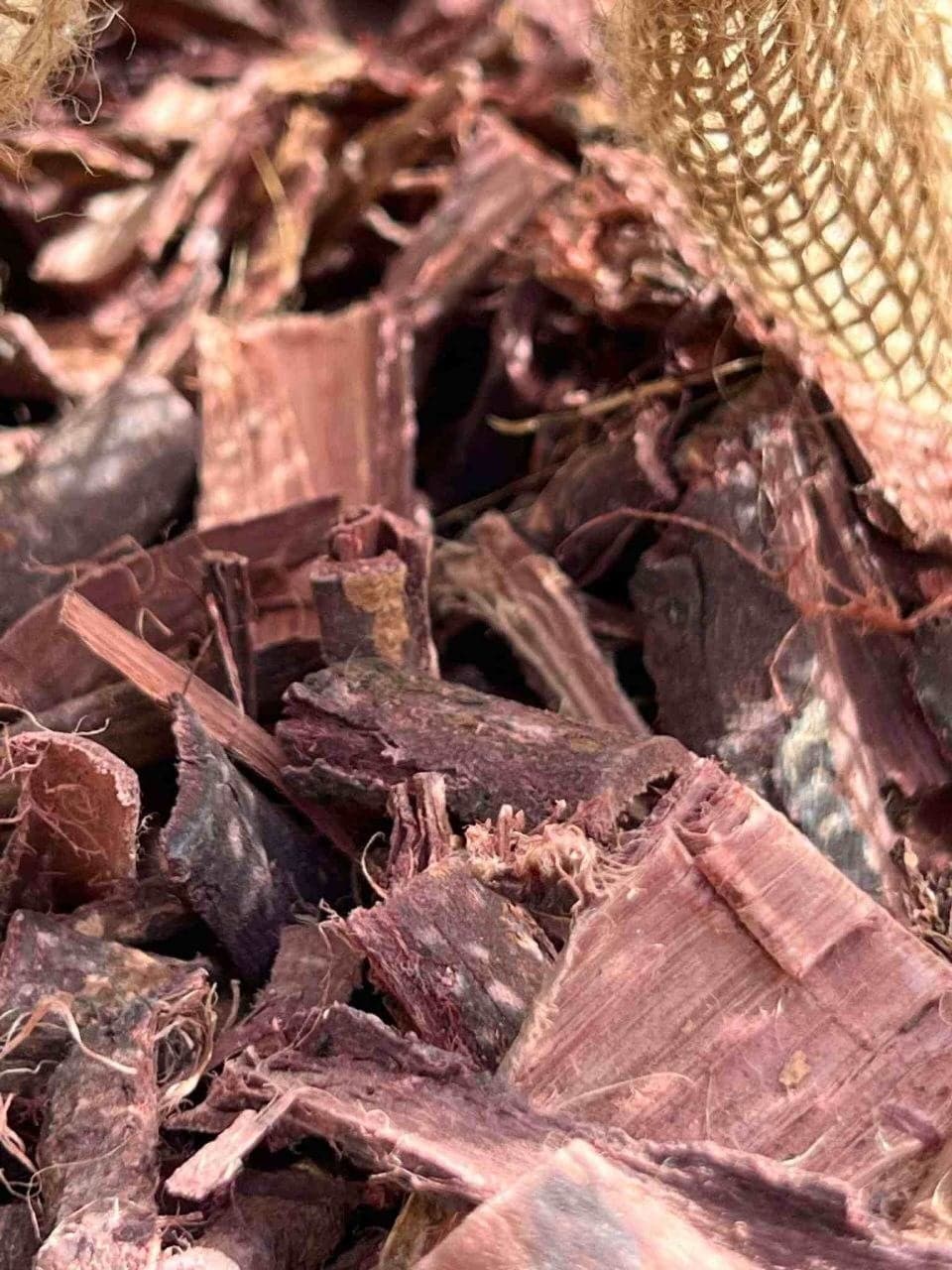
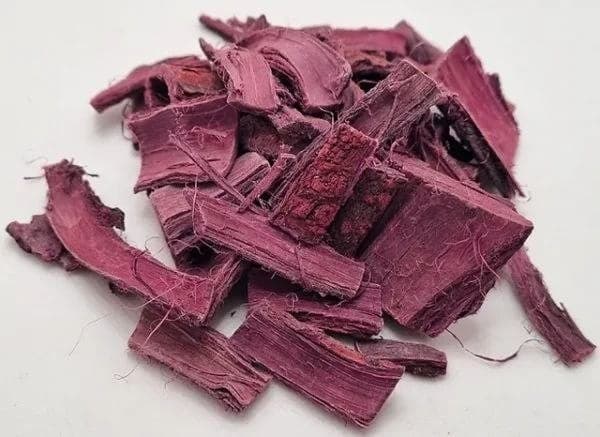
Whole Mimosa hostilis root bark in thick chips and strips, dark outside and pink-purple within. The least processed cut, the longest-keeping, sold by the pound from 1/4 lb.
Mimosa hostilis root bark as it comes off the root: thick chips and curled strips, weathered dark or tan on the outside and a strong pink-purple to red on the inner face. That inner color is the dye. This is the least processed of our three cuts, and the one to buy if you want bark that will sit on the shelf for a long time before it meets a pot.
The plant is Mimosa tenuiflora, long sold as Mimosa hostilis, a thorny legume tree of northeastern Brazil and southern Mexico known locally as jurema preta. Its root bark carries a heavy load of tannins and red-purple pigments, the reason it is prized by dyers and leather workers alike.
It keeps. With less cut surface exposed to air and light, whole bark holds its color longer than any shredded or milled form, so it suits dyers who buy once a year and studios keeping a stock.
It also lets you choose your own cut. Break the chips up by hand for a slow bath, soak them overnight to soften before simmering, or mill a portion to powder when a job calls for it. Milling your own powder from bark explains how. If you would rather skip that step, the shredded and powder cuts are ready for the pot.
Break or cut the pieces small, cover them with water and leave them to soak overnight; the water will already be turning pink by morning. Then bring it to a gentle simmer and hold it there until the bath is as deep as you want, lift the bark out, and add your wetted fiber. Chips take longer to give up their color than shredded bark, and they give repeat baths the same way. See getting a second and third bath from one batch.
On wool and silk the color runs from rose and plum to burgundy and deep brown with more bark and time, and shifts to slate and charcoal with an iron afterbath. Keep the pot neutral to slightly acidic to stay in the purples. Keeping a bark bath purple instead of brown covers the details.
Tannin-rich barks are the traditional material of vegetable tanning, and Mimosa root bark is among the richest. Whole bark suits long, slow soaks for leather, and on vegetable-tanned hides it deepens the surface to warm red-browns. Dyeing leather with bark has the method.
Measure against the dry weight of the fiber. A mid shade takes about 50 to 75 percent of the fiber's weight, 8 to 12 ounces of bark to a pound of wool, and a pale tint 25 to 40 percent. Whole bark releases its color more slowly than the other cuts, so give it an overnight soak and a longer simmer to get full value from it. How much bark per pound of fibre has a full table.
Sold by weight at one price per pound, in 1/4 lb, 1/3 lb, 1/2 lb and 1 lb sizes, with the price for your size shown in the buy box. Parcel orders from 100 dollars ship free. For several pounds, ask for a quote on the bulk and wholesale page.
You place your order, a person checks it and sends payment details in your order chat, and the order ships from California with tracking once payment is confirmed. US addresses only; see the shipping policy. Every order is packed in a double-sealed, smell-proof bag that is flushed with nitrogen before it is closed: the nitrogen pushes the oxygen out, so the bark does not oxidize in transit or on your shelf and arrives as fresh as the day it was packed.
Store sealed, dry and dark and whole bark will keep its color for years. Keep it away from children and pets, use separate pots for dyeing and cooking, and wear gloves around a hot bath. This is raw botanical material for dyeing and craft. It is not food, not a supplement and not for human consumption.
Every batch is tested before it is offered for sale, on a full panel rather than potency alone.
What this material is, how to read the report that comes with it, and what the law says where you are.
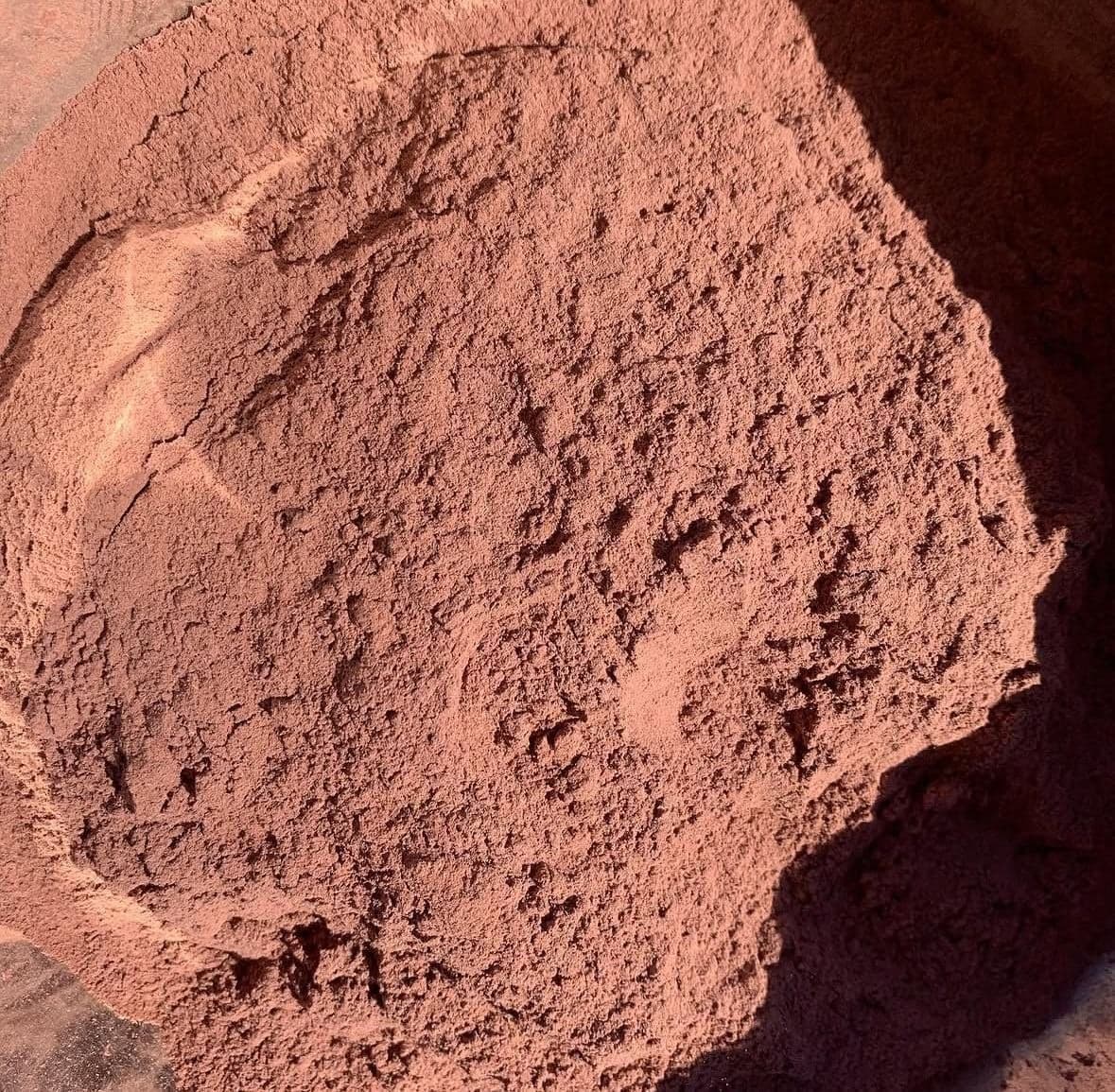
Mimosa hostilis root bark is the inner bark of the root of Mimosa tenuiflora, a fast-growing tree of north-eastern Brazil and southern Mexico. Dyers buy it for one reason: it is unusually rich in tannin, and tannin on protein fibre gives purple. It is sold by the pound in three cuts.
GuideCheck four things in this order: does the batch code on the report match the bag in your hand, when was it tested, is the laboratory accredited for those tests, and does the report cover species identity and contaminants such as heavy metals and microbes. A report that fails the first check describes different material.
GuideYou order here by sending a request, not a payment. A person checks the stock and your address, then sends payment details in your order chat and by email for the method you chose: Cash App, Chime, Apple Cash or Bitcoin. Once payment arrives, the bark is weighed, nitrogen-sealed and shipped from California with tracking.
It is the root bark in thick chips and strips, dark outside and pink-purple within, before any shredding or milling. It is the longest-keeping cut and is broken down or soaked before use. It is sold as raw botanical material for dyeing and craft and is not for human consumption.
Break the chips small, soak them overnight in water, then simmer gently until the bath is as deep as you want. Lift the bark out before adding wetted fiber, and reuse it for paler second and third baths.
It stores longest and lets you choose your own cut, but it is slower to use. Shredded bark is the everyday dyeing cut, and powder is fastest for small batches and soap.
Yes. It is one of the richest tannin barks, and on vegetable-tanned leather it deepens the surface to warm red-browns. Long, slow soaks suit whole bark best.
In a double-sealed, smell-proof bag that is flushed with nitrogen before sealing. Nitrogen displaces the oxygen inside the bag, which stops the bark oxidizing, so the color and freshness hold in transit and in storage. Reseal the bag after each use to keep it that way.
From California, to US addresses only, with tracking once payment is confirmed. Parcel orders from 100 dollars ship free.
It is sold as raw botanical material for natural dyeing, soap color, leather work and craft. Dyers use it for rose, plum, burgundy and brown on wool and silk, and grey to charcoal with an iron afterbath. It is not food and it is not for human consumption; at checkout you confirm that is what you are buying it for, and that confirmation is stored with your order.
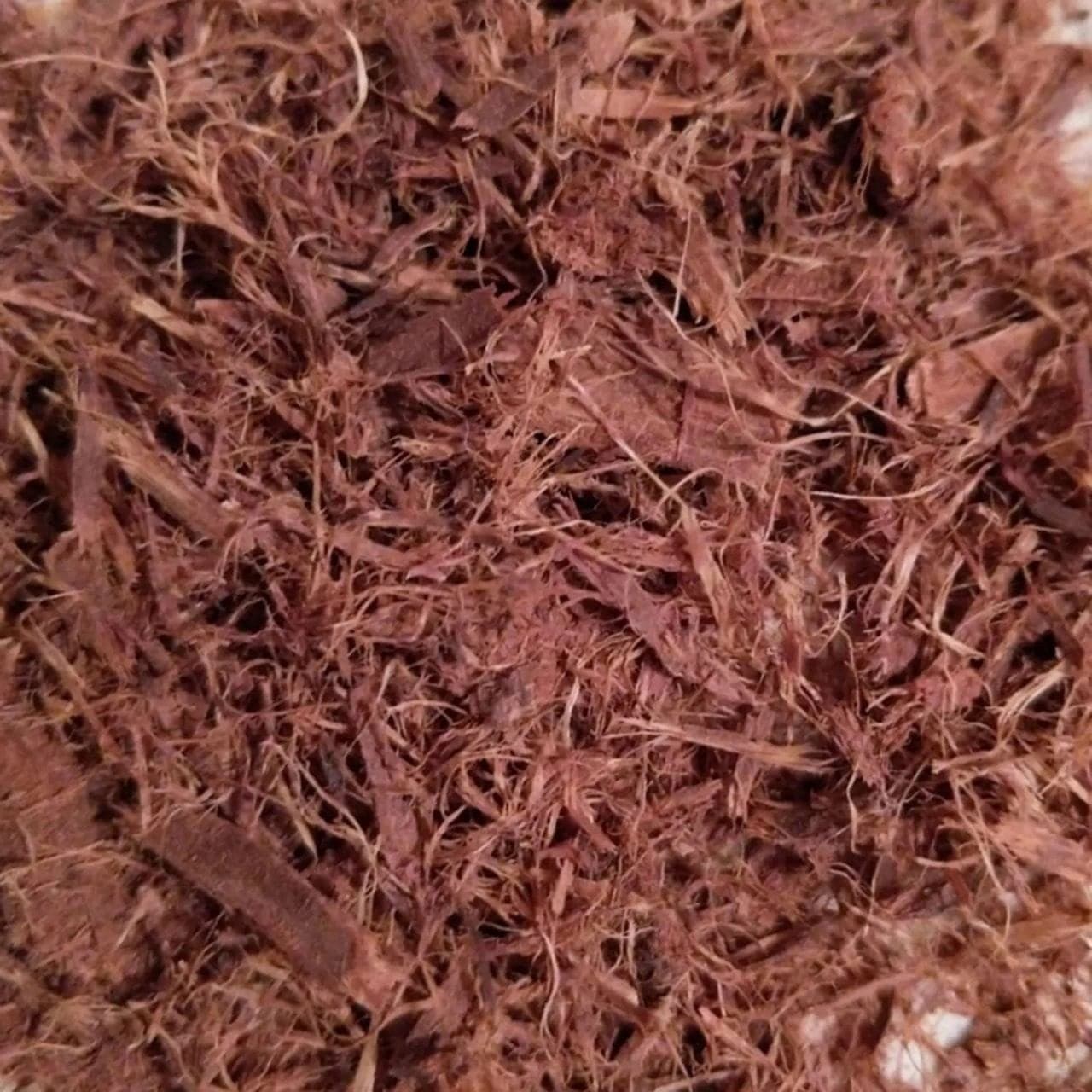
Shredded for everyday dyeing: it strains cleanly and gives second and third baths from the same bark. Powder for test skeins, small batches and cold-process soap, because it releases color fastest. Whole chips and strips for stocking up, because they keep longest and can be broken or milled when you need them.
Plan on 50 to 75 percent of the dry fiber weight for a mid shade, which is 8 to 12 ounces of bark per pound of wool, or 25 to 40 percent for a pale tint. Deep plum and burgundy take up to an equal weight of bark and fiber. Test a small skein first, because water and fiber change the result.
Yes. Root bark is priced by the pound in 1/4, 1/3, 1/2 and 1 lb sizes, and larger quantities for dye studios, soap makers, schools and resellers are quoted by a person. Use the bulk order page or email sales@mimosalsd.com with the cut and the quantity you need.
Yes. We ship to every US state and the District of Columbia, and your cart shows the delivery option and cost for your address before you order.
After a person has confirmed it. You place your order and choose a payment method; we check the stock and the address it is going to, then send payment details in your order chat on this site and by email. Your order is confirmed once payment arrives. We never ask for card details.
You must be 21 or older. You confirm your age once, when you enter the site, and everything we sell is for adults 21 and over, whatever the product.
Pricing
$32.50/ 1/4 lb
$130 per pound
Total
$32.50
1 × 1/4 lb at $32.50
Your cart is empty
Everything we sell is batch-tested, and we tell you what ships to your state before you add it.
Browse the shop