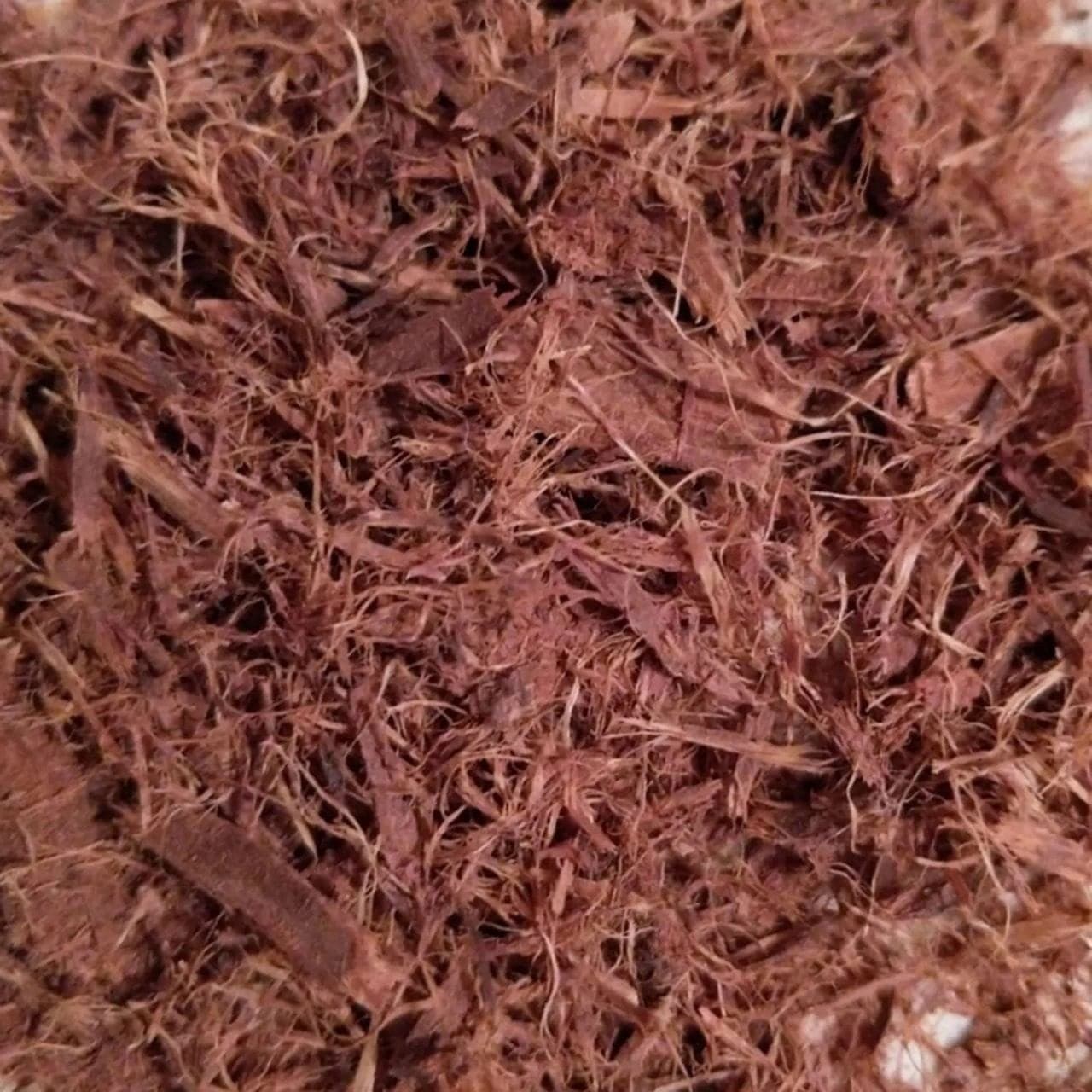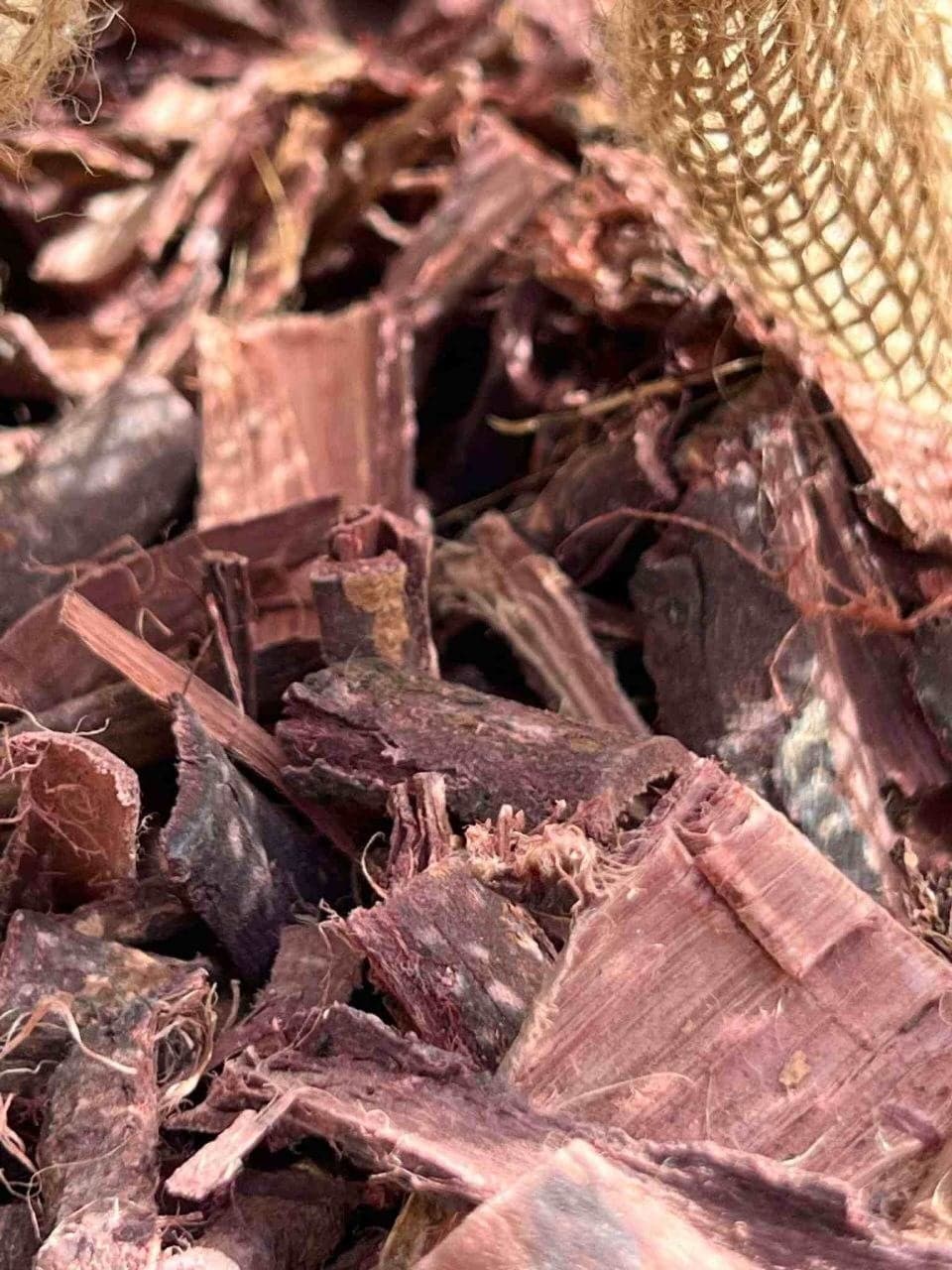
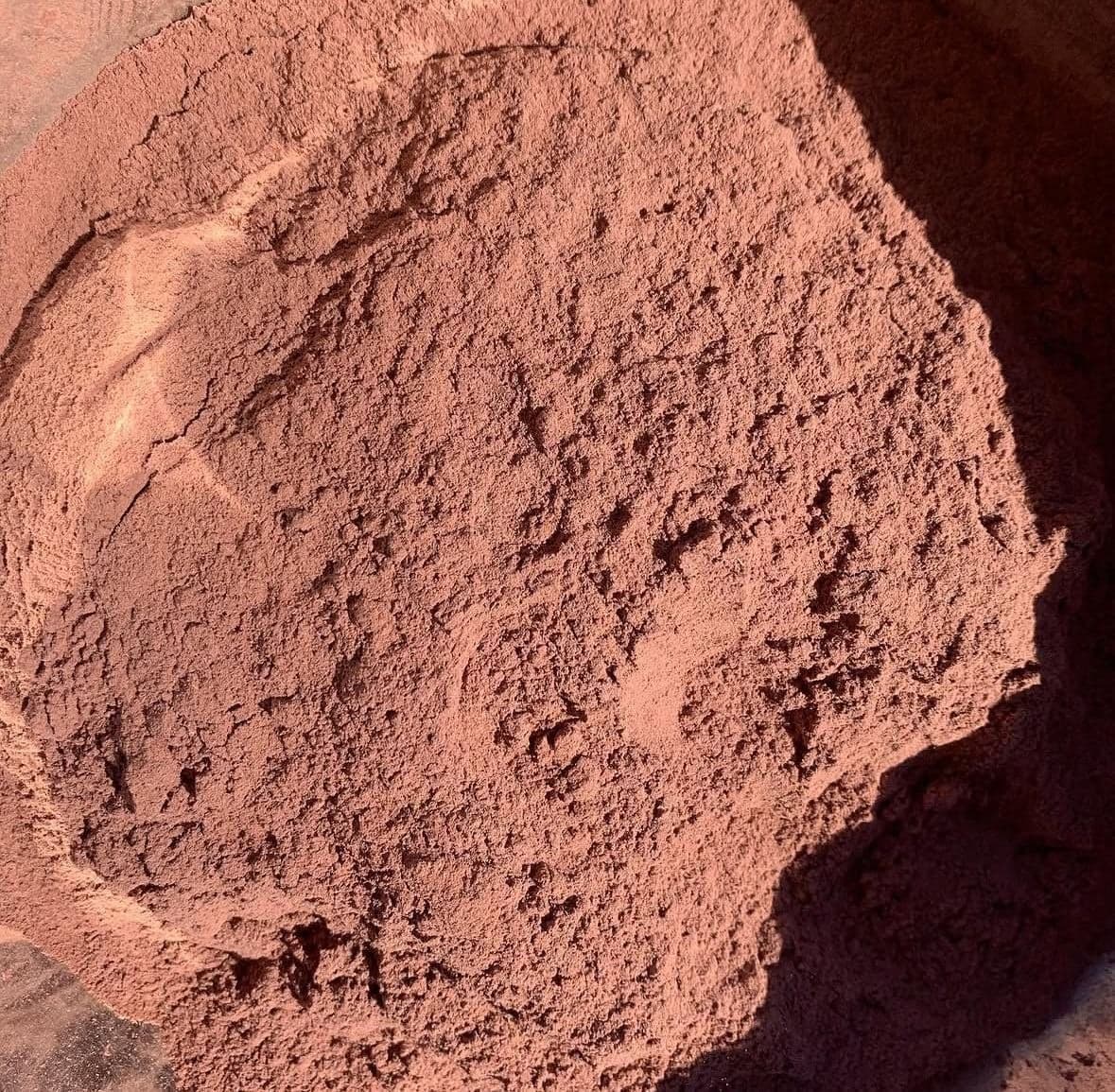
Mimosa Hostilis Root Bark Powder
Botanical use only
$37.501/4 lb
Mimosa hostilis root bark is the inner bark of the root of Mimosa tenuiflora, a fast-growing tree of north-eastern Brazil and southern Mexico. Dyers buy it for one reason: it is unusually rich in tannin, and tannin on protein fibre gives purple. It is sold by the pound in three cuts.
Editorial desk · Written and checked in house · Updated
This page is the short version of everything else in this section. If you read one thing before your first pound arrives, read this.
## The tree, and which part is sold
Mimosa tenuiflora — the name Mimosa hostilis is still the one the trade uses — is a small, fast-growing tree found across north-eastern Brazil and into southern Mexico, where it is known as jurema and as tepezcohuite. It regrows quickly after cutting and after fire, which is why the root bark is harvested as a by-product of land already being worked rather than from anything rare.
What is sold is the inner bark of the root: stripped off, dried, and then either left in lengths, cut coarse, or milled to a powder.
## Why dyers want it
Tannin. The root bark carries an unusually heavy tannin load, and tannins bond readily to the protein in wool and silk. That bond is what makes the colour stay, and it is why this material gives depth on animal fibre that most plant colours cannot reach. On cotton and linen it needs more work and lands paler and browner.
The colour range runs from dusty rose through aubergine to maroon, with slate and charcoal available through an iron modifier. It is not a reliable source of bright anything, and it browns if you boil it.
## The three cuts
| Cut | Behaves like | Suits |
| --- | --- | --- |
| Powder | Fast, strong, needs straining | Small batches, soap, test pots |
| Shredded | Slower, easy to strain, re-baths well | Larger fibre work |
| Stripped | Slowest, closest to raw | Long cold baths, leather |
The cut changes the speed and the handling, not the colour. Full detail in [the three cuts of mimosa root bark](/blog/the-three-cuts-of-mimosa-root-bark) and [why particle size changes everything in a dye pot](/blog/why-particle-size-changes-everything-in-a-dye-pot).
## The five numbers worth memorising
- **80°C / 175°F** — the working temperature. Boiling turns purple to brown and cannot be undone. - **10 to 15%** — alum, as a percentage of dry fibre weight. - **50 to 100%** — bark, as a percentage of dry fibre weight. - **pH 5 to 8** — the safe range for wool and silk. - **1 to 2%** — iron, if you want slate rather than purple.
Every percentage is of the **dry** weight of the fibre, weighed before it is wetted. That one habit prevents more disappointment than any other.
## The order to learn it in
1. [Mordant properly](/blog/mordanting-wool-before-a-bark-bath) — alum fully dissolved, an hour just under a simmer, cooled in the pot. 2. [Hold the temperature down](/blog/keeping-a-bark-bath-purple) — this is the one fault that cannot be corrected. 3. [Weigh the bark against the fibre](/blog/weighing-bark-against-fibre) and write the ratio down. 4. [Test on a scrap first](/blog/testing-a-dye-before-you-commit-a-fleece). Every batch differs. 5. Then start moving [pH](/blog/using-ph-to-steer-the-shade) and [iron](/blog/iron-as-a-modifier-how-far-to-go), one at a time.
## Storage and safety in two lines
Dry, dark, sealed and off the floor; kept that way it holds its strength for years, and [caking is the warning sign](/blog/storing-root-bark-so-it-lasts). Fine powder makes an airborne dust, so open the bag low in still air and wear a fitted mask when weighing or milling it — [the full list is here](/blog/working-safely-with-fine-milled-bark).
## What this material is not
It is a raw botanical material sold for dyeing, soap making and craft work. It is not food, it is not a supplement, and it is not for human consumption. Our checkout asks you to confirm that intended use, and we would rather lose the sale than blur it.
Powder, shredded bark and stripped root are one material cut three ways. Powder gives colour fastest and filters worst. Shredded sits in the middle and is what most regular dyers settle on. Stripped root keeps longest and asks for the most preparation before it is useful.
Milling does not add colour to bark. It multiplies the surface where colour crosses into water, and that one change explains why powder works faster, strains harder, floats, spoils sooner and gives no second bath. Understand the mechanism once and the rest follows without a list.
Tannins bind to protein and to metal ions. That single property explains why tannin-rich bark takes so strongly on wool and silk, why it needs help on cotton, why a pinch of iron darkens a whole pot, and why hard water quietly dulls a colour you had judged in the jar.
Bark does not expire on a date. It is spoiled by damp, heat and light, in that order. Sealed, dry, dark and at an even temperature, a bag holds its colour for years; in a garage that swings from freezing to forty degrees, powder cakes and a year is optimistic.
A pound of root bark dyes roughly one to two pounds of wool at useful depth, and two or three times that if you work the exhaust baths. Buying one larger batch also keeps colour consistent across a run, which matters more than the saving for anyone selling finished work.
A coffee or spice grinder will take shredded bark to a usable powder in short bursts, sieved between passes. It is worth doing when you want one cut in the cupboard and both in the pot; it is not worth doing for volume, because domestic grinders overheat and the dust is considerable.
Any finely milled plant material makes an airborne dust that irritates eyes, nose and airways. Open the bag at waist height in still air, wear a fitted P2 or N95 mask when weighing or milling, wipe surfaces damp rather than sweeping, and keep it away from food areas and pets.
Sassafras albidum is a small deciduous tree of eastern North America, recognised by three leaf shapes on the same branch: unlobed oval, two-lobed mitten and three-lobed. Its aromatic root bark is used by dyers for rose-tan and orange-brown shades, and greys with an iron modifier.
One bath, start to finish: scour the fibre, mordant it with alum at twelve per cent of its dry weight, soak the bark overnight, hold the pot at eighty degrees for an hour, and let it cool with the fibre in it. Everything else in this section is a variation on those five steps.
Written and checked in house
Everything here is written by the people who weigh, pack and answer the phone. We publish the working numbers — ratios, temperatures, quantities — and where a figure depends on your water or your fibre we say so instead of rounding it into a promise.
Your cart is empty
Everything we sell is batch-tested, and we tell you what ships to your state before you add it.
Browse the shop