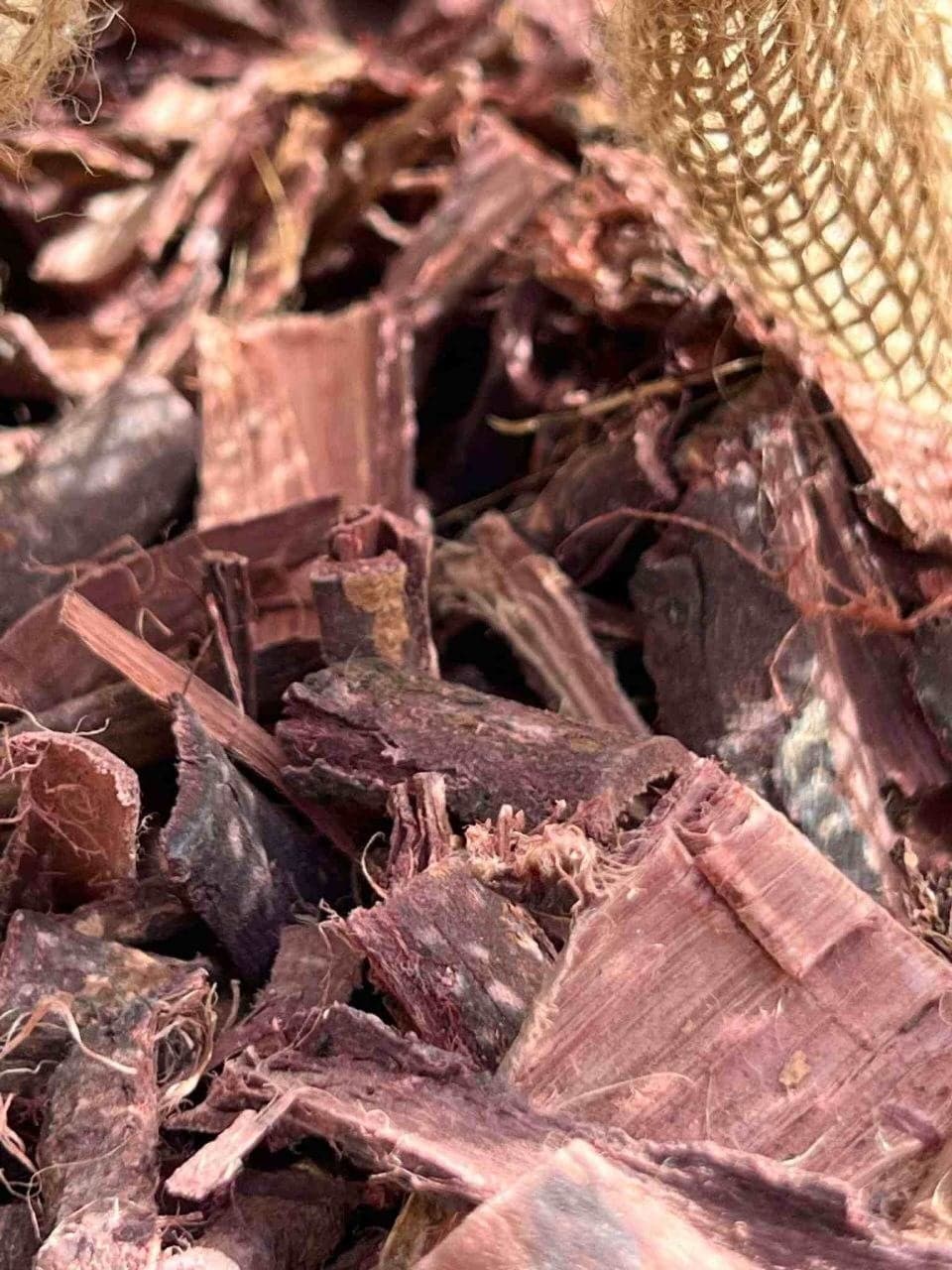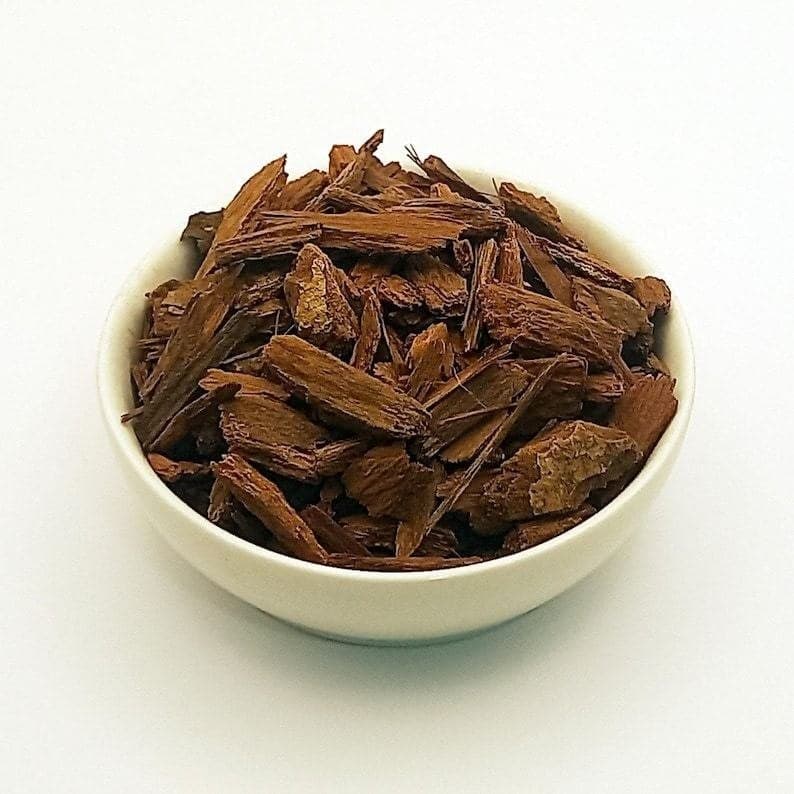
Sassafras Root Bark, Cut (Sassafras albidum)
Botanical use only
$42.501/4 lb
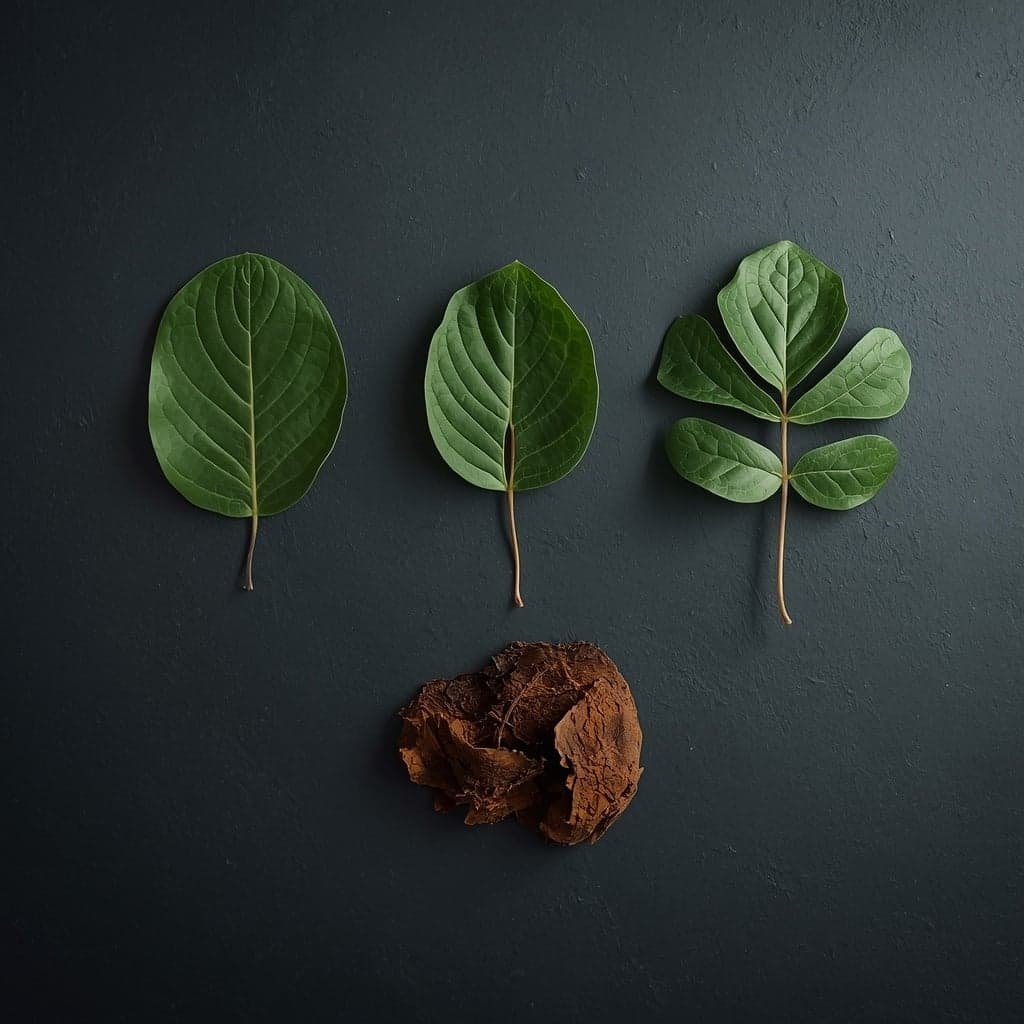
Sassafras albidum is a small deciduous tree of eastern North America, recognised by three leaf shapes on the same branch: unlobed oval, two-lobed mitten and three-lobed. Its aromatic root bark is used by dyers for rose-tan and orange-brown shades, and greys with an iron modifier.
Editorial desk · Written and checked in house · Updated
Two different trees, two different continents, two different colours. Sassafras is not a substitute for mimosa root bark and does not behave like it, so it is worth knowing on its own terms.
Sassafras albidum is a deciduous tree of the laurel family, native to eastern North America — broadly from southern Ontario and Maine down to Florida and west to Texas. It is usually a small tree of twenty to sixty feet, often growing in thickets at the edges of woodland and along fence lines, and it spreads readily from root suckers.
The leaves are the giveaway, because one tree carries three shapes at once:
All three appear on the same branch, which almost nothing else does. Add the bright yellow-to-orange autumn colour, the green twigs, and the aroma when a twig or root is scratched, and identification is straightforward.
| Mordant or modifier | Typical shade on wool |
|---|---|
| Alum | Rose-tan, warm apricot, soft orange-brown |
| No mordant | Weak, uneven — mordant it |
| Iron | Grey-brown to slate, muted |
| Alkali shift | Warmer, redder |
It sits in a different part of the colour wheel from mimosa root bark, which runs purple to maroon, and the two overdye well precisely because of that. A pale sassafras ground under a short mimosa bath gives a warm plum that neither material reaches alone.
Method is the same as any tannin bark: scour, mordant with alum, cold soak overnight, hold the bath at about 80°C rather than boiling it, and strain before the fibre enters. See mordanting wool before a bark bath.
Colour varies more than mimosa's does. Root, root bark, bark and twig all give different strengths, and season affects it. Test every batch before committing good fibre.
It is sold here as a dye material. We make no claim about any other use, historical or otherwise, and nothing about this species is offered as a food, a flavouring or a supplement.
Everything described here is raw botanical material sold for dyeing, soap making and craft work. It is not food, it is not a supplement, and it is not for human consumption. Nothing on this page is a recommendation to put any of it in or on a body.

We are a US business first, but we also ship Mimosa hostilis and sassafras root bark to other countries. Each international order is quoted separately, because the cost of sending bark abroad depends on its weight. Ask through the bulk enquiry form, choose Outside the United States, and check your own country's import rules for plant material before you order.
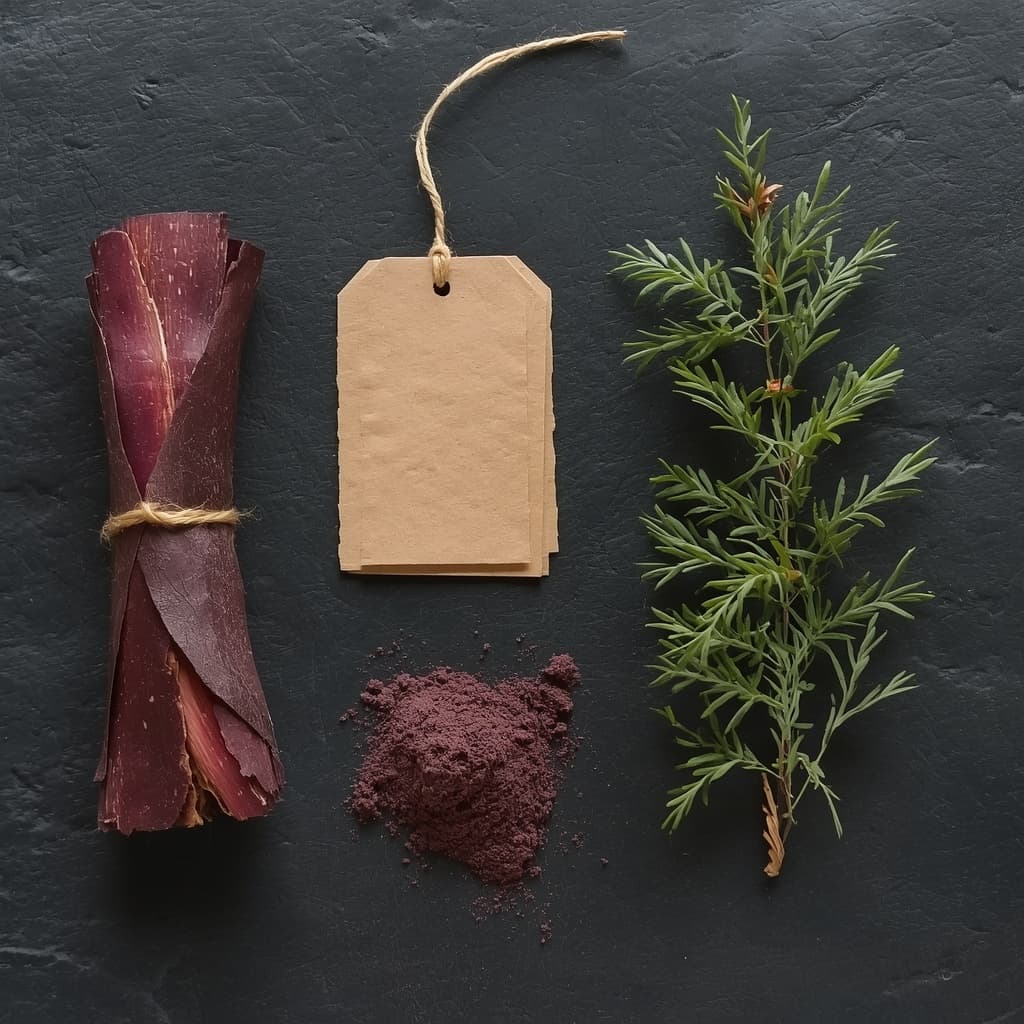
Mimosa hostilis and Mimosa tenuiflora are the same tree. Mimosa tenuiflora is the botanical name in current use and Mimosa hostilis is an older synonym that the dye trade kept. Jurema preta and tepezcohuite are its common names. It is not the leather trade's mimosa, the sensitive plant, or the pink-flowered mimosa tree of American gardens.
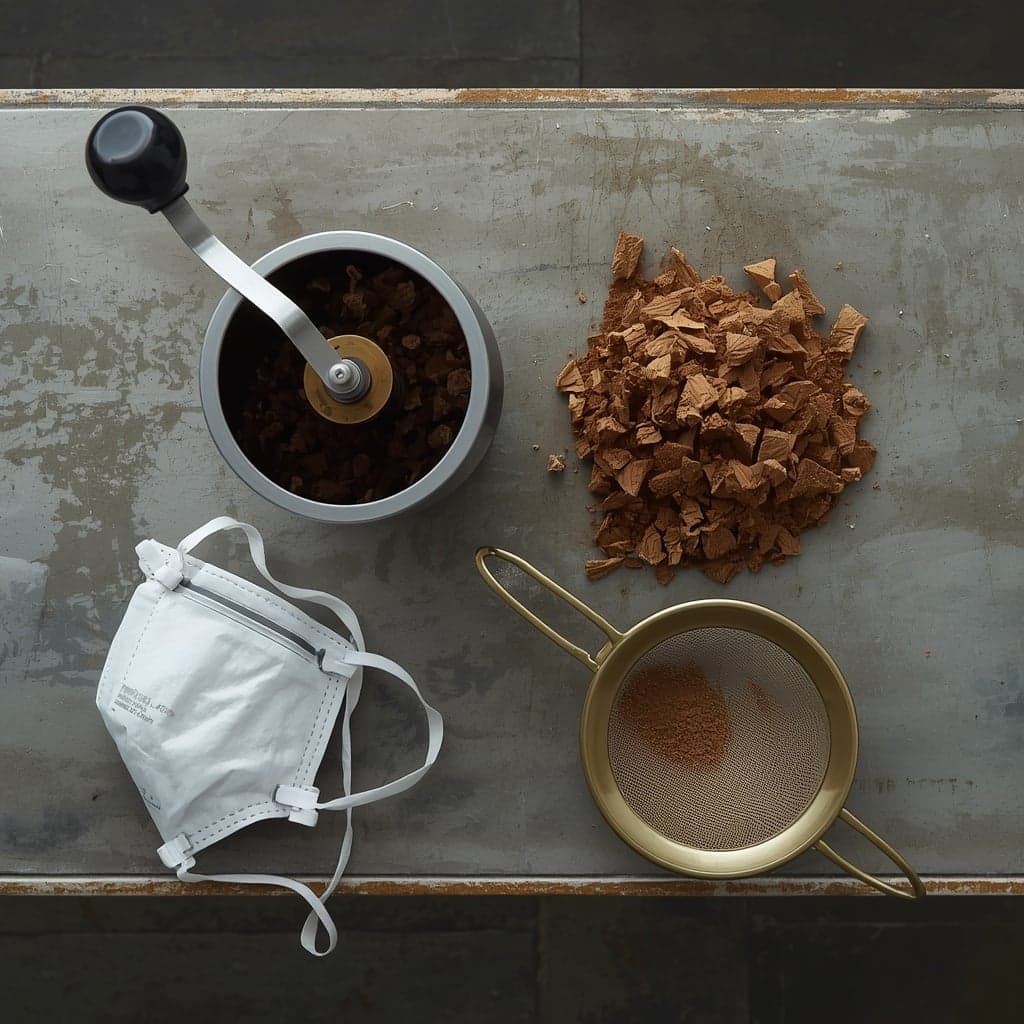
A coffee or spice grinder will take shredded bark to a usable powder in short bursts, sieved between passes. It is worth doing when you want one cut in the cupboard and both in the pot; it is not worth doing for volume, because domestic grinders overheat and the dust is considerable.
Your cart is empty
Everything we sell is batch-tested, and we tell you what ships to your state before you add it.
Browse the shop