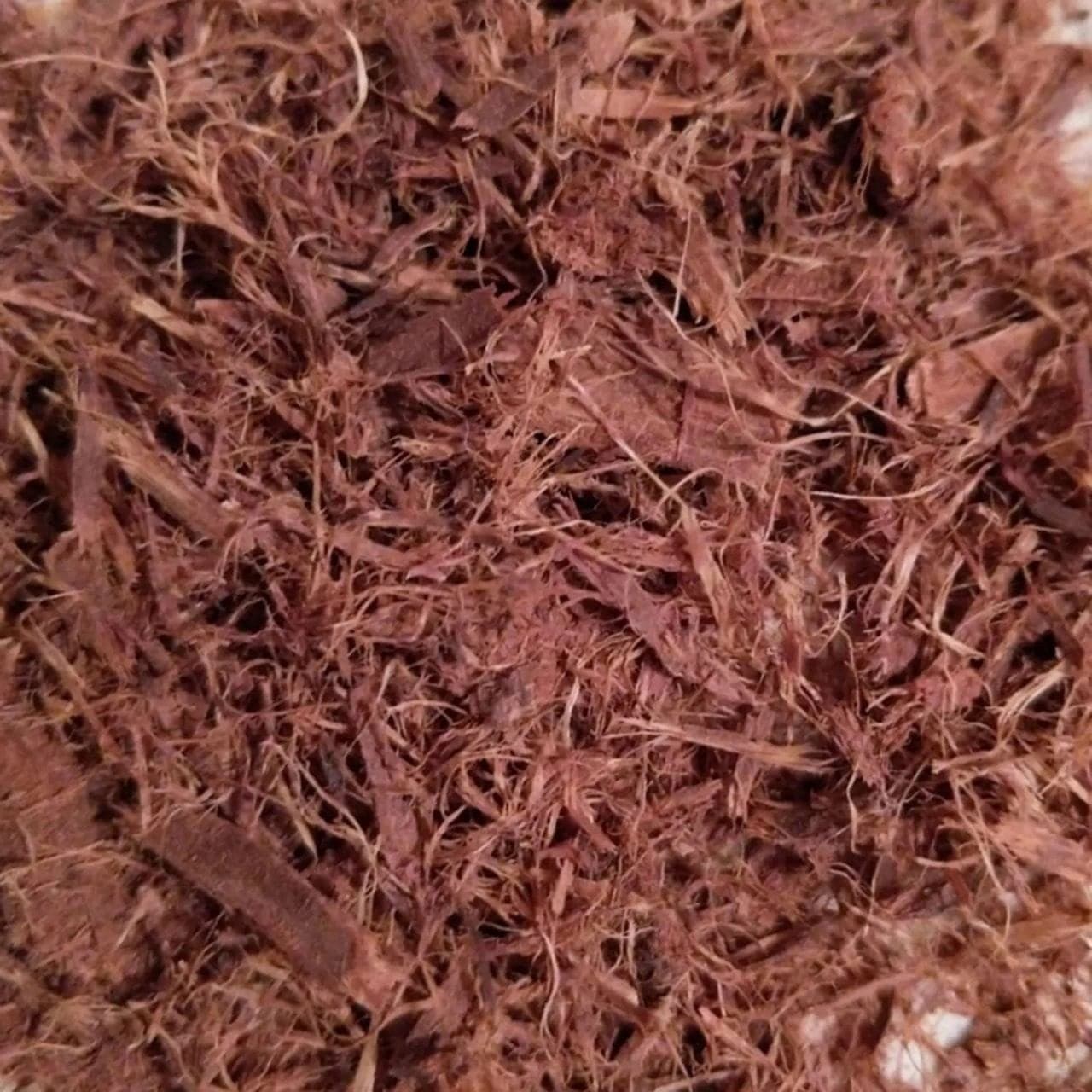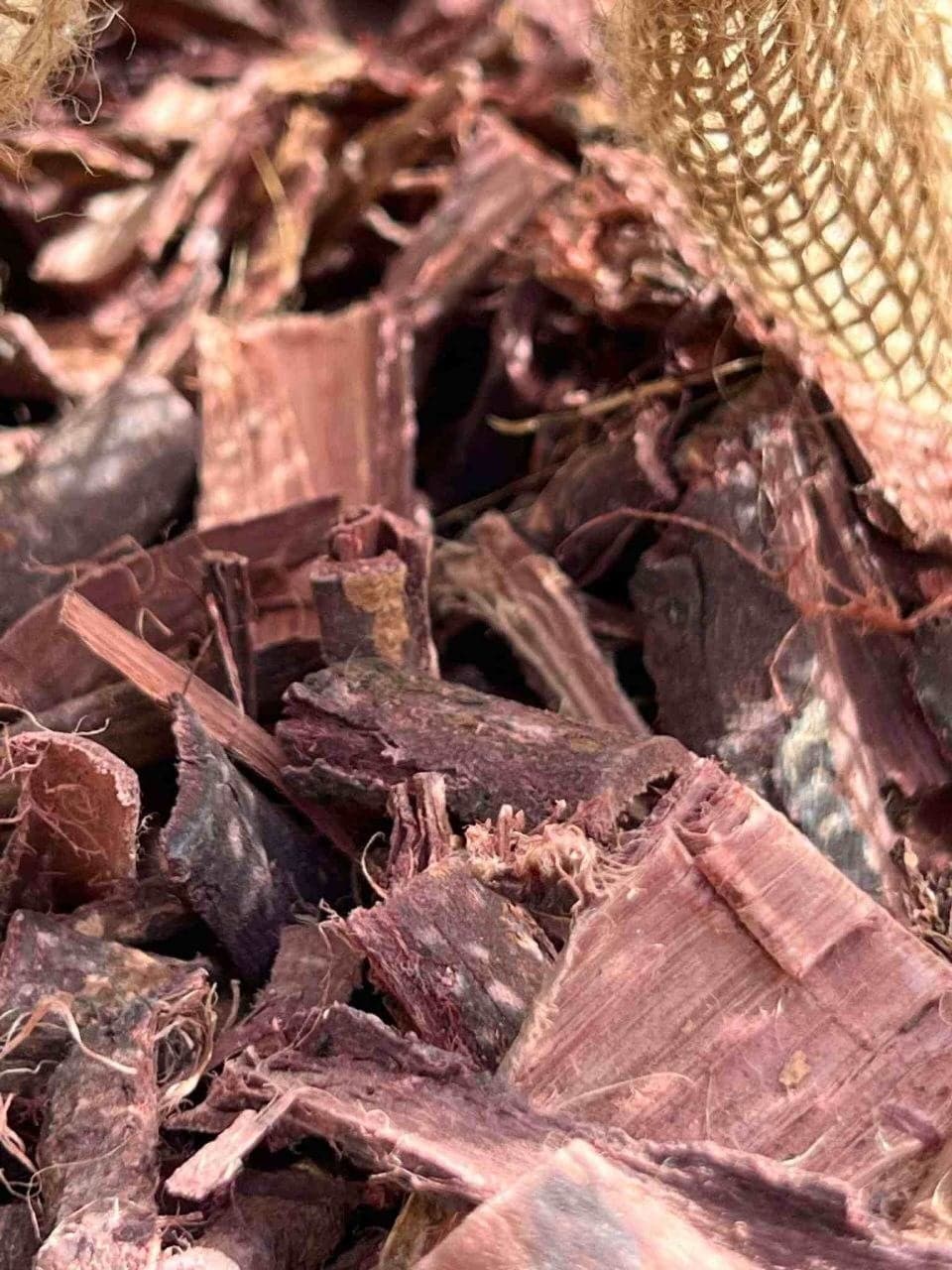
Whole Mimosa Hostilis Root Bark (Chips and Strips)
Botanical use only
$32.501/4 lb
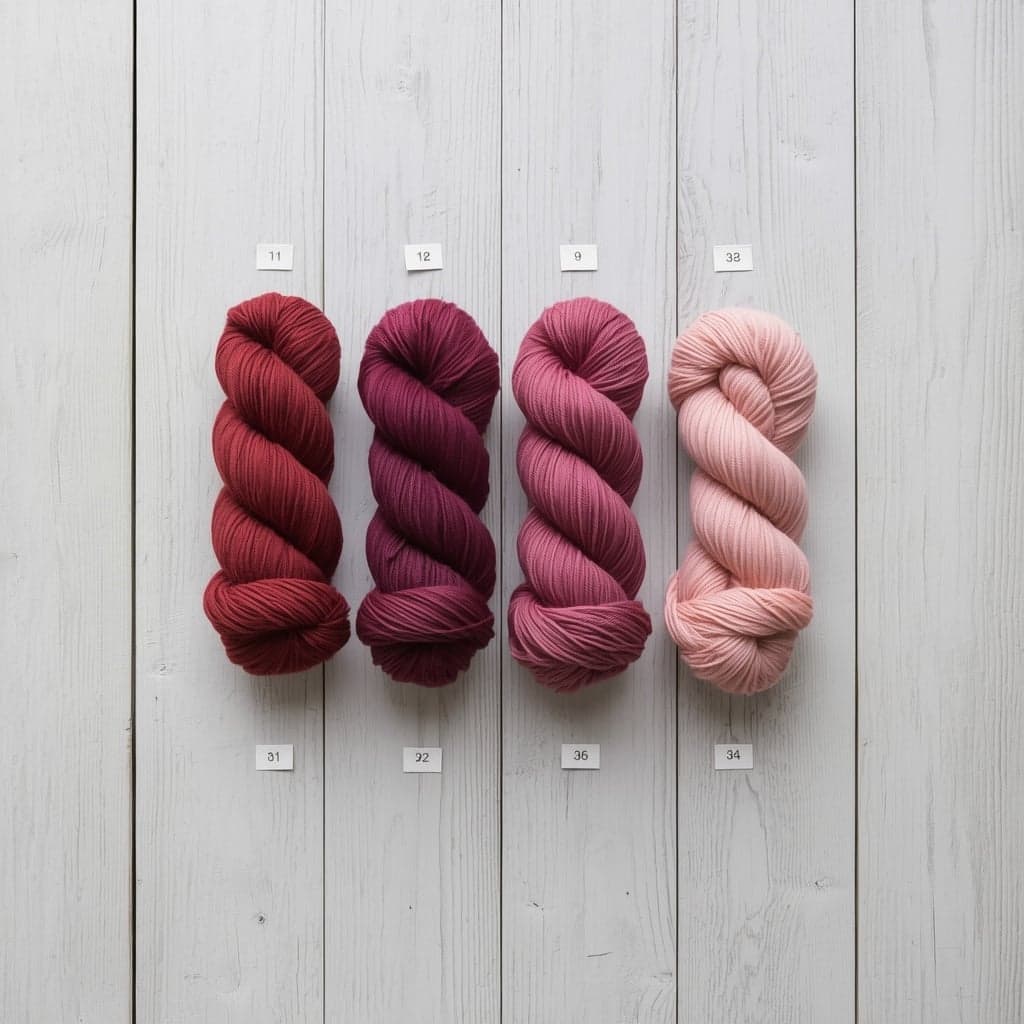
Spent bark still holds colour. A second bath typically gives a shade or two lighter than the first and a third lighter again, which is how a graded set of skeins comes from one batch. Keep the material wet between baths and use it within a few days.
Editorial desk · Written and checked in house · Updated
A first bath takes the most easily released colour and leaves a good deal behind. Treating what is left as waste is the most expensive habit in this craft.
| Bath | Relative depth | Typical use |
|---|---|---|
| First | Full | The deep skein |
| Second | Roughly half to two thirds | The mid shade of a graded set |
| Third | A quarter or less | Tints, cotton, blending fibre |
| Fourth | Little worth the fuel | Water the compost with it |
This is the cheapest way to dye a gradient set: three or four skeins from the same batch, each a step lighter, which match each other in a way separately mixed baths never quite do.
1. Lift the fibre out of the first bath when it is where you want it. 2. Keep the bark — in its mesh bag, or strained and returned to the pot. 3. Top the pot up with fresh water, bring it back to about 80°C, and hold it for an hour to load the new bath. 4. Enter the next fibre.
Going slightly longer and slightly hotter on later baths recovers more of what is left, and the browning risk is lower on a weaker bath than on a strong one.
Wet bark left warm goes off quickly, and a bath that smells sour will also dye unevenly. Keep the material submerged in cool water in a lidded bucket, in the coolest place you have, and use it within two or three days. Dried-out bark that has been wet once rarely gives much on a later pass.
A bath itself keeps about the same length of time. Smell it before you commit fibre to it.
Shredded and stripped material has more still to give on a second pass, because the first bath only reached the outer surfaces. Powder gives up most of its colour to the first bath, so its second is weaker. See the three cuts of mimosa root bark.
Everything described here is raw botanical material sold for dyeing, soap making and craft work. It is not food, it is not a supplement, and it is not for human consumption. Nothing on this page is a recommendation to put any of it in or on a body.
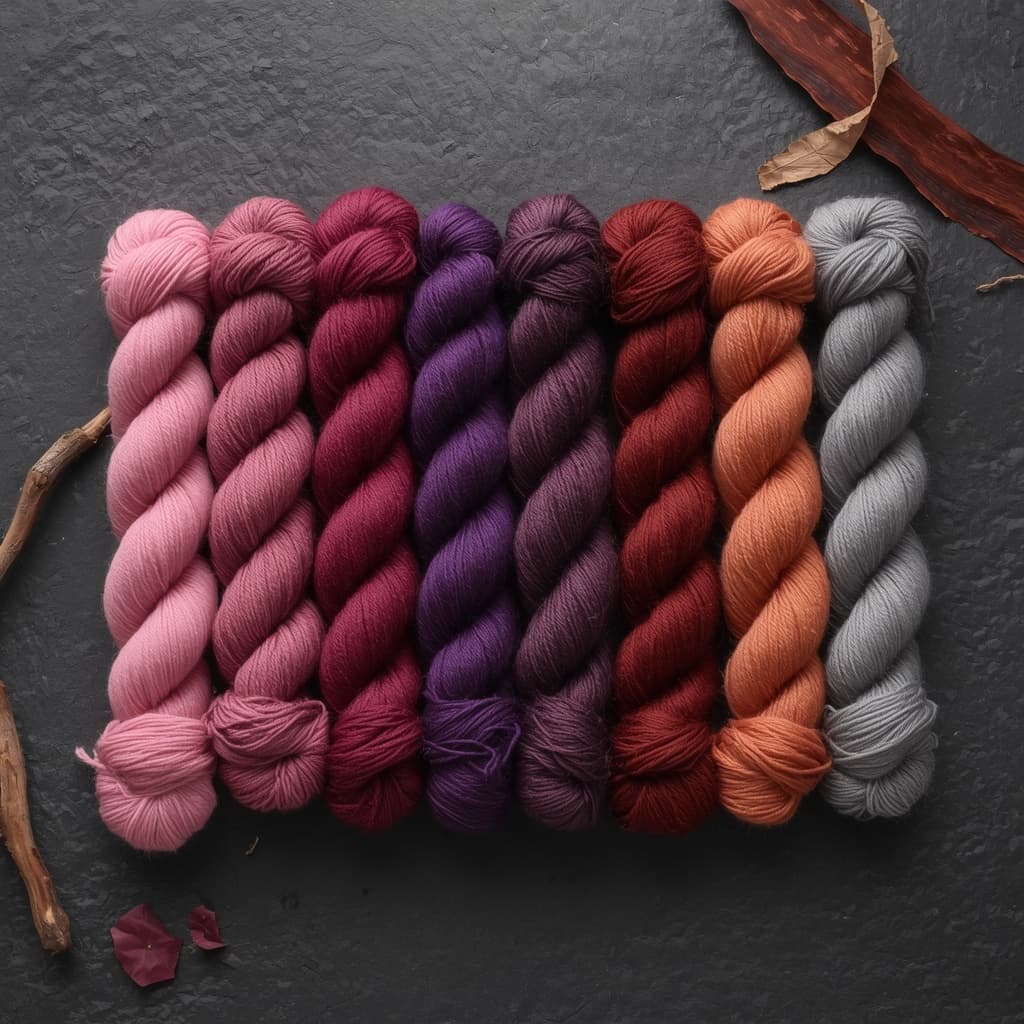
Overdyeing is dyeing one color on top of another. Mimosa hostilis gives rose to plum, so over indigo blue it makes violet and deep purple, over a yellow dye it makes peach, coral and rust, and with iron it turns grey and slate. Dye small samples first, and change only one thing between them.
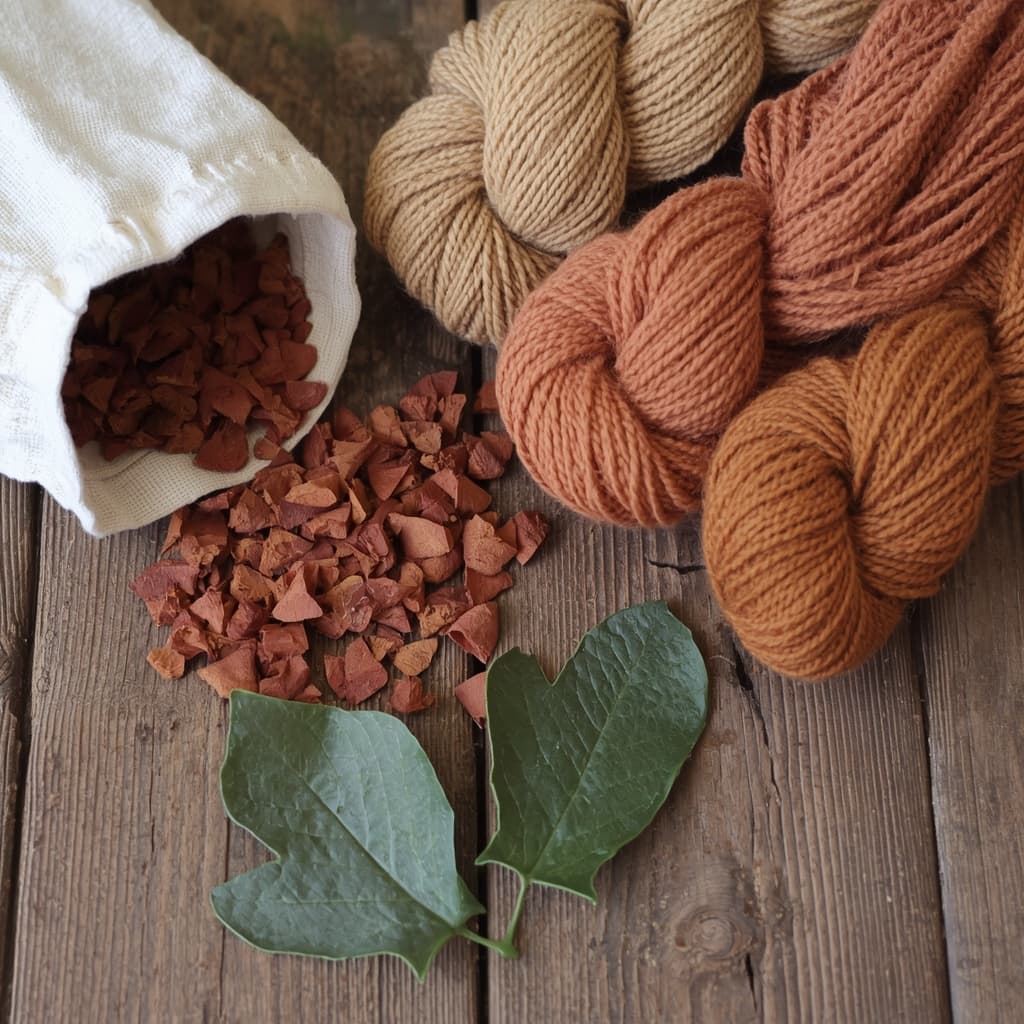
Sassafras root bark gives warm tan, rose-tan and orange-brown on wool mordanted with alum, and grey-brown with an iron afterbath. Use about a pound of bark to a pound of dry wool. Soak the bark overnight, simmer it gently for an hour, strain, then hold the mordanted wool in the bath just under a simmer for an hour and let it cool there.
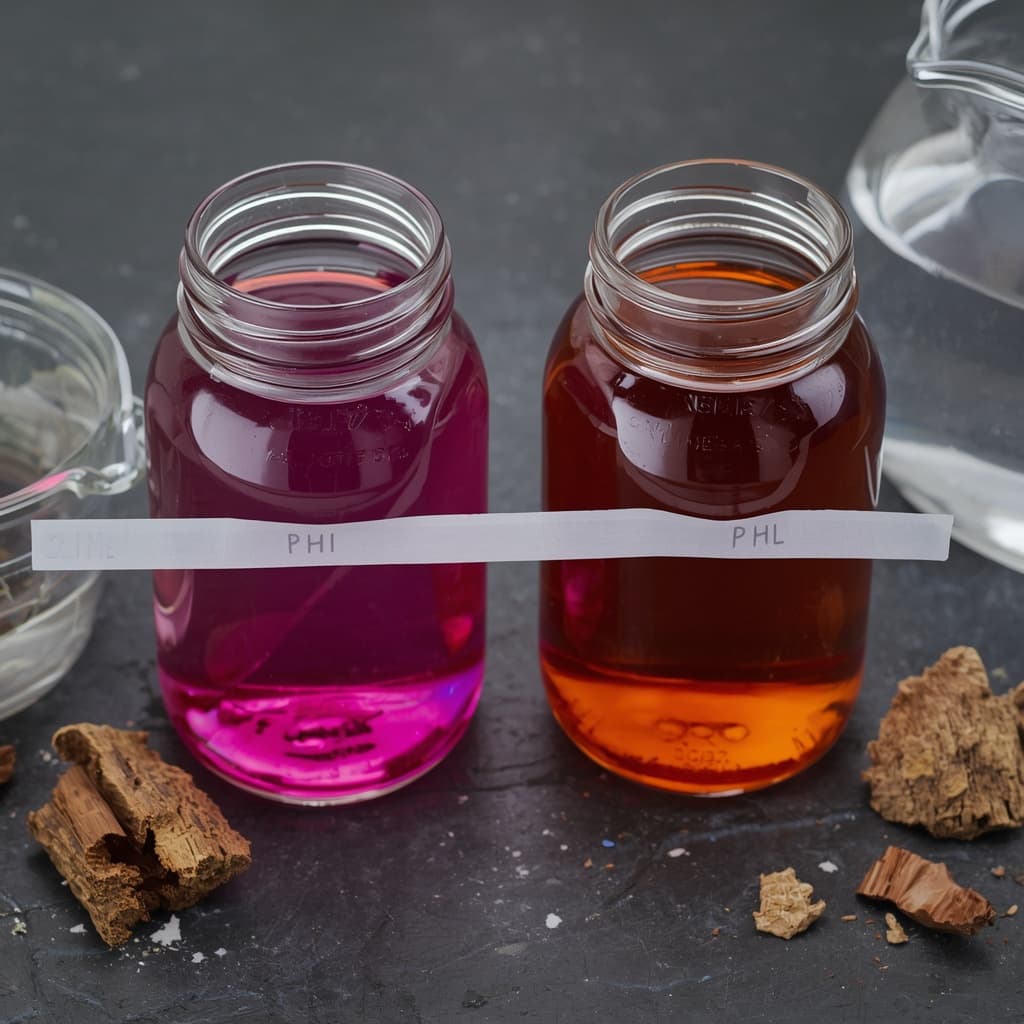
Hard water carries calcium and magnesium and usually runs alkaline, and both shift a tannin dye. With Mimosa hostilis the purples drift toward brown and the color looks duller. Iron in well water greys it further. Rainwater or distilled water is the simplest answer; a little white vinegar or citric acid, to bring the bath to about pH 5 or 6, is the next best.
Your cart is empty
Everything we sell is batch-tested, and we tell you what ships to your state before you add it.
Browse the shop