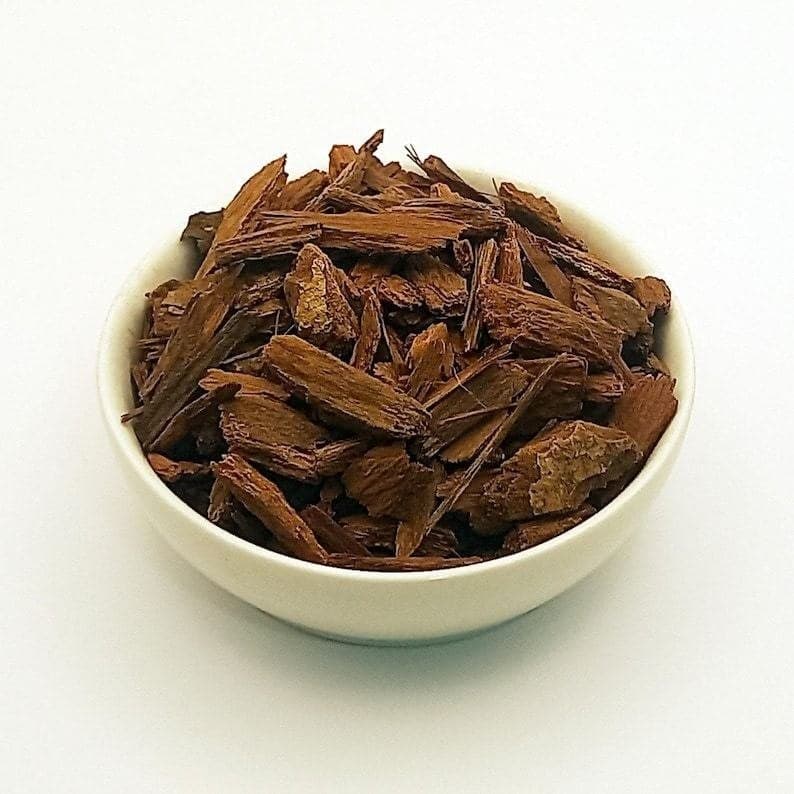
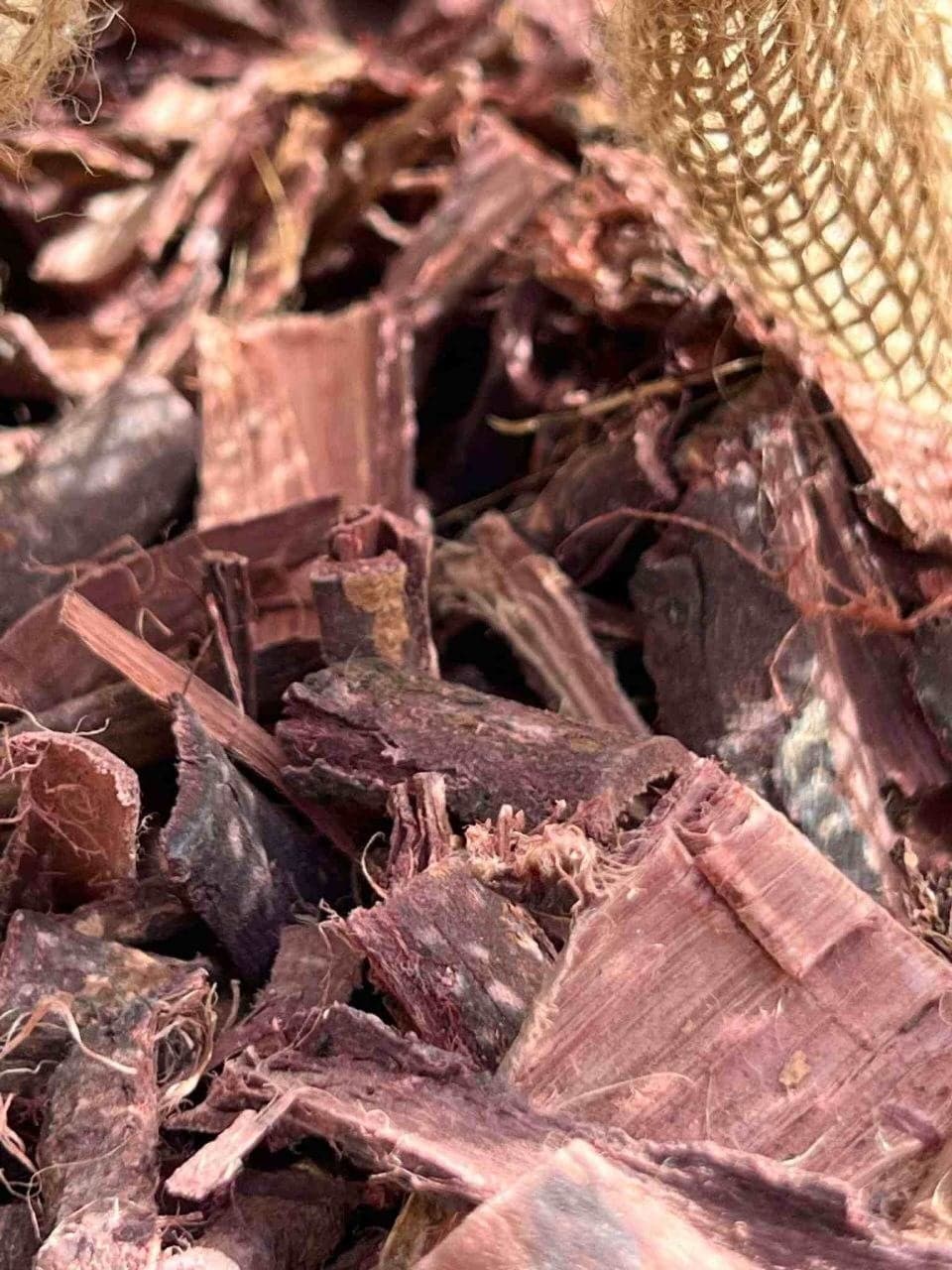
Whole Mimosa Hostilis Root Bark (Chips and Strips)
Botanical use only
$32.501/4 lb
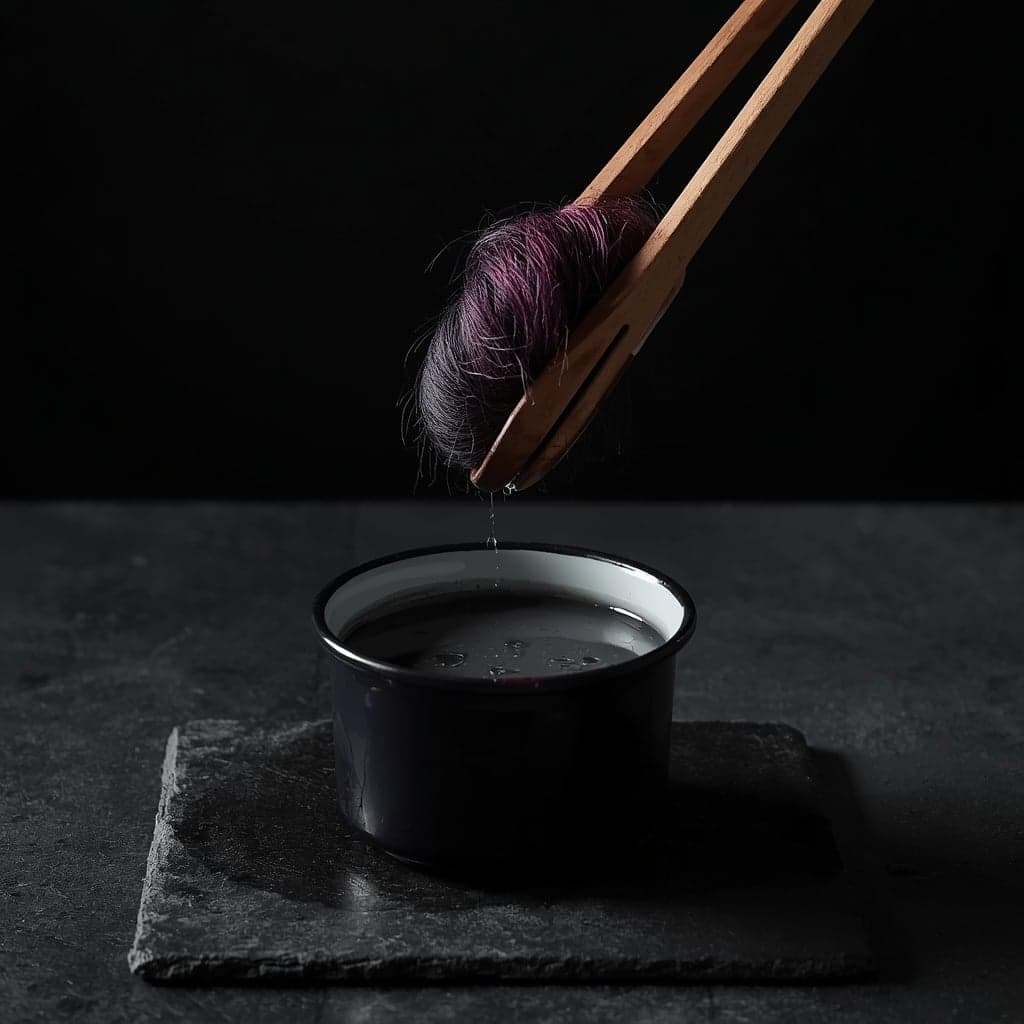
Iron darkens and greys a tannin colour in seconds, taking purple to slate and brown to charcoal. Keep it to one or two per cent of the fibre weight, use a separate pot, dip rather than simmer, and pull the fibre while it still looks too light.
Editorial desk · Written and checked in house · Updated
Iron and tannin react. That reaction is the oldest black in textile history, and on a tannin-rich bark it works so fast that the usual advice is not about how to do it but about how to stop in time.
Ferrous sulfate — copperas, or iron sulfate — combines with tannin to make a dark grey-black complex. On a bark bath the result is a genuine slate, charcoal or near-black rather than a darker version of the original purple.
It is also the honest rescue for a bath that went brown. A brown you did not want becomes a charcoal you did. See keeping a bark bath purple instead of brown.
| Iron as % of dry fibre weight | Result |
|---|---|
| 0.5% | A slight cooling, barely visible |
| 1 to 2% | Slate, charcoal — the useful range |
| 4% and above | Near-black, and the wool starts to feel harsh |
Iron at strength weakens wool and silk over time, which is why historic iron-blacks are often the first parts of an old textile to fail. One to two per cent is where the colour is worth having and the fibre is not.
1. A separate pot. Iron contaminates: once a pot has held it, every pale bath afterwards comes out dulled. Mark the pot and keep it for this. 2. Dissolve it fully in hot water, in the pot, before the fibre goes near it. 3. Dip, do not simmer. Warm water, thirty seconds to a few minutes, moving the fibre continuously. 4. Lift it early. It reads two shades darker when dry than it looks wet. 5. Rinse well, then wash with a pH-neutral detergent. Iron left in the fibre keeps working.
Because the reaction is so quick, dipping only part of a skein gives a clean gradient in one pass — the base colour at one end, charcoal at the other. Hold the skein above the pot and lower it in stages, a minute apart.
Iron sulfate stains everything it touches, including grout, counters and the pot you forgot to label. Work over a tray, and keep it out of reach of children and animals.
Everything described here is raw botanical material sold for dyeing, soap making and craft work. It is not food, it is not a supplement, and it is not for human consumption. Nothing on this page is a recommendation to put any of it in or on a body.
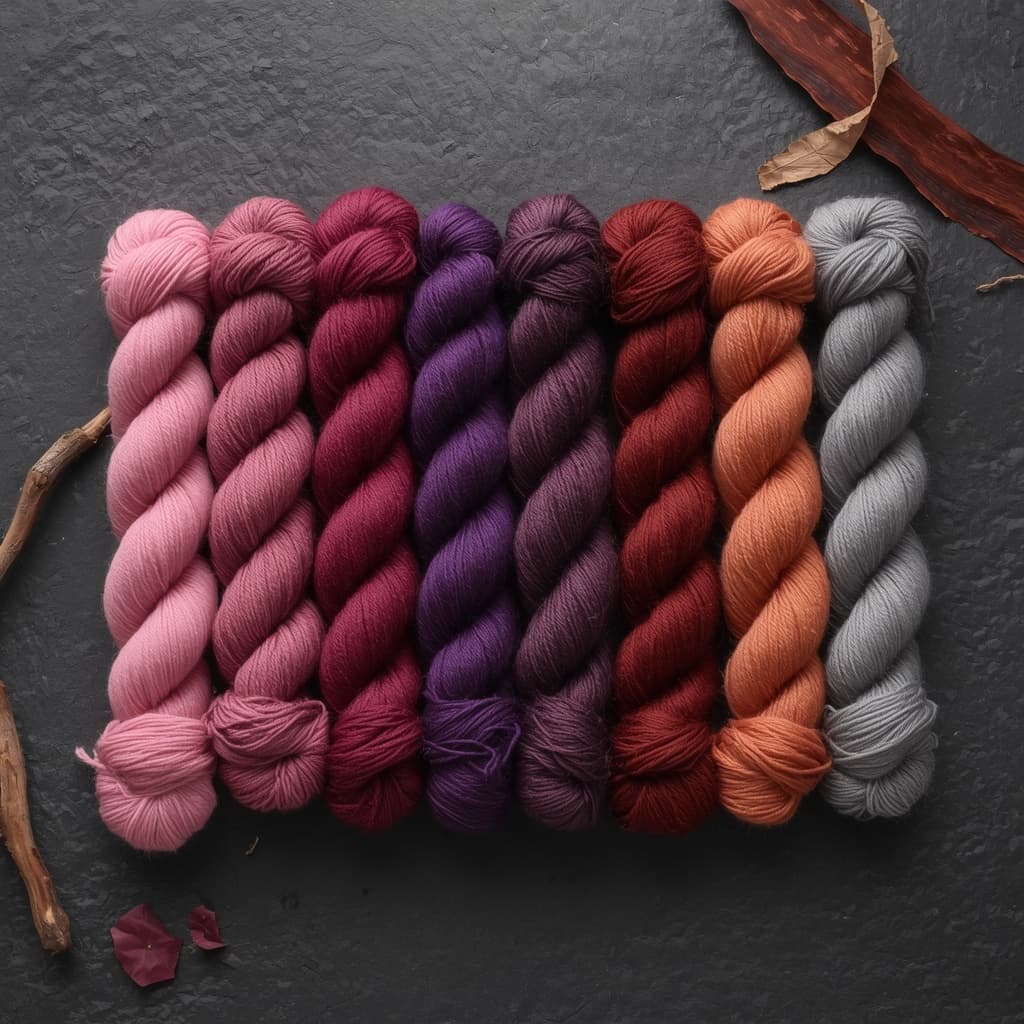
Overdyeing is dyeing one color on top of another. Mimosa hostilis gives rose to plum, so over indigo blue it makes violet and deep purple, over a yellow dye it makes peach, coral and rust, and with iron it turns grey and slate. Dye small samples first, and change only one thing between them.
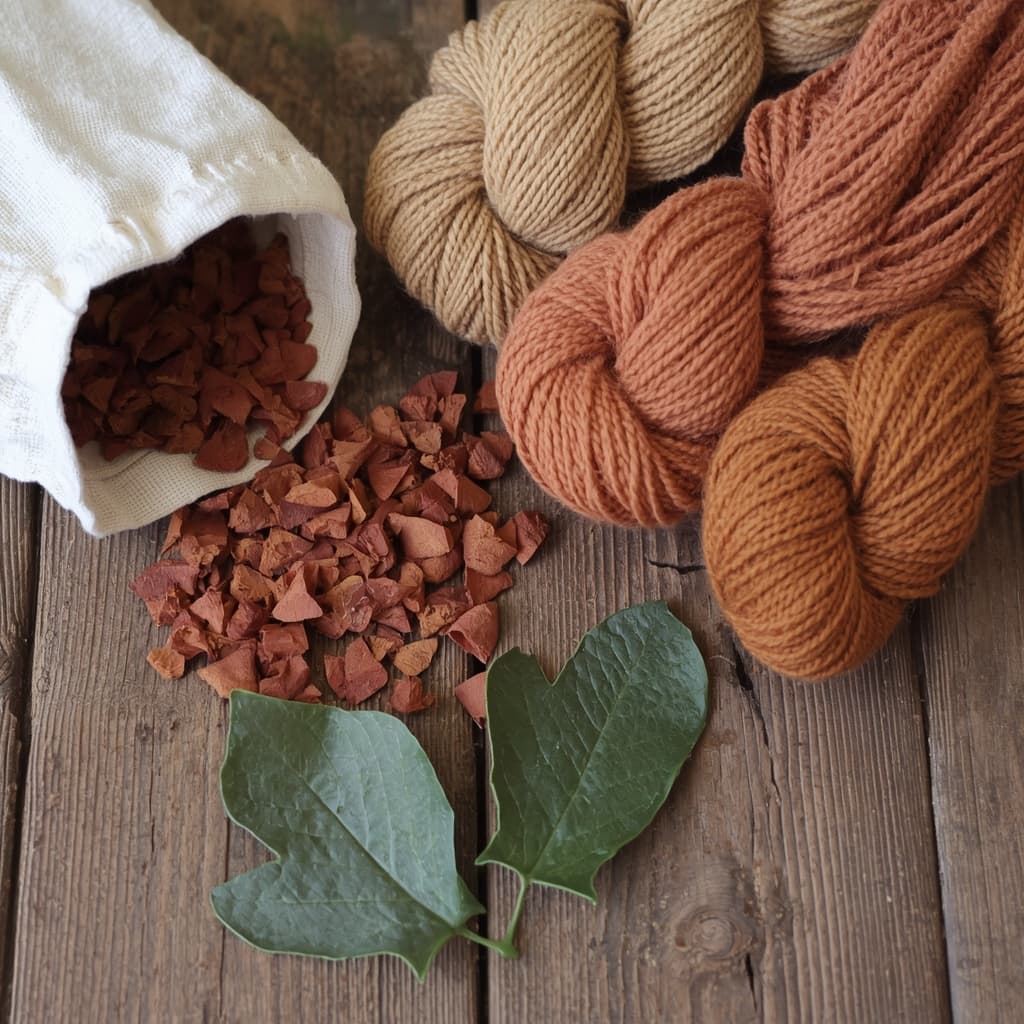
Sassafras root bark gives warm tan, rose-tan and orange-brown on wool mordanted with alum, and grey-brown with an iron afterbath. Use about a pound of bark to a pound of dry wool. Soak the bark overnight, simmer it gently for an hour, strain, then hold the mordanted wool in the bath just under a simmer for an hour and let it cool there.
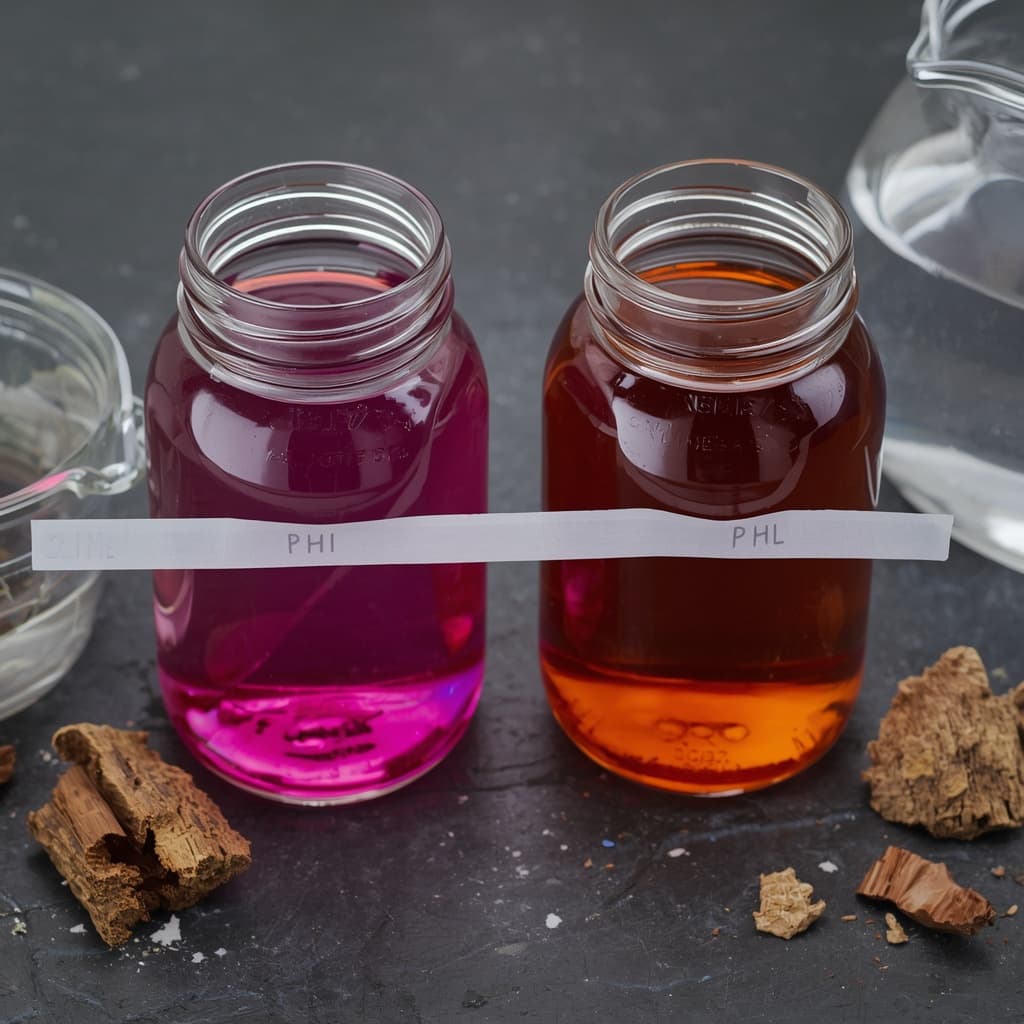
Hard water carries calcium and magnesium and usually runs alkaline, and both shift a tannin dye. With Mimosa hostilis the purples drift toward brown and the color looks duller. Iron in well water greys it further. Rainwater or distilled water is the simplest answer; a little white vinegar or citric acid, to bring the bath to about pH 5 or 6, is the next best.
Your cart is empty
Everything we sell is batch-tested, and we tell you what ships to your state before you add it.
Browse the shop