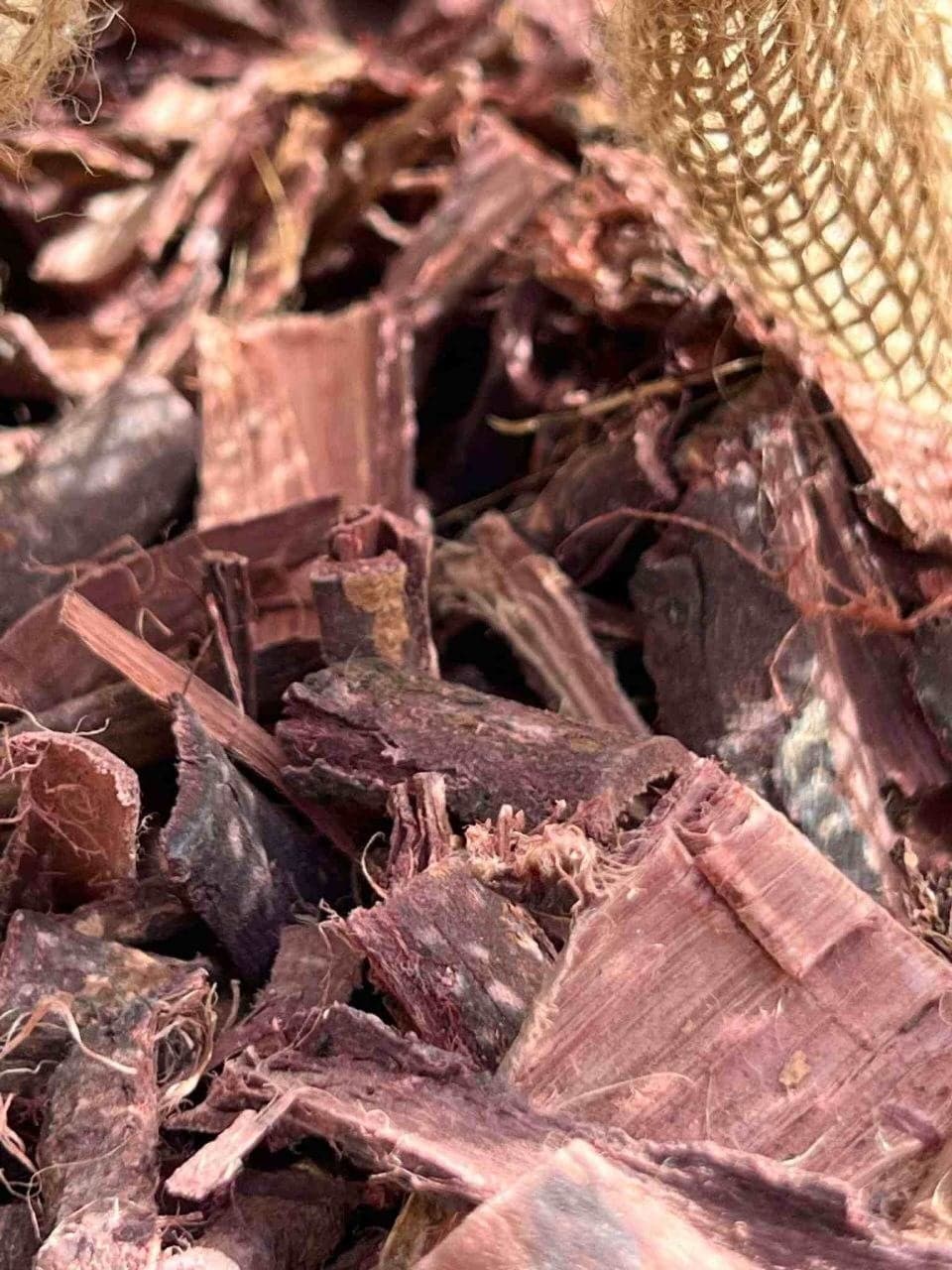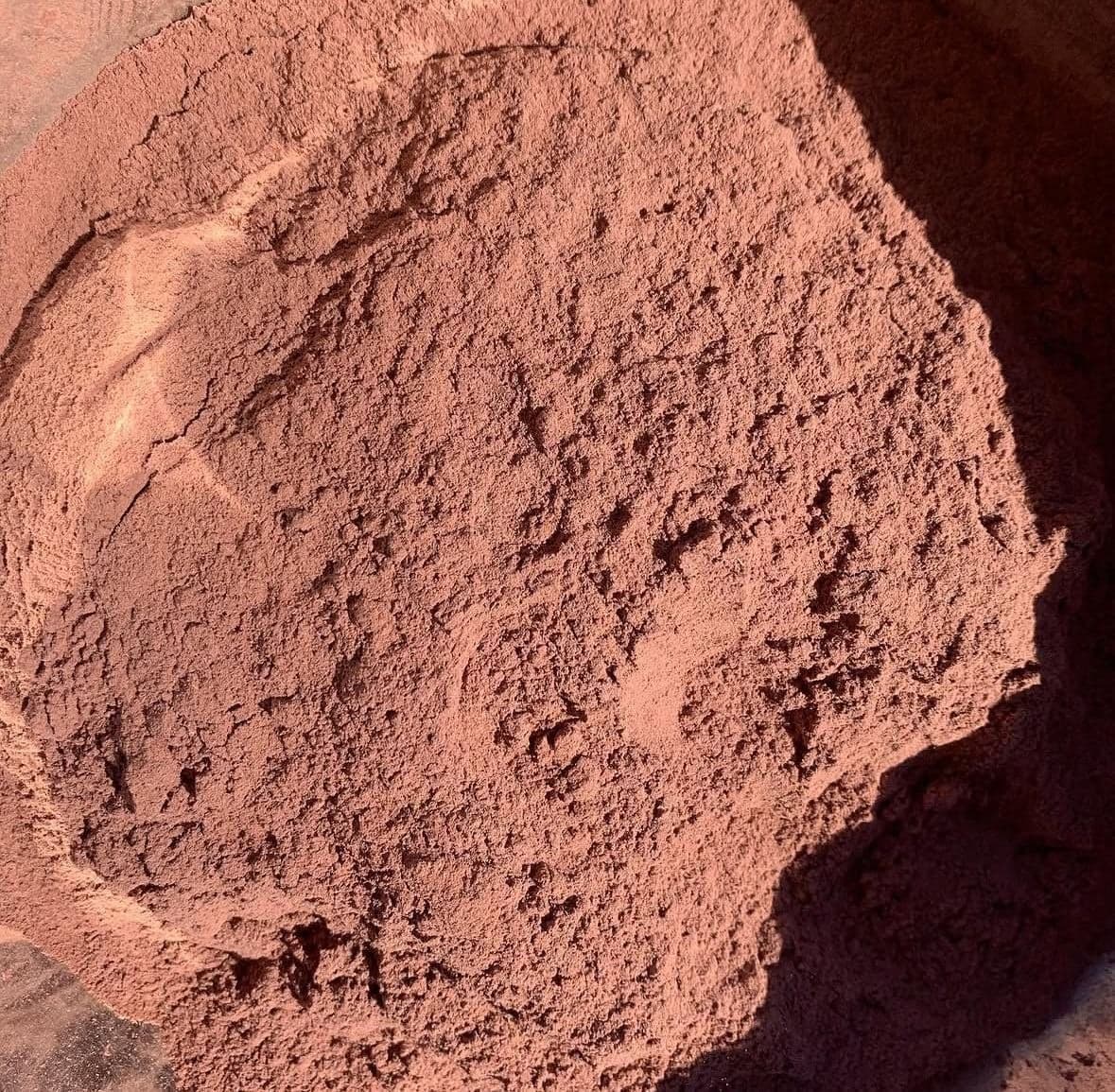
Mimosa Hostilis Root Bark Powder
Botanical use only
$37.501/4 lb
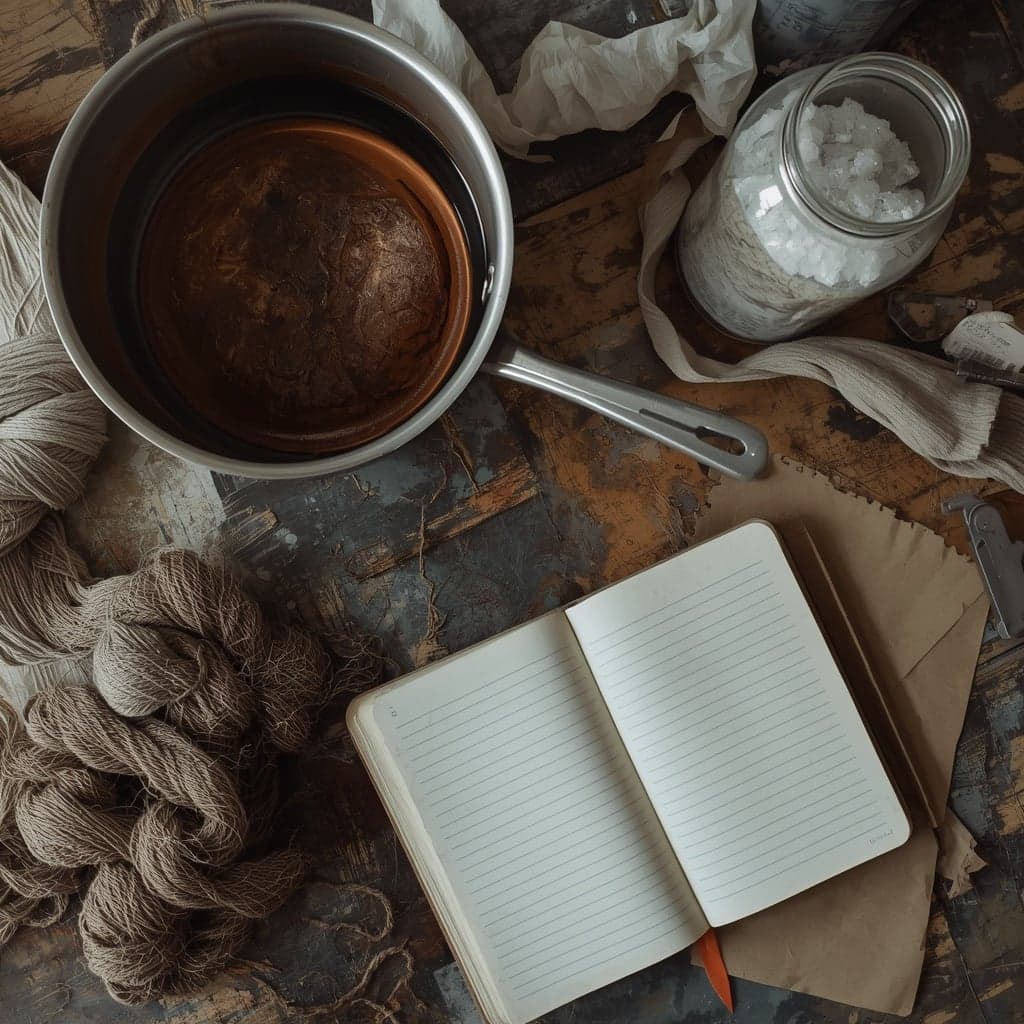
Almost every disappointing first bath comes down to eight things: boiling it, skipping the scour, undissolved alum, weighing wet fibre, leaving material loose in the pot, packing the pot, judging colour wet, and changing three variables at once. None is expensive to fix.
Editorial desk · Written and checked in house · Updated
We hear about the same eight faults over and over, which is good news: they are all cheap to correct, and none of them is the material's doing.
The single commonest fault and the only one that cannot be undone. A rolling boil takes this colour to brown in minutes. Work at about 80°C / 175°F — small bubbles on the base of the pot, nothing breaking the surface. Buy a thermometer before you buy more bark. See keeping a bark bath purple.
Spinning oil, lanolin and factory sizing all repel water, and fibre that wets unevenly dyes unevenly. A hot wash with a pH-neutral detergent before mordanting is not optional.
A crystal that has not dissolved mordants the spot it settles against far more heavily than the rest, and the bath afterwards shows it as a hard-edged pale patch. Dissolve alum in a jug of very hot water before it goes in the pot. See mordanting wool before a bark bath.
Every ratio in dyeing is a percentage of dry fibre weight. Wet wool holds several times its weight in water, so a damp weighing makes both the alum and the bark quantities wrong.
Bark and especially powder pressed against wool leaves specks that do not rinse out of the plies. Use a mesh bag, or strain before the fibre enters. See filtering a bark bath.
Fibre crammed into too little water dyes pale where it touched itself. Use enough water that a skein can be lifted and turned without force. Volume does not dilute the colour — depth comes from the ratio, not the concentration.
Wet fibre reads one to two shades darker than it will dry. Squeeze a strand, dry it against a warm mug, and judge that. Pulling a skein too early is the second commonest regret after boiling.
A bath where temperature, ratio and pH all moved teaches nothing, because nothing can be attributed. Change one variable per pot and write down what you did. The notebook is the actual skill.
Test pots. A fistful of bark, a small jar and a metre of the same yarn costs almost nothing and answers the question before a fleece is at risk. See testing a dye before you commit a fleece.
Everything described here is raw botanical material sold for dyeing, soap making and craft work. It is not food, it is not a supplement, and it is not for human consumption. Nothing on this page is a recommendation to put any of it in or on a body.
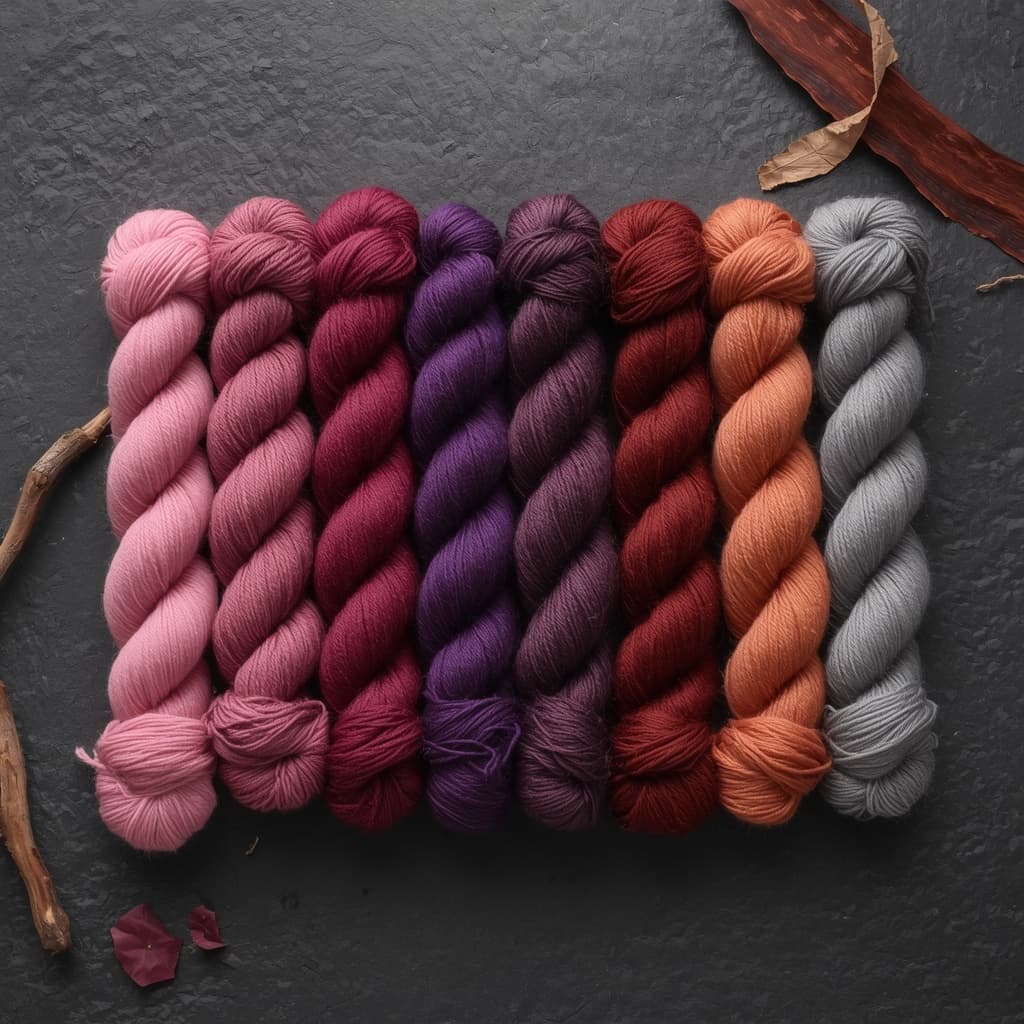
Overdyeing is dyeing one color on top of another. Mimosa hostilis gives rose to plum, so over indigo blue it makes violet and deep purple, over a yellow dye it makes peach, coral and rust, and with iron it turns grey and slate. Dye small samples first, and change only one thing between them.
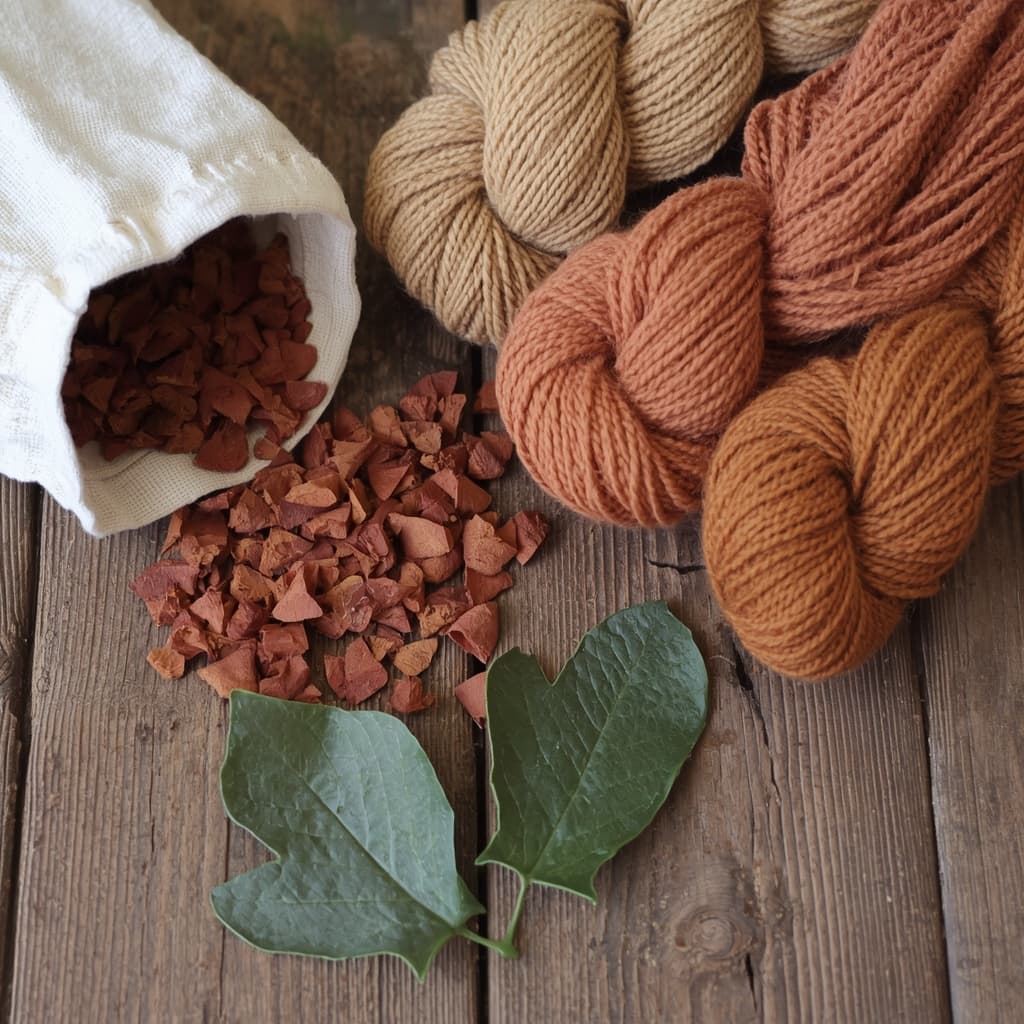
Sassafras root bark gives warm tan, rose-tan and orange-brown on wool mordanted with alum, and grey-brown with an iron afterbath. Use about a pound of bark to a pound of dry wool. Soak the bark overnight, simmer it gently for an hour, strain, then hold the mordanted wool in the bath just under a simmer for an hour and let it cool there.
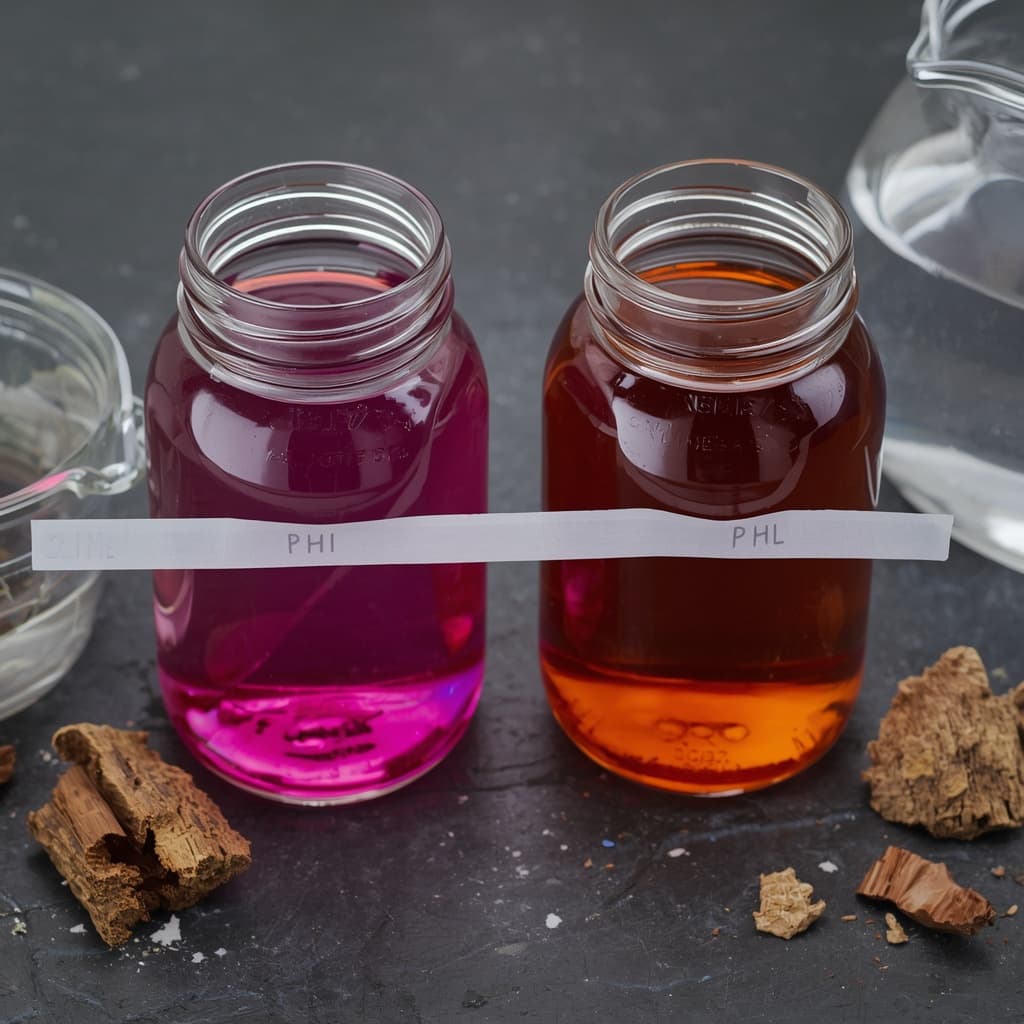
Hard water carries calcium and magnesium and usually runs alkaline, and both shift a tannin dye. With Mimosa hostilis the purples drift toward brown and the color looks duller. Iron in well water greys it further. Rainwater or distilled water is the simplest answer; a little white vinegar or citric acid, to bring the bath to about pH 5 or 6, is the next best.
Your cart is empty
Everything we sell is batch-tested, and we tell you what ships to your state before you add it.
Browse the shop