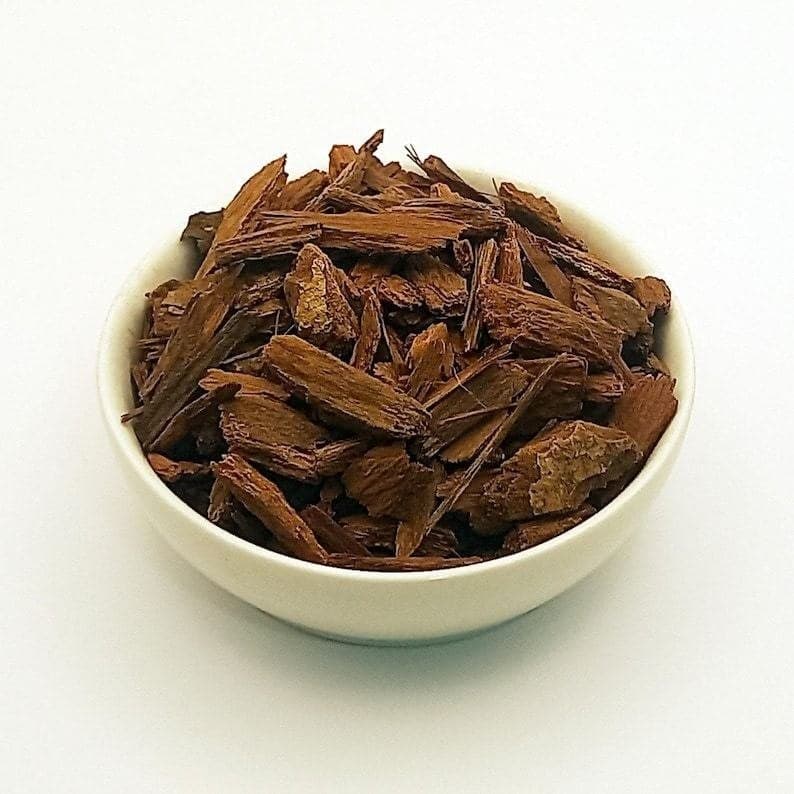
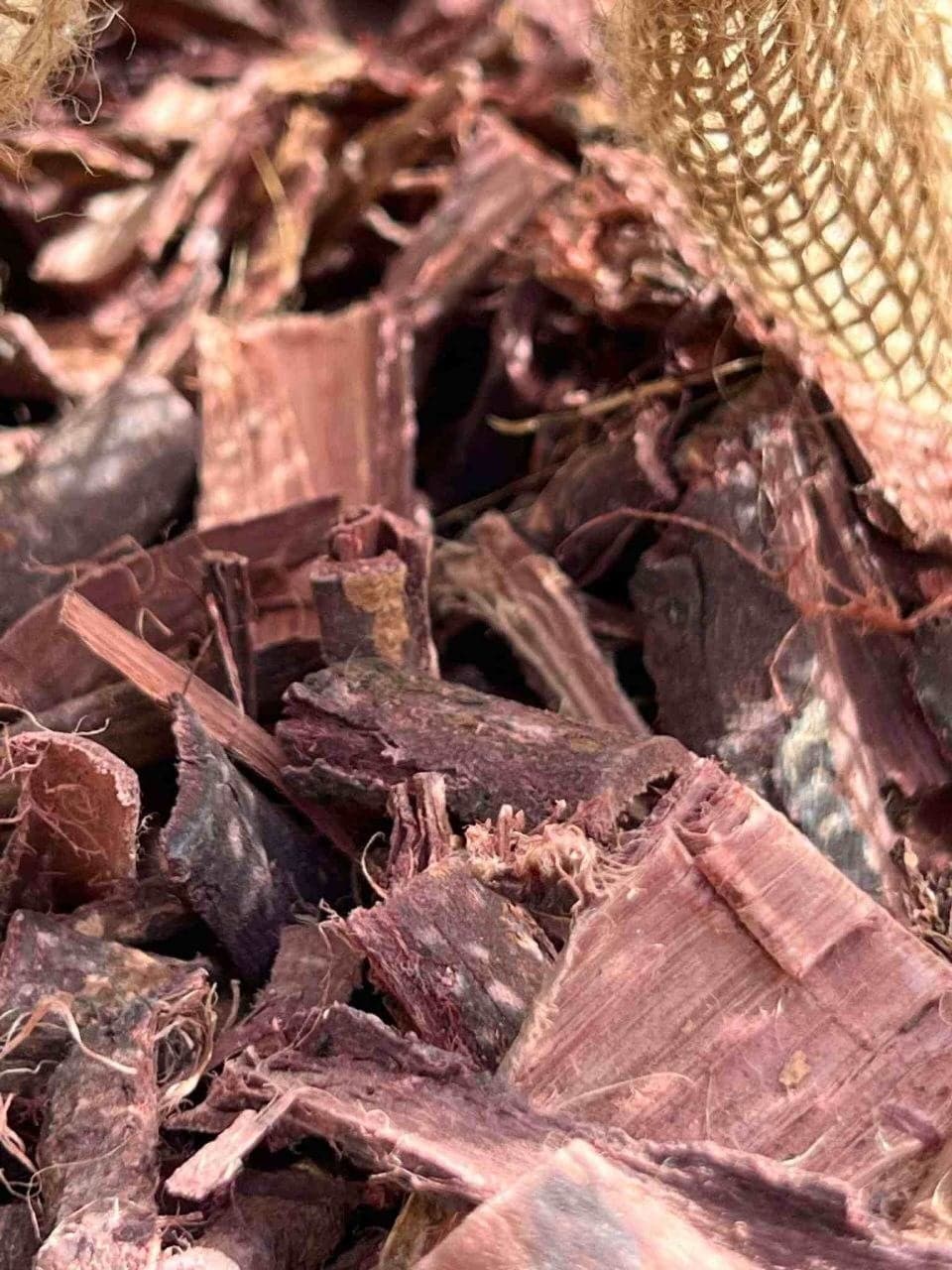
Whole Mimosa Hostilis Root Bark (Chips and Strips)
Botanical use only
$32.501/4 lb
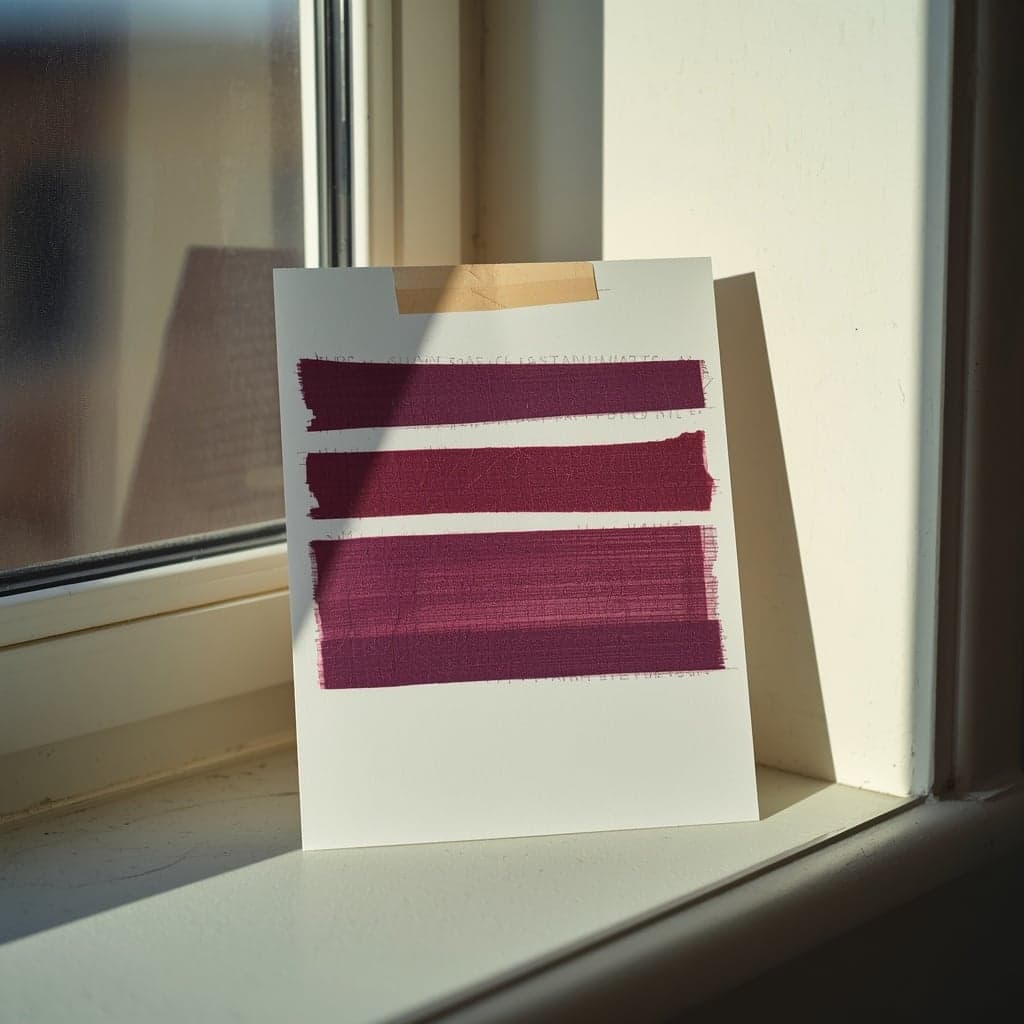
Two tests answer it. Tape half a dyed sample in a south-facing window for four weeks and compare the halves for light fastness; wash another sample four times with a white swatch alongside for wash fastness. Both cost nothing and take one evening to set up.
Editorial desk · Written and checked in house · Updated
Fastness is two separate properties, and a dye can be good at one and poor at the other. Anyone selling or gifting dyed work should know which they have.
1. Dye a strip of the fibre, or use a length of the finished yarn. 2. Cut it in two. Put one half in a drawer. 3. Tape the other to the inside of a south-facing window, with card covering its left half. 4. Leave it four to eight weeks. Longer is better. 5. Compare all three: the drawer piece, the covered half, the exposed half.
The card is what makes it a test rather than an impression, because a fade you can only see against the original is the fade a customer will notice in a year.
Wash a dyed sample four times in warm water with a pH-neutral detergent, with a white swatch of the same fibre pinned to it. Then look at two things: whether the sample lost depth, and whether the white swatch picked colour up. The second matters more — a dye that bleeds will bleed onto everything else in the machine.
| What you see | What it means |
|---|---|
| Sample holds, swatch stays white | Well mordanted, properly rinsed |
| Sample holds, swatch tints | Unfixed surplus left in the fibre; wash again before use |
| Sample loses depth in wash one, then holds | Normal — that was the surplus coming off |
| Sample keeps losing depth | Mordant step failed |
Properly mordanted, wool and silk hold this colour well in washing. Light is the harder test: like most plant colours it softens in strong sun, moving towards a warmer, browner tone rather than simply going pale. That is a reason to be honest about it, not a reason to avoid it — keep dyed pieces out of permanent direct sun and they hold for years.
Iron-modified shades generally hold their depth better in light than the unmodified purple. See iron as a modifier.
Rinse until the water runs clear, and wash once with detergent before the piece goes into use. Most apparent bleeding is surplus colour that was never bonded.
Do not overload the bath. Fibre cannot hold more than it can hold; the surplus sits on the surface and comes off in the first wash, taking your confidence with it.
Everything described here is raw botanical material sold for dyeing, soap making and craft work. It is not food, it is not a supplement, and it is not for human consumption. Nothing on this page is a recommendation to put any of it in or on a body.
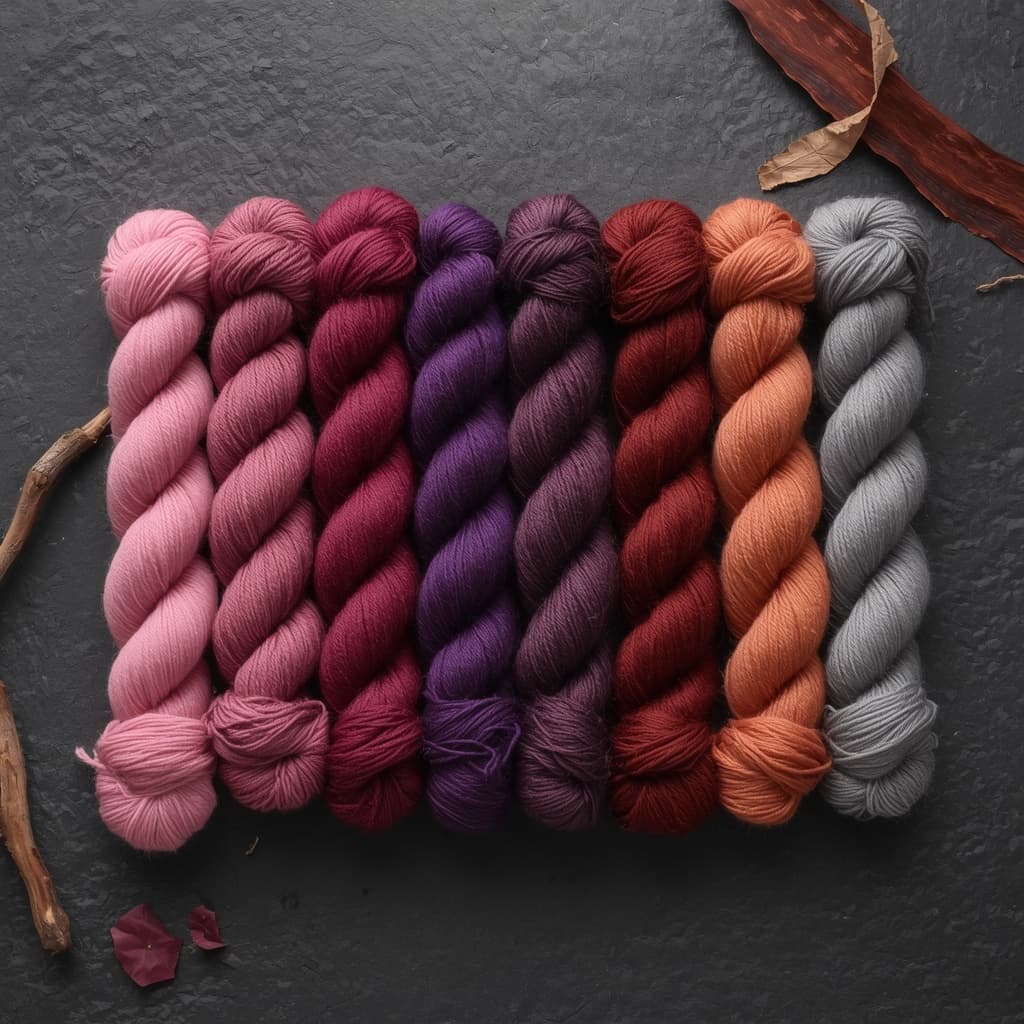
Overdyeing is dyeing one color on top of another. Mimosa hostilis gives rose to plum, so over indigo blue it makes violet and deep purple, over a yellow dye it makes peach, coral and rust, and with iron it turns grey and slate. Dye small samples first, and change only one thing between them.
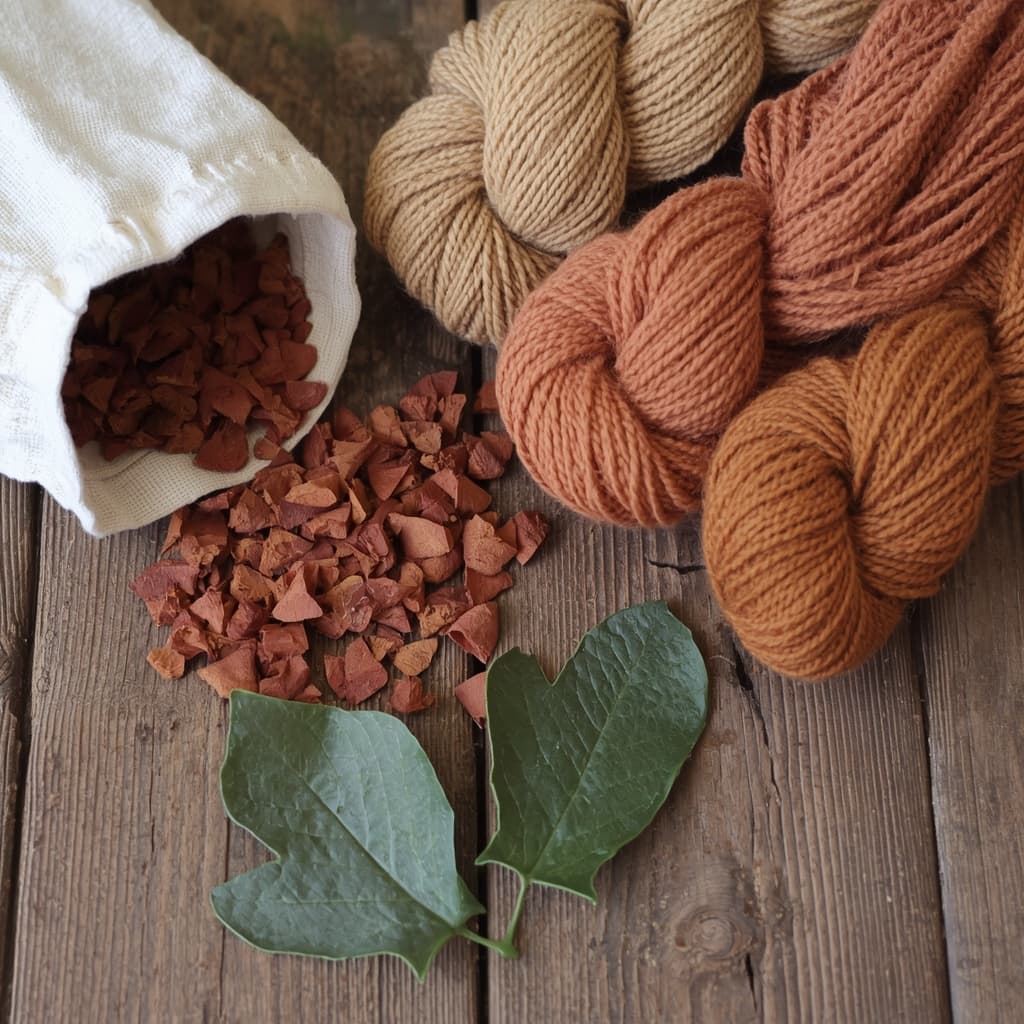
Sassafras root bark gives warm tan, rose-tan and orange-brown on wool mordanted with alum, and grey-brown with an iron afterbath. Use about a pound of bark to a pound of dry wool. Soak the bark overnight, simmer it gently for an hour, strain, then hold the mordanted wool in the bath just under a simmer for an hour and let it cool there.
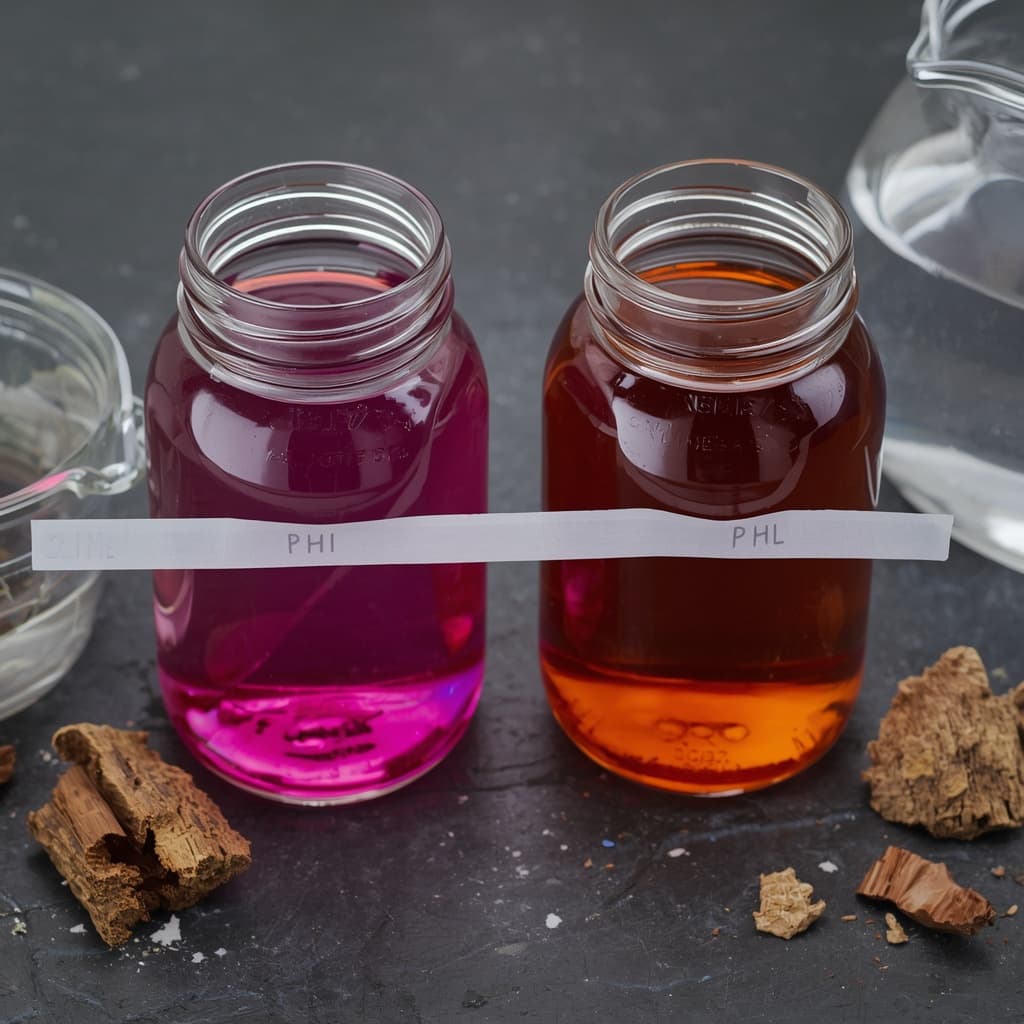
Hard water carries calcium and magnesium and usually runs alkaline, and both shift a tannin dye. With Mimosa hostilis the purples drift toward brown and the color looks duller. Iron in well water greys it further. Rainwater or distilled water is the simplest answer; a little white vinegar or citric acid, to bring the bath to about pH 5 or 6, is the next best.
Your cart is empty
Everything we sell is batch-tested, and we tell you what ships to your state before you add it.
Browse the shop