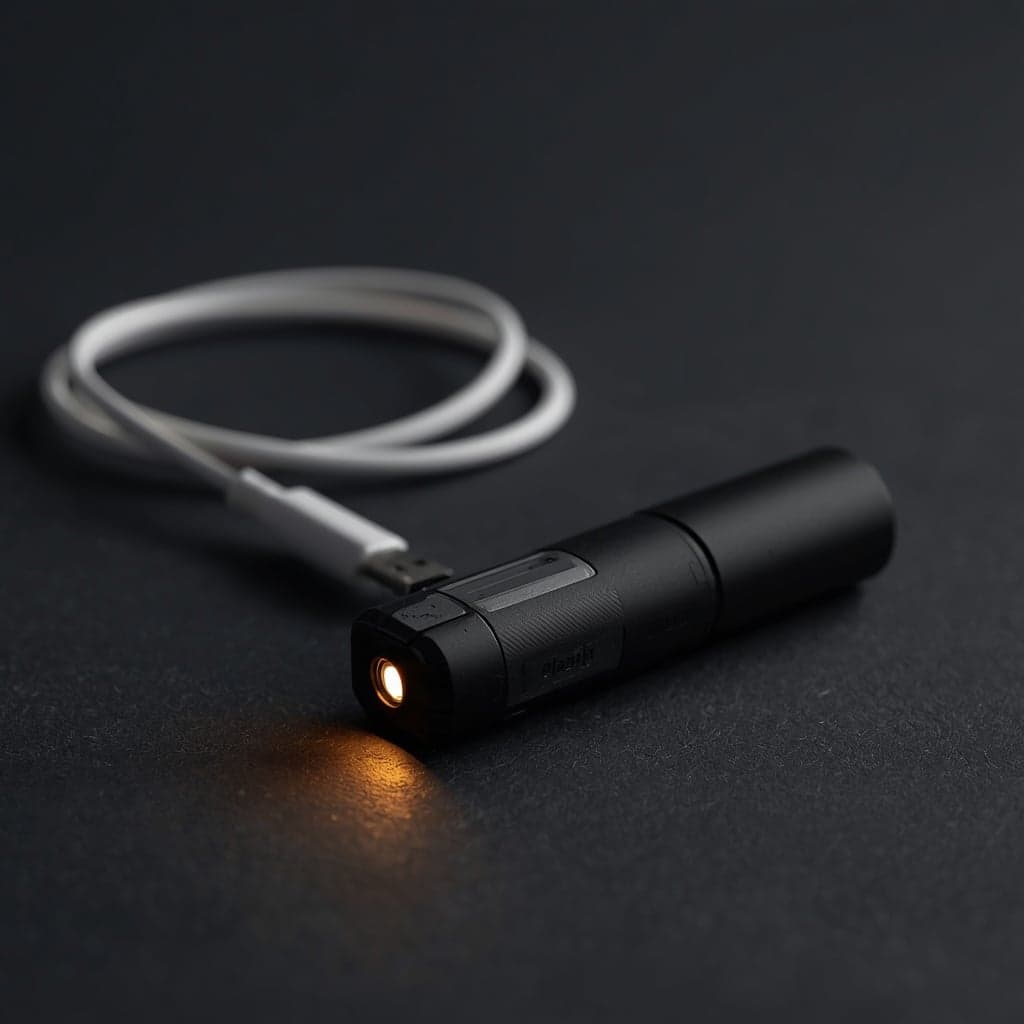
There is no common standard, but the patterns repeat across manufacturers: three blinks is usually a short or a bad connection, ten or fifteen is usually a flat battery, and a long continuous blink is usually the draw-time cut-off. Rapid blinking while charging means the cell is refusing the charge.
Editorial desk · Written and checked in house · Updated
Nobody publishes a standard for this and every manufacturer does as it pleases, which is why a blinking light feels like a code you were never given. In practice the patterns are consistent enough to diagnose.
| Pattern | Usual meaning | What to try |
|---|---|---|
| 3 blinks on draw | Short circuit or poor contact | Unscrew the cartridge, wipe both contacts, refit hand tight |
| 10 to 15 blinks | Battery flat | Charge it, if it can be charged |
| One long blink, then off | Draw-time cut-off reached | Shorter draws; this is a safety feature working |
| Rapid blinking on the charger | Cell refusing the charge | Stop charging it and stop using it |
| No light at all | Flat, dead, or no contact | Try another battery or cartridge to isolate it |
1. Unscrew the cartridge and look at the centre pin. Contents leaked onto the contact is the commonest cause and a cotton bud fixes it. 2. Refit hand tight. Over-tightening crushes the pin, which produces exactly the same three blinks permanently. 3. Try the cartridge on another battery, and another cartridge on this battery. Whichever combination fails tells you which part is at fault.
Rapid blinking while charging, a hot body, a swollen case, or any smell of burning. Disconnect it, put it somewhere non-flammable away from anything that can catch, and do not charge it again. A lithium cell that refuses charge is not a fault to work around.
Dispose of it properly rather than in household rubbish. See disposing of hardware and lithium batteries.
On a two-part setup these tests take half a minute. On a sealed disposable there is nothing to unscrew and no part to swap, so a blinking light is all the information there is. That is the practical cost of the format. See disposable or cartridge.
A cold device, a device that has been lying on its side, and a device with a fresh cartridge that has not been left to saturate all behave like faulty ones. Warm it, stand it upright a few minutes, then test again.
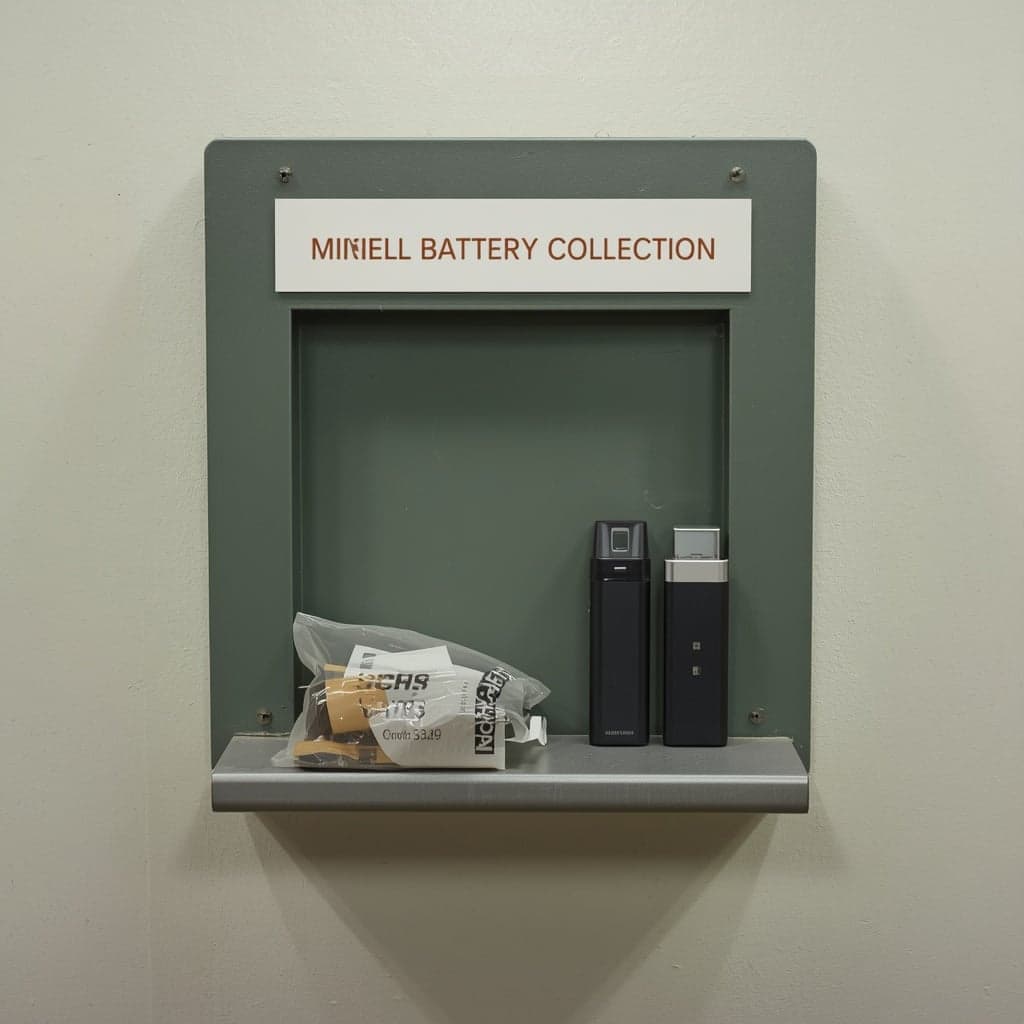
A used device is electronic waste with a lithium cell in it, and it does not belong in household rubbish or a kerbside recycling bin. Take it to a battery collection point, a household hazardous waste site, or a shop that accepts device take-back. Never crush, puncture or bin one.
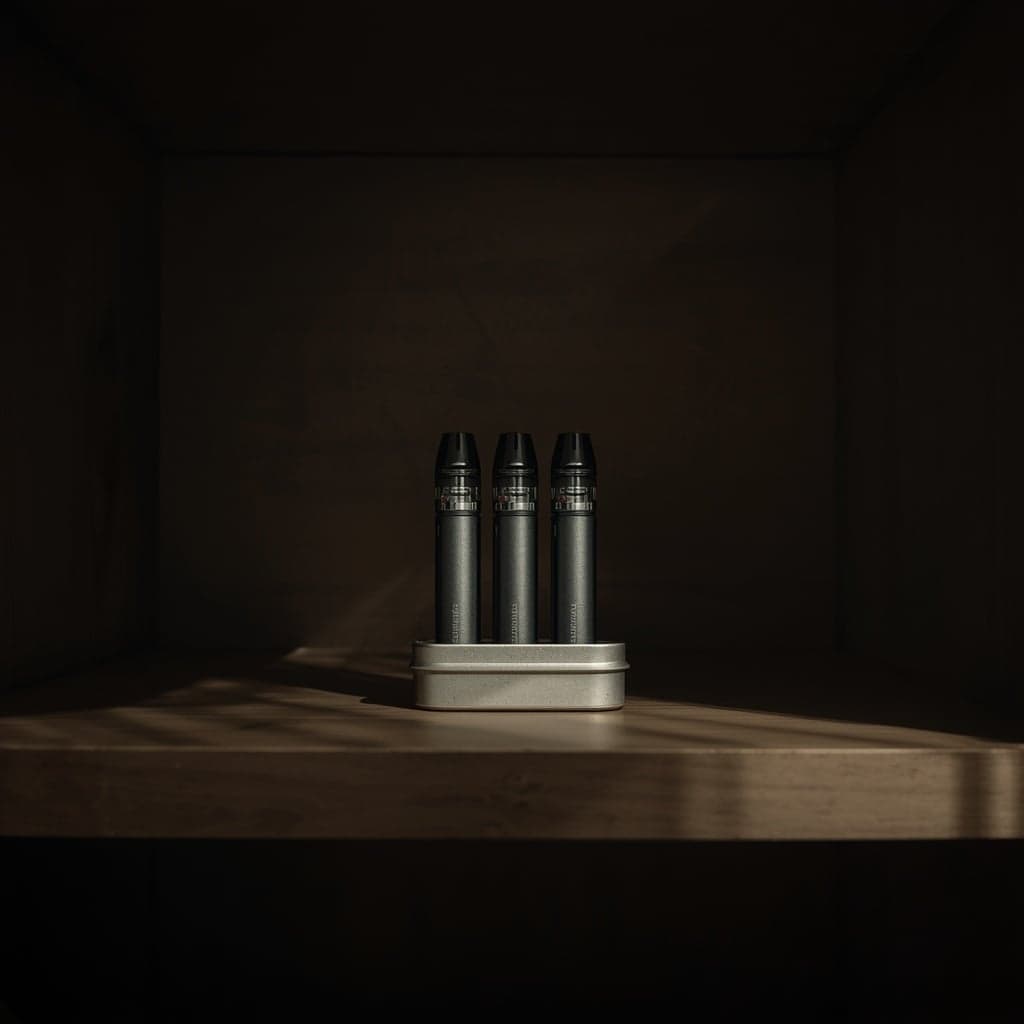
Upright, mouthpiece up, somewhere cool and dark, around half charged if it is going away for a while. Heat thins the contents and causes leaks, cold thickens them and dries the wick, and a device left on its side floods its own airway.
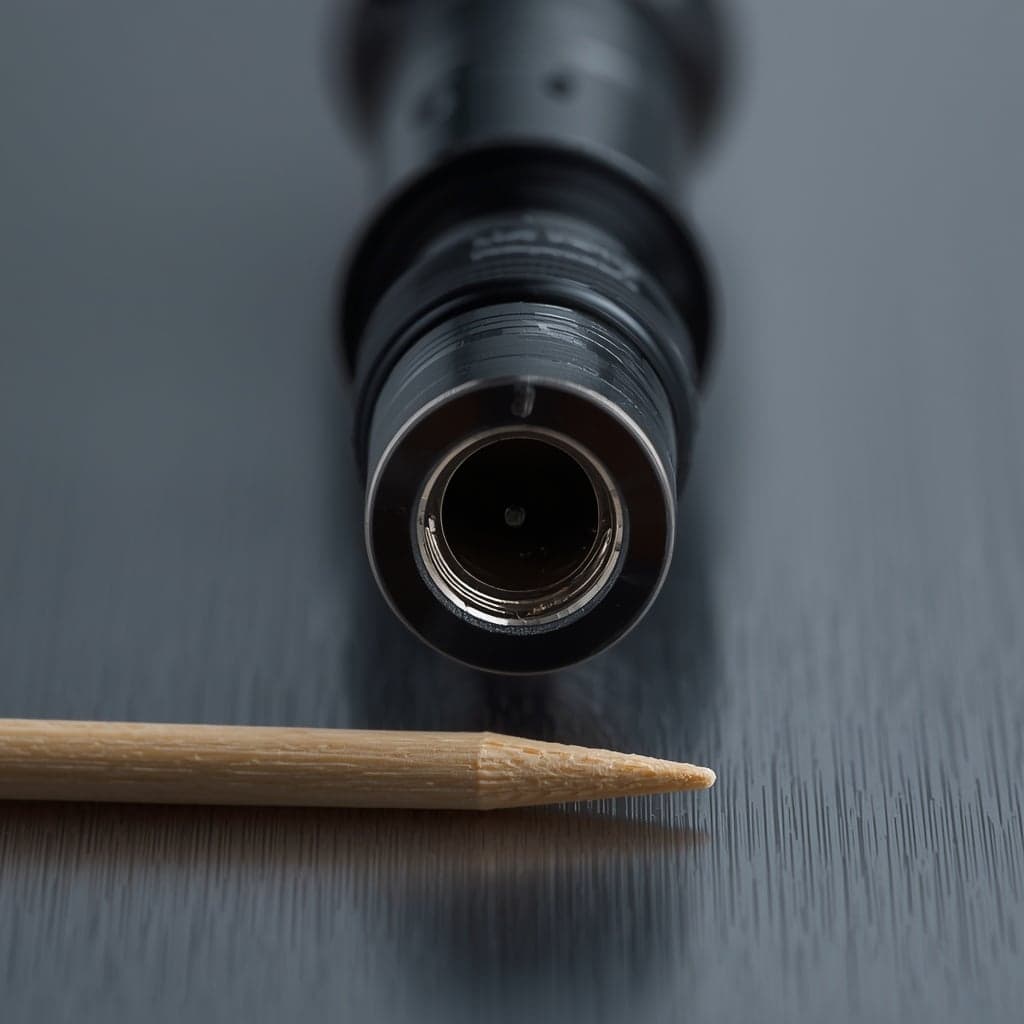
A clog is nearly always cold, thick contents blocking a narrow airway, or condensation collecting in the mouthpiece. Warm the cartridge in your hands, stand it upright, clear the mouthpiece with a cotton bud or a paperclip, then take short gentle draws rather than hard ones.
Your cart is empty
Everything we sell is batch-tested, and we tell you what ships to your state before you add it.
Browse the shop