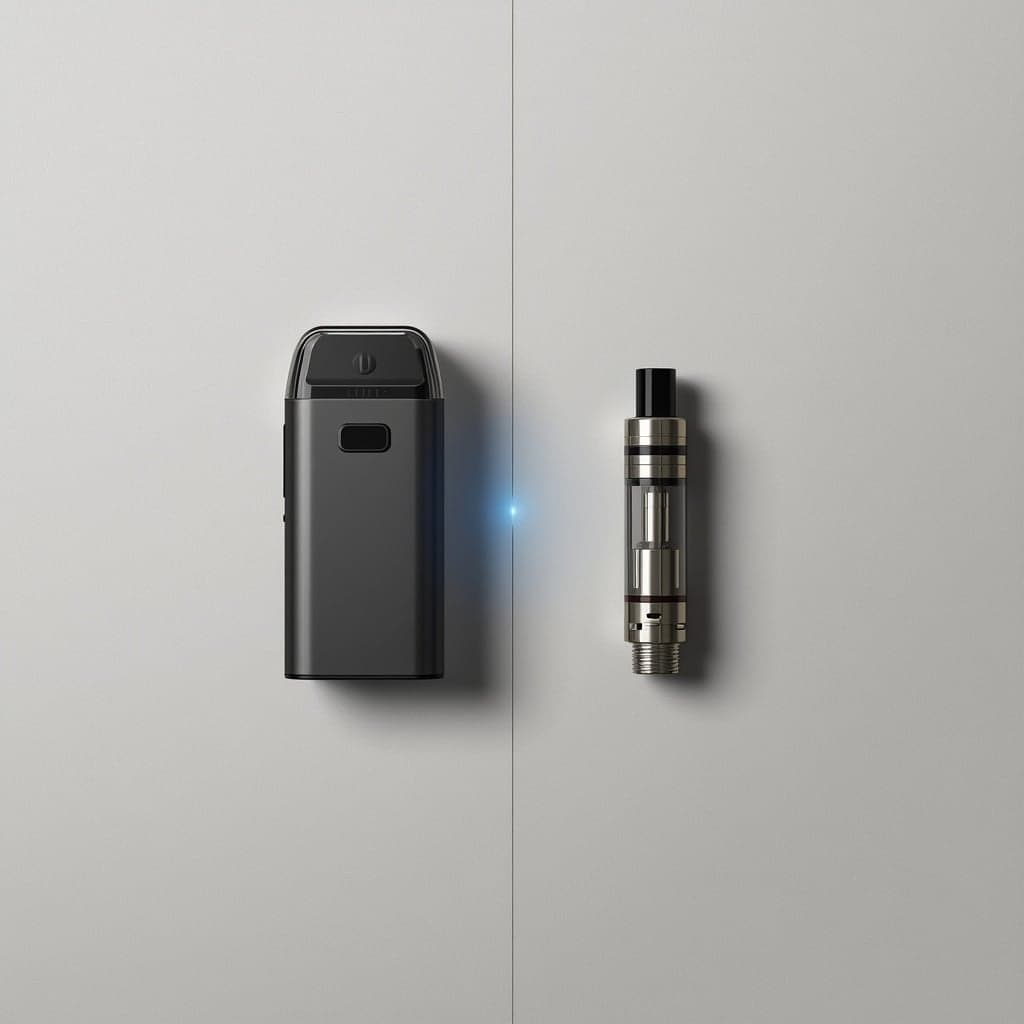
A disposable is one sealed unit — battery, cartridge and contents together, discarded when empty. A cartridge is the consumable half only, screwed onto a battery you keep. The first is simpler; the second is cheaper over time and easier to diagnose when something stops working.
Editorial desk · Written and checked in house · Updated
Two formats, and most of the practical differences follow from one fact: whether the battery is replaceable.
| Aspect | Disposable | Cartridge plus battery |
|---|---|---|
| Battery | Sealed inside, discarded with it | Kept and reused |
| Contents | Fixed at manufacture | You choose each cartridge |
| Cost per unit | Lower up front | Higher up front, lower over time |
| Voltage control | Rarely any | Common on better batteries |
| If it stops working | The whole thing is scrap | Swap parts to find the fault |
| Waste | A lithium cell every time | One cell for many cartridges |
A middle category, and the source of most of the confusion. These are sealed like a disposable but carry a USB-C port so the battery can be topped up — because the cell is smaller than the contents it has to heat, and would otherwise die with the device half full.
Charging one is not the same as charging a phone. See charging a rechargeable device safely.
This is the real argument for the two-part format. When a cartridge-and-battery setup stops working you can isolate the cause: another cartridge on the same battery, or the same cartridge on another battery, tells you which half failed in thirty seconds.
A sealed disposable gives you no such test. A blinking light is the only information you get, and it means several different things. See what a blinking light usually means.
Buy a disposable when you want nothing to think about, or to try something once.
Buy a cartridge and battery when you expect to buy more than a few, when you want control over voltage, or when you would rather not throw a lithium cell away every time. Either way, the hardware and the contents are separate questions — the thread standard says nothing about what is in the tank. See what a 510 cartridge is.
Both formats end as electronic waste with a lithium cell in them, which is not household rubbish. See disposing of hardware and lithium batteries.
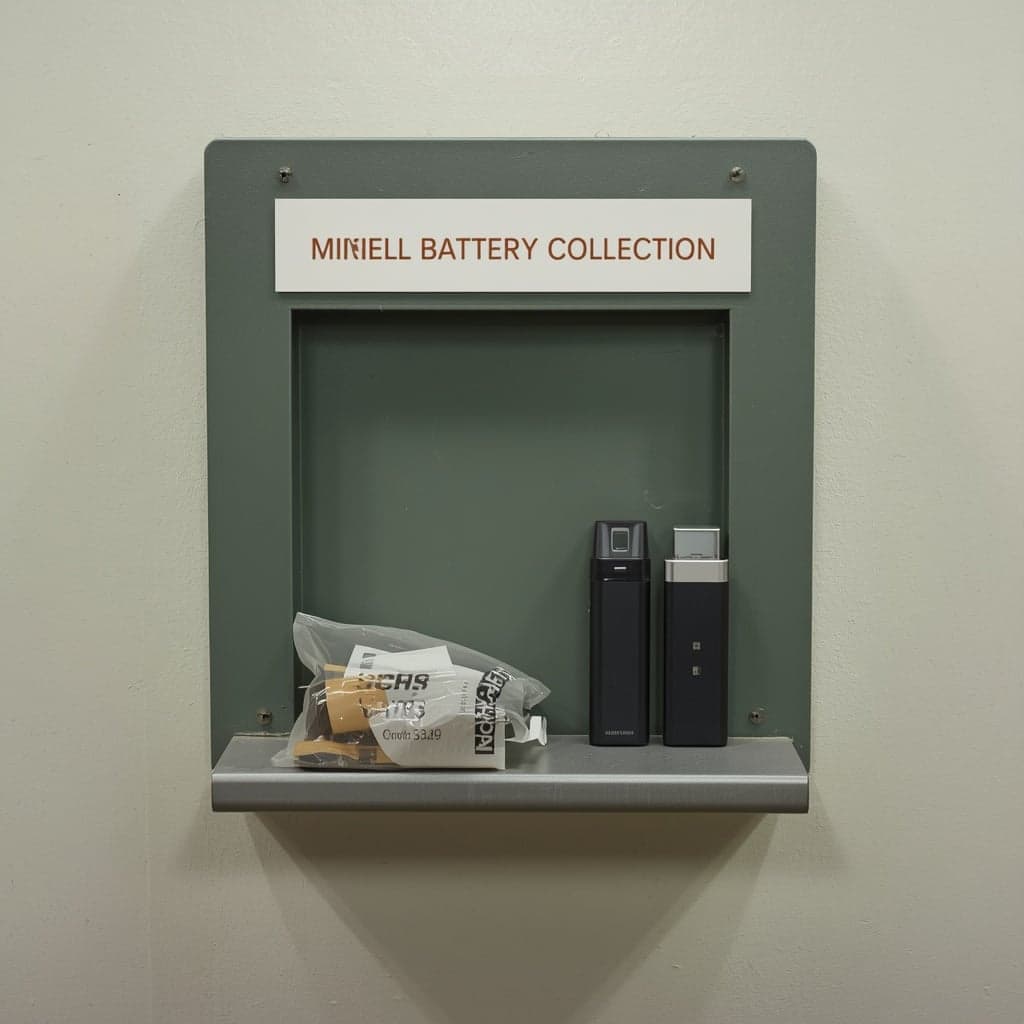
A used device is electronic waste with a lithium cell in it, and it does not belong in household rubbish or a kerbside recycling bin. Take it to a battery collection point, a household hazardous waste site, or a shop that accepts device take-back. Never crush, puncture or bin one.
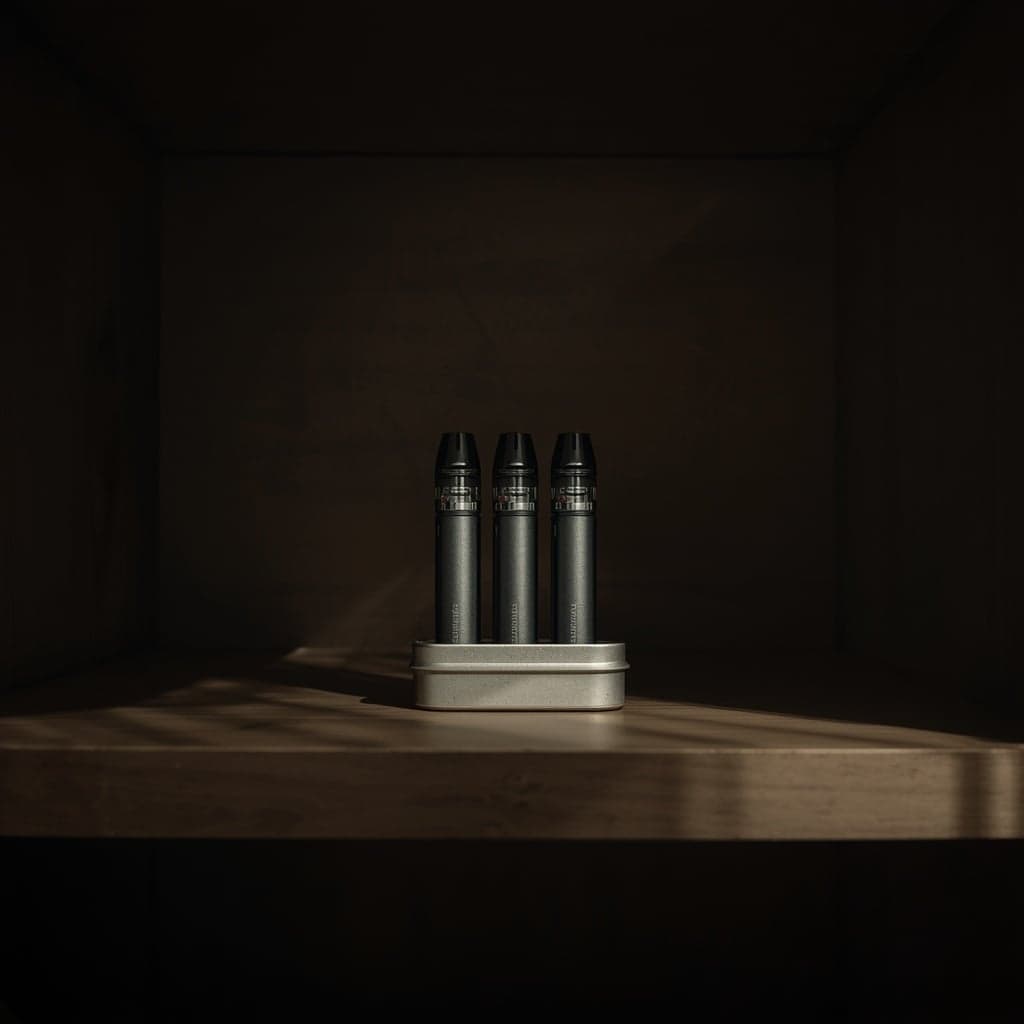
Upright, mouthpiece up, somewhere cool and dark, around half charged if it is going away for a while. Heat thins the contents and causes leaks, cold thickens them and dries the wick, and a device left on its side floods its own airway.
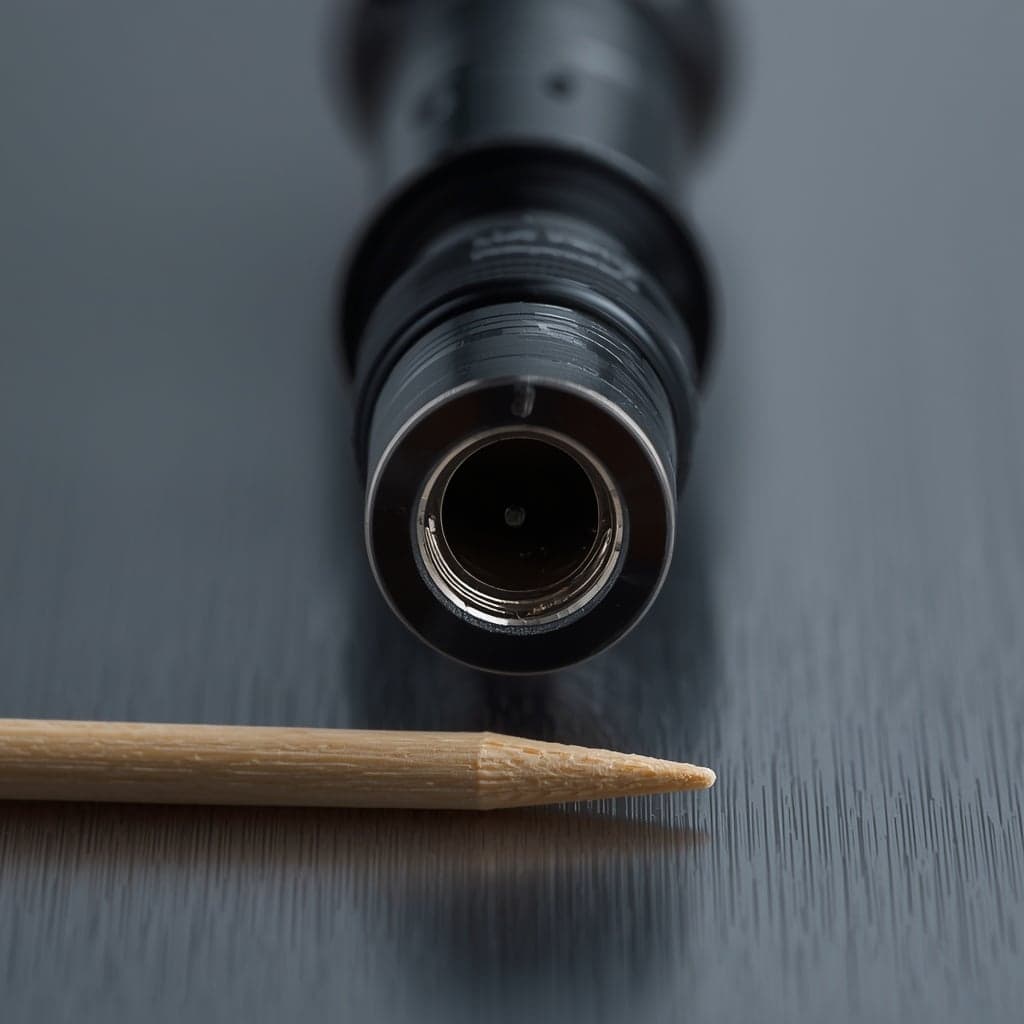
A clog is nearly always cold, thick contents blocking a narrow airway, or condensation collecting in the mouthpiece. Warm the cartridge in your hands, stand it upright, clear the mouthpiece with a cotton bud or a paperclip, then take short gentle draws rather than hard ones.
Your cart is empty
Everything we sell is batch-tested, and we tell you what ships to your state before you add it.
Browse the shop